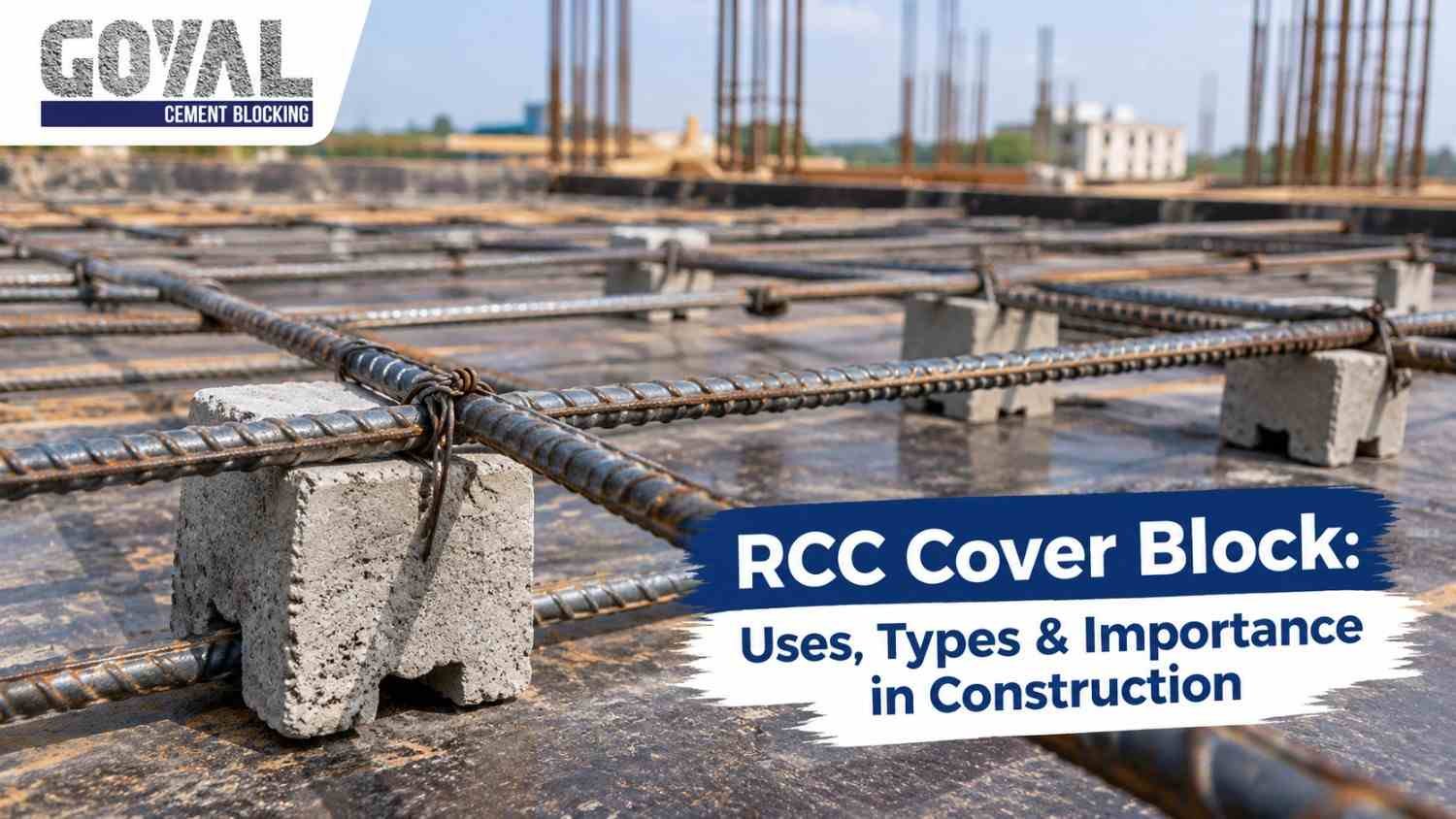
Walk onto any RCC construction site before the concreting stage, and you'll notice small blocks tucked under the steel reinforcement mesh — sitting quietly, almost unnoticed. Most people passing by wouldn't even glance twice at them. But these small blocks, known as RCC cover blocks, are doing one of the most important jobs on that entire site.
If you've ever wondered what these blocks actually do, why they're placed so precisely, or why engineers insist on using the right size and type — you're in the right place. In this blog, we'll walk through everything in plain, simple language: what RCC cover blocks are, the different types available, their real uses on site, and why they matter so much to the long-term strength of any structure.
At Goyal Cement Blocking, we manufacture and supply these blocks in bulk to contractors and builders across the region, so this is a topic we understand inside-out — not just in theory, but from real site experience.
What Is an RCC Cover Block?
Let's start from the basics. In any RCC (Reinforced Cement Concrete) structure — be it a slab, beam, column, or foundation — steel reinforcement bars are placed inside the concrete to give the structure tensile strength. Concrete alone is strong under compression but weak under tension, which is exactly why steel bars are added.
But here's the thing: these steel bars can't just sit anywhere inside the concrete. They need to be positioned at a very specific distance from the outer surface. This distance is called the "concrete cover," and it's not a random number — it's calculated based on the structural design, exposure conditions, and relevant IS code requirements.
An RCC cover block is simply a small spacer placed between the reinforcement bars and the formwork (shuttering) to maintain this exact distance while concrete is being poured. Without it, the steel could shift, sag, or come too close to the surface — and that's where real problems begin.
Why Does the Concrete Cover Actually Matter?
Before we go further into types and uses, it's worth understanding why this "cover" distance is such a big deal in the first place.
The layer of concrete surrounding the reinforcement isn't just filler — it's protection. It shields the steel from moisture, oxygen, chlorides, and other environmental elements that cause corrosion. If the cover is too thin (because the reinforcement shifted or wasn't positioned correctly), the steel becomes exposed to these elements much sooner than it should be.
Once corrosion starts, the steel expands slightly, which creates internal pressure within the concrete. Over time, this pressure leads to cracking, spalling, and serious structural deterioration — problems that are expensive and difficult to fix once the structure is complete.
This is exactly why cover blocks in RCC construction aren't an optional site item — they're a critical part of ensuring the structure performs the way it was designed to, for decades.
Types of RCC Cover Blocks
Not all cover blocks are the same. Depending on the material, application, and site requirement, there are a few common types used across construction projects in India.
1. Concrete Cover Blocks
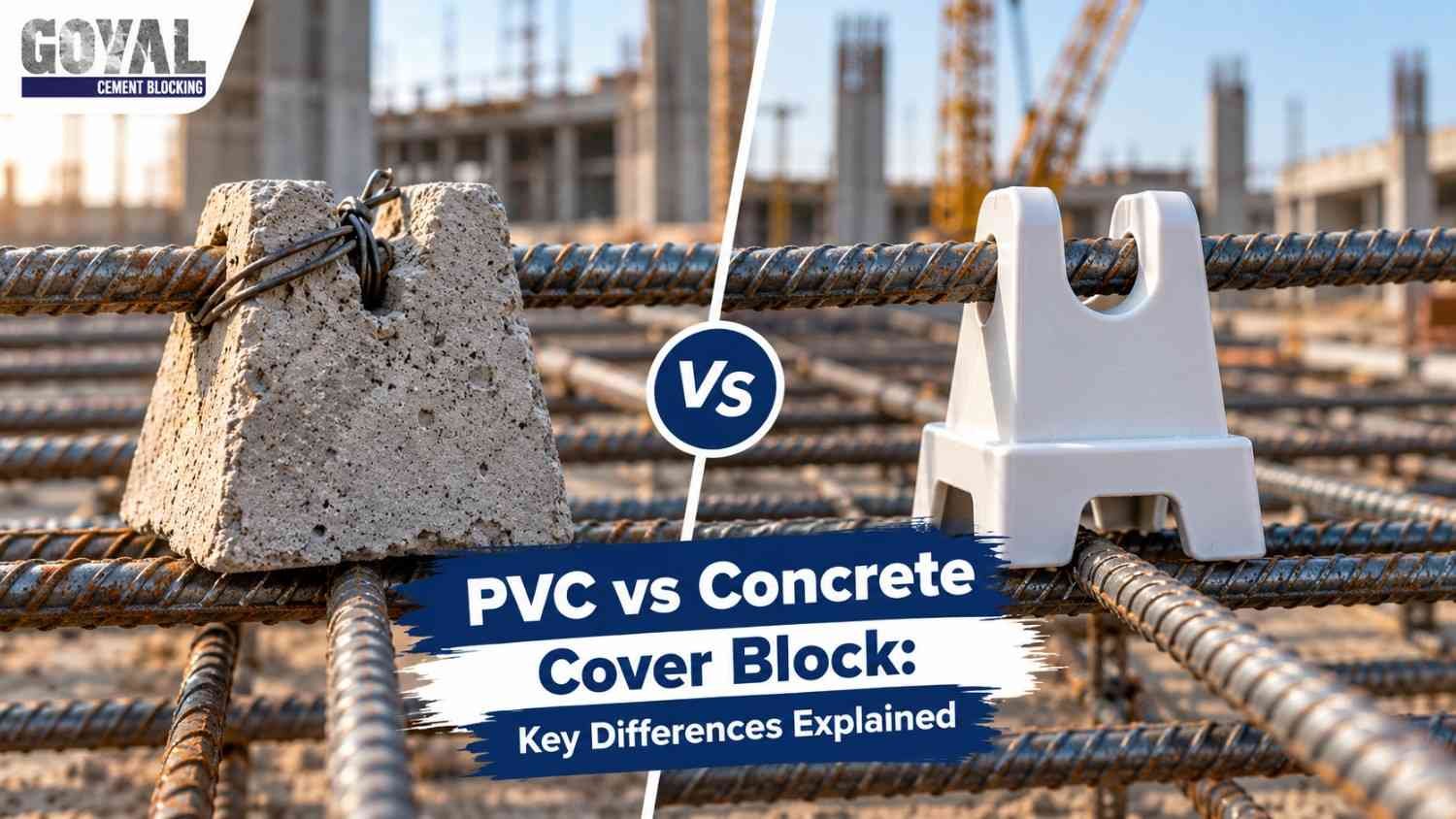
These are the most widely used type, especially for serious, long-lasting structures. Made from cement, sand, and fine aggregate, concrete cover blocks in RCC bond naturally with the surrounding concrete once poured, since they're made from the same base material.
This natural bonding means there's no mismatch in material properties — no weak points, no gaps forming around the spacer over the years. They're commonly used in slabs, beams, columns, foundations, and virtually every major structural element.
2. PVC Cover Blocks
PVC cover blocks are made from rigid plastic and are popular for their lightweight nature and quick, snap-fit installation. They're commonly used in smaller, faster-paced projects where speed of construction matters more than long-term structural considerations. However, since PVC doesn't bond with concrete the way concrete-based blocks do, some engineers prefer to avoid them for larger or more exposed structures.
3. Circular and Rectangular Cover Blocks
Cover blocks also come in different shapes depending on the reinforcement pattern and application. Circular blocks are commonly used for column reinforcement, while rectangular or square blocks are more common for slabs and beams, where a flatter support surface is needed.
4. Wheel-Type Cover Blocks
These are a specific design used mainly for vertical reinforcement in columns and walls. Their wheel-like shape allows them to roll slightly against the formwork during concreting, helping maintain consistent cover even as the pour progresses.
Whatever type is chosen, the golden rule remains the same — the size and material should always match the structural drawing's specification, not just site convenience.
Uses of RCC Cover Blocks in Different Structural Elements
One of the reasons cover blocks are so important is that they're used across virtually every part of an RCC structure — not just one or two elements. Let's look at how they're applied in different areas.
Cover Blocks in Slabs
In slab construction, cover blocks are typically placed below the reinforcement mesh to maintain the required distance from the bottom shuttering. Without them, the reinforcement can sag under its own weight or the weight of workers walking over it during pouring, reducing the actual cover achieved.
Cover Blocks in Beams
Beams carry both longitudinal reinforcement and stirrups, both of which need to stay correctly positioned within the concrete section. Cover blocks help maintain the required gap between this reinforcement and the formwork on all sides, ensuring the beam gets adequate protective concrete cover as per design.
Cover Blocks in Columns
Columns have vertical reinforcement along with ties or stirrups running around them. Correct cover block placement here is especially important because any reinforcement movement before concreting can directly affect the final protective cover — and columns often carry significant structural load.
Cover Blocks in Foundations and Footings
Foundation reinforcement faces constant exposure to soil moisture and, in many cases, aggressive ground conditions. This makes adequate concrete cover particularly critical here. Cover blocks support the reinforcement above the base of the footing, ensuring the specified cover is properly maintained even before the pour begins.
Why RCC Cover Blocks Are So Important — The Real Reasons
Let's bring it all together and look at exactly why these small blocks carry such big responsibility on a construction site.
1. They Maintain the Correct Concrete Cover
This is the core function. A properly sized cover block creates a fixed physical gap between the reinforcement and formwork, ensuring the design's specified cover is actually achieved on site — not just on paper.
2. They Protect Reinforcement From Corrosion
By maintaining adequate cover, these blocks ensure there's enough concrete between the steel and the outside environment, significantly reducing the risk of early corrosion and the structural problems that follow.
3. They Keep Reinforcement Stable During Concreting
Concrete pouring is an active process — workers move around, concrete flows, vibrators compact the mix. Without proper support, reinforcement can shift from its intended position. Cover blocks hold everything steady through this process.
4. They Improve Consistency Across the Structure
Using proper, manufactured cover blocks instead of improvised materials like broken bricks or stone pieces ensures a more uniform cover throughout the structure — something random spacers simply can't guarantee.
5. They Support Better Quality Control
Because cover blocks come in defined, known sizes, site engineers can quickly verify whether the correct cover is being maintained during inspection — making quality checks faster and more reliable.
Common Mistakes to Avoid With Cover Blocks
Even though cover blocks seem like a simple item, a few common mistakes on site can undo their entire purpose:
- Using random materials as spacers — Broken bricks, stones, or debris don't provide consistent dimensions and should never replace proper cover blocks.
- Ignoring the structural drawing's specified size — Cover requirements vary by structural element and exposure condition; there's no universal size that fits every application.
- Poor placement density — Placing too few cover blocks across a large reinforcement area can still allow sagging between spacers.
- Skipping inspection before pouring — Even with cover blocks in place, site engineers should verify positioning and stability before concrete is poured.
- Sourcing from unreliable manufacturers — Poorly cured or inconsistent cover blocks can fail to maintain proper spacing, defeating their entire purpose.
Why the Manufacturer You Choose Actually Matters
Here's something that often gets overlooked — even the right type and size of cover block won't perform well if it's poorly manufactured. Inconsistent curing, incorrect cement-to-aggregate ratio, or uneven sizing can compromise the block's ability to do its job properly.
This is exactly why working with an experienced, quality-focused manufacturer makes a real difference. As trusted RCC Cover Block Manufacturers, we at Goyal Cement Blocking focus on consistent sizing, proper curing, and reliable quality checks across every batch we produce — because we understand this small component plays a big role in a structure's long-term durability.
We supply RCC cover blocks in bulk to contractors and builders working on residential, commercial, and infrastructure projects, and our focus has always stayed on products that genuinely perform under real site conditions — not just ones that look fine in a sample box.
Final Thoughts
RCC cover blocks might be small, inexpensive, and easy to overlook — but their role in a structure's durability is anything but small. They maintain the exact concrete cover a structure needs, protect reinforcement from corrosion, keep steel stable during concreting, and support better overall quality control on site.
Whether you're working on a slab, beam, column, or foundation, using the right type and size of cover block — sourced from a reliable manufacturer — is one of those small decisions that pays off for decades. That's exactly the standard we follow at Goyal Cement Blocking, supplying quality cover blocks in RCC construction to contractors who understand that durability starts with getting the small details right.
If you're unsure which type or size of cover block suits your specific project, feel free to reach out to our team — we're always happy to guide you based on your actual structural requirements.
Frequently Asked Questions
Quick answers to what people usually ask.