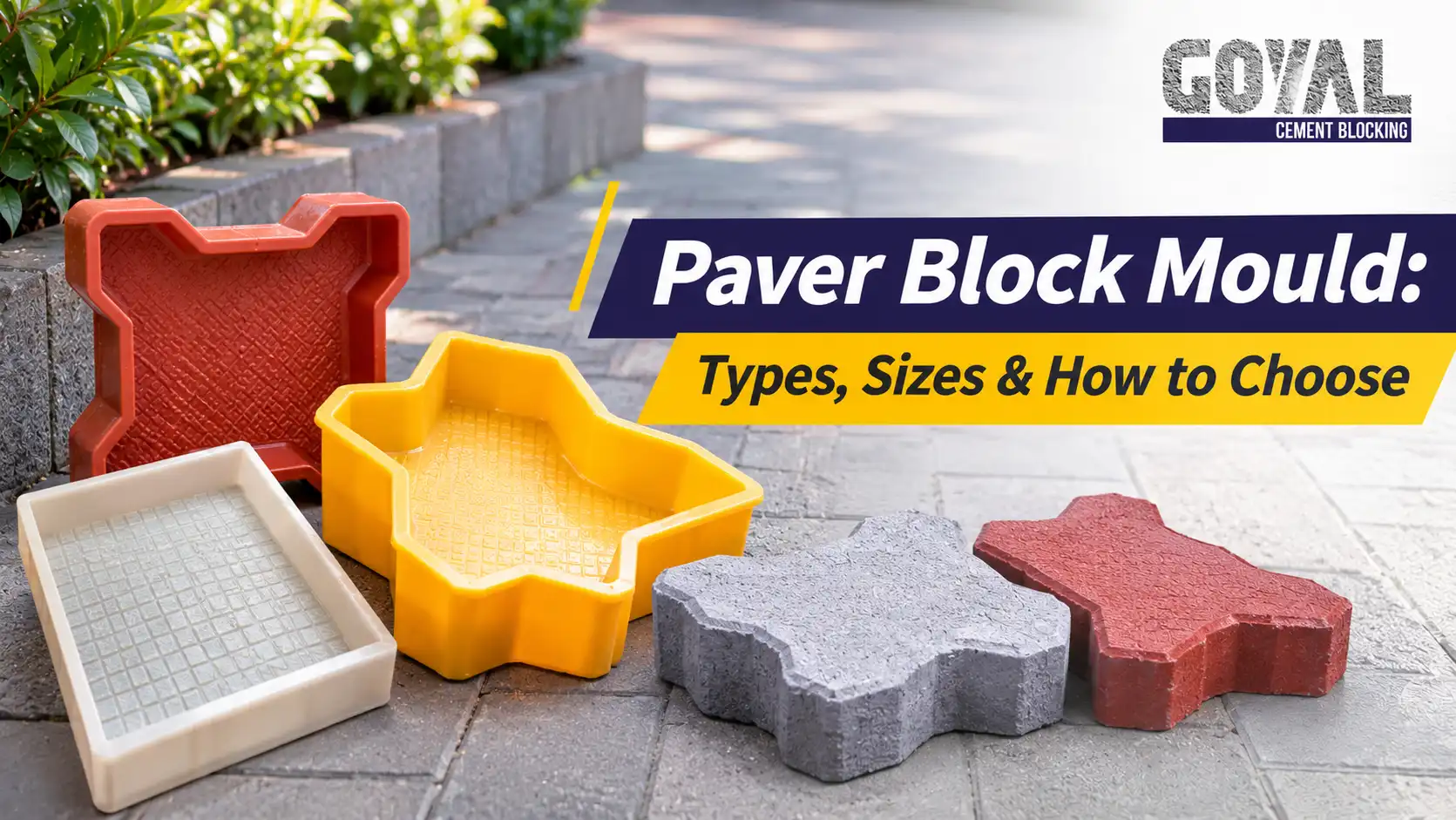
Every paver block starts life inside a mould. The mould decides the size, the thickness, the edge, the surface texture and the pattern of each block, so a good paver block mould gives clean, uniform blocks and a poor one gives rough edges, uneven sizes and extra rejection. Whether you run a casting yard, supply pavers for projects or simply want to understand how your blocks are made, knowing how moulds work helps you judge quality.
This guide explains the main types of paver block moulds, the sizes and shapes in common use, how the mould affects the finished block, how to choose one and how to look after it. Goyal Cement Blocking makes paver tile blocks at our plant in Palwal, Haryana, and the mould knowledge below comes from what matters in everyday block production.
What Does a Paver Block Mould Do?
A paver block mould is a form with one or more cavities. Fresh concrete is placed in the cavities, compacted and left to set, and the block is released in the exact shape of the cavity. Because the same mould is used again and again, any fault in the mould repeats in every block. A small dent in a cavity becomes a flaw in hundreds of blocks.
The mould also controls the top surface. A plain cavity gives a smooth face, while a textured base gives a stone like or patterned finish. This matters for buyers, since the face and edge are the first things people see after laying.
Types of Paver Block Moulds
Rubber moulds
Rubber moulds are flexible, which makes the finished block easy to release and reduces edge chipping. They are common for hand casting and for small batches, and they can reproduce fine surface patterns. Their flexibility also means they can distort if they are stored badly or overfilled.
Plastic moulds
Plastic moulds, often made of tough polypropylene or similar materials, are light and quick to clean. They are widely used with vibrating tables. They keep their shape well when handled with care, and they suit regular production of standard shapes.
Polyurethane moulds
Polyurethane moulds are flexible and can capture detailed textures. They are often chosen when a decorative surface is the priority, such as for patterned or stamped looking pavers.
Steel moulds
Steel moulds are rigid and durable, and they are used on block making machines that press and vibrate the concrete. They suit large, continuous production because they resist wear and hold tight dimensions.
No single type is best for every user. The right choice depends on your volume, the shapes you need, the surface you want and how the blocks will be compacted.
Common Paver Block Shapes and Sizes
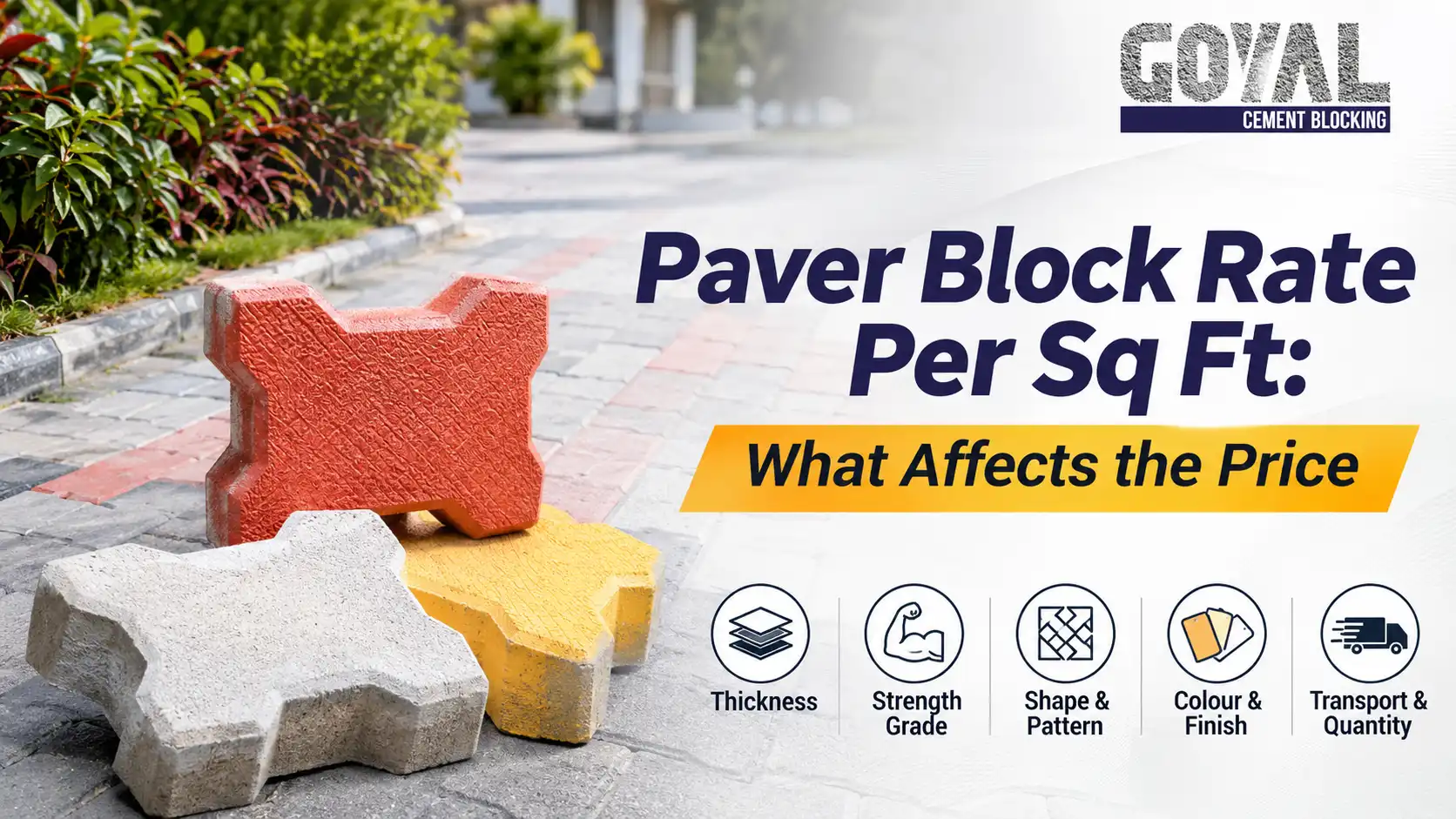
Pavers are made in many shapes, and each shape needs its own mould. Common examples include plain rectangular blocks, zig zag or interlocking shapes, I shaped blocks, hexagonal blocks and square or rectangular tiles. Interlocking shapes are popular for driveways and parking, because the blocks lock against their neighbours and share loads. Our complete guide to concrete interlocking blocks explains this in more detail.
Thickness is the other key dimension. Moulds are made for common thicknesses such as 60 mm, 80 mm and 100 mm.
- 60 mm suits footpaths, gardens and light pedestrian areas.
- 80 mm suits driveways and parking for light vehicles.
- 100 mm suits heavier traffic, such as industrial yards and loading areas.
Treat these as general guidance and confirm the thickness with your designer. The mould you choose fixes the thickness of every block you make.
How the Mould Affects Block Quality
Many quality problems trace back to the mould. A worn mould lets the cavity grow slightly, so blocks become oversize and no longer fit neatly. A distorted mould creates uneven thickness, which makes the laid surface rock and crack. Rough or damaged walls leave tearing on the block edge and a poor face. Poor cleaning leaves old concrete in corners, which prints into the next casting.
These faults are easy to spot in a delivery. Blocks of consistent size, sharp edges and a clean top face are signs of a well kept mould and a careful process. If you are buying blocks rather than moulds, our advice on how to find the best paver block manufacturer near you helps you judge a supplier by what you can inspect.
How to Choose a Paver Block Mould
Ask a few practical questions before you buy any mould.
- Volume: how many blocks will you make each day? High volume favours steel moulds and machines, while small batches suit rubber or plastic.
- Shape and size: does the mould match the pattern, thickness and dimensions you need?
- Surface finish: do you want a smooth face or a textured one?
- Durability: how well does the mould material resist wear, and how often will it need replacing?
- Ease of release: will the block come out cleanly without chipping?
- Compatibility: does it work with your compaction method, such as a vibrating table or a press?
- Cost per block: compare the mould price with the number of blocks it can produce, not just the purchase price.
Ask the seller for a sample block made in the mould you are considering. Check its size, edges and surface before you commit to a larger order.
Mould Care and Maintenance
A well maintained mould lasts longer and gives better blocks. A few habits make a big difference.
- Clean after every use. Remove leftover concrete before it hardens, using water and a soft brush.
- Apply a release agent. Use a suitable mould release before each casting so blocks come out cleanly.
- Avoid rough tools. Metal scrapers can scratch cavity walls, and every scratch repeats in the blocks.
- Store flat. Keep moulds on a level surface so they do not bend or warp.
- Protect from sun and heat. Long exposure can harden or distort rubber and plastic.
- Inspect regularly. Retire moulds that show cracks, warping or heavy wear.
Make Your Own Pavers or Buy Ready Made?
Setting up your own casting involves moulds, mixing, compaction, curing space and quality control. For a single project, buying ready made paver blocks from a manufacturer is usually simpler, and it gives you blocks made in controlled conditions. Making your own makes sense when you have steady, high volume demand and the space and skills to run production.
If you are still deciding which block to use, our guide on how to choose the right paver tiles block for your outdoor space and our overview of concrete paver blocks are good starting points. When you are ready to budget, read what affects the paver block rate per sq ft to compare quotes properly.
Paver Block Moulds in Kolkata and Other Cities
Needs differ from city to city, and so do suppliers and delivery costs. If you are in West Bengal, you can see our city page for paver block mould manufacturer in Kolkata for local details. For any other city, send us your requirement through the contact page and we will tell you what we can offer.
Getting Help From Goyal Cement Blocking
Share your requirement through our contact page. Tell us the use of the pavement, the preferred shape and thickness, the quantity and the delivery location. We will reply with advice and a quotation based on your specification, so you can compare it on equal terms.
Common Mistakes When Buying or Using Moulds
A few repeated mistakes cost production time and money. Avoid these and your blocks will be more consistent.
- Buying the cheapest mould without checking how many castings it can handle before it wears.
- Choosing a thickness by habit rather than by the traffic the pavement will carry.
- Skipping the sample block, then discovering uneven edges after a bulk run.
- Using too much release agent, which leaves a patchy surface, or too little, which makes blocks stick.
- Mixing old and new moulds in one batch, which gives slightly different sizes across the same pavement.
- Filling the cavity unevenly, so the block is denser on one side and weaker on the other.
Keep a simple record of each mould, including its age and condition, and replace it when it starts to drift out of size. A mould that is retired on time is far cheaper than a batch of rejected blocks.
Key Points to Remember
The mould is the starting point of every paver block, and its quality shows up in every block it produces. Match the mould type to your volume and finish, choose a thickness that fits the traffic, keep the mould clean and well stored, and check a sample before you buy in bulk. These steps give you uniform blocks with sharp edges and a clean face.
Need paver blocks for your project? Send us your requirement and our team will help you choose the right block. Contact Goyal Cement Blocking today.
Frequently Asked Questions
Quick answers to what people usually ask.