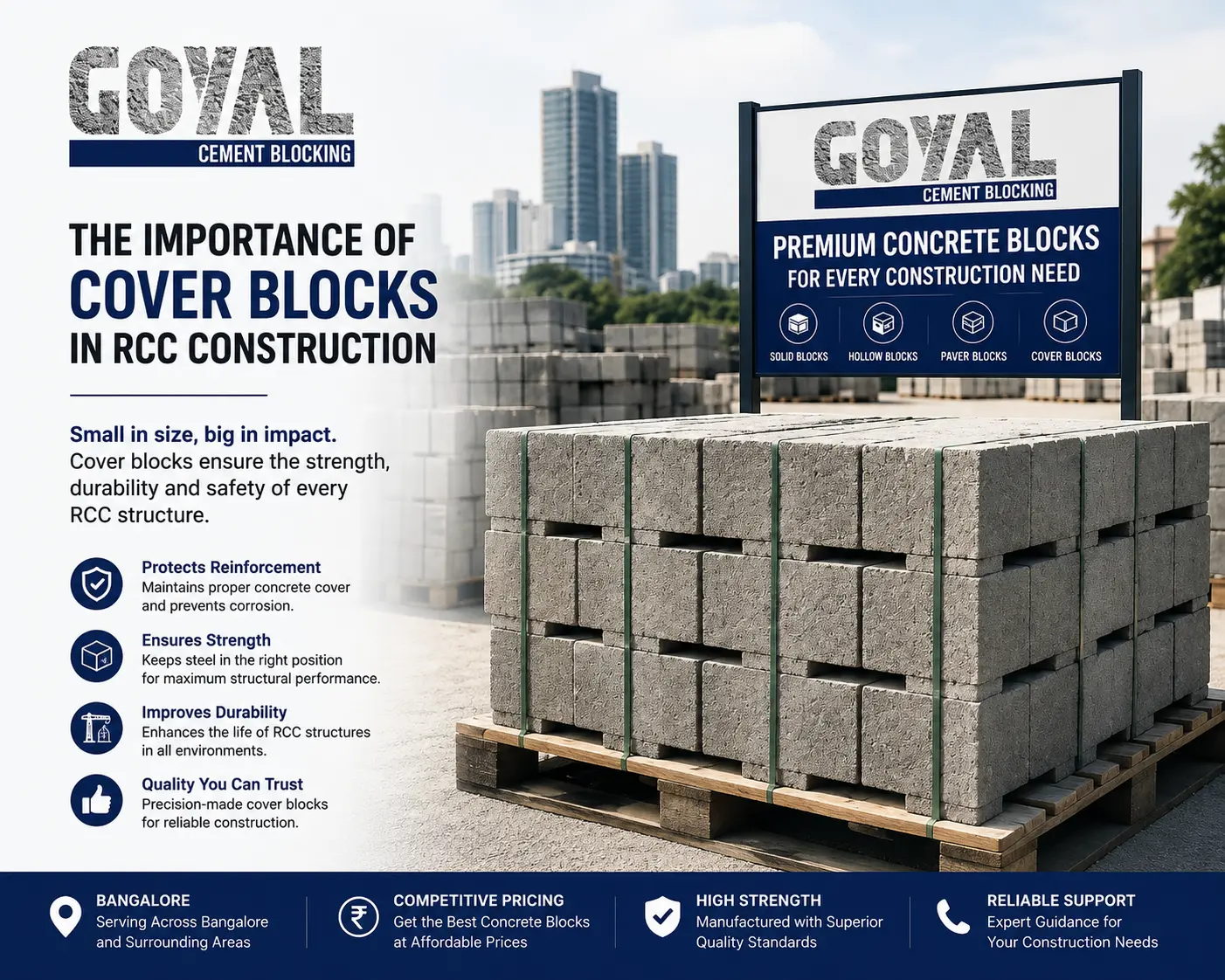
If you've spent any time around a construction site, you've probably seen small blocks tied to reinforcement bars, sitting quietly under the steel mesh before the concrete gets poured. Most people walk past them without a second thought. But these little spacers — called cover blocks — actually play one of the most important roles in determining how long your structure will last.
And here's where the real confusion begins for most builders, contractors, and even engineers: should you go with PVC cover blocks or concrete cover blocks?
Both are widely available. Both claim to do the same job. And honestly, at first glance, they look like they'd perform identically. But once you dig a little deeper, you'll realize the difference between the two can actually impact the durability, strength, and lifespan of your entire structure.
At Goyal Cement Blocking, this is one of the most common questions we get from customers — so let's break it down in plain, simple language, without the confusing technical jargon.
What Is a Cover Block, Really?
Before comparing the two types, let's quickly understand what a cover block actually does.
When reinforcement steel is placed inside a slab, beam, column, or foundation, it needs to stay at a specific distance from the outer surface of the concrete. This distance is called "concrete cover," and it's not just a random number — it's calculated based on structural design and environmental exposure.
Why does this gap matter so much? Because this layer of concrete is what protects the steel from moisture, air, chemicals, and corrosion. Without proper cover, the reinforcement is exposed to the elements much sooner, and that's when problems like rusting, cracking, and structural weakening begin.
A cover block is simply the spacer that holds the reinforcement at this exact distance while concrete is being poured. It sounds like a small detail — but it's a detail that can make or break the durability of your structure over the years.
What Are Concrete Cover Blocks?
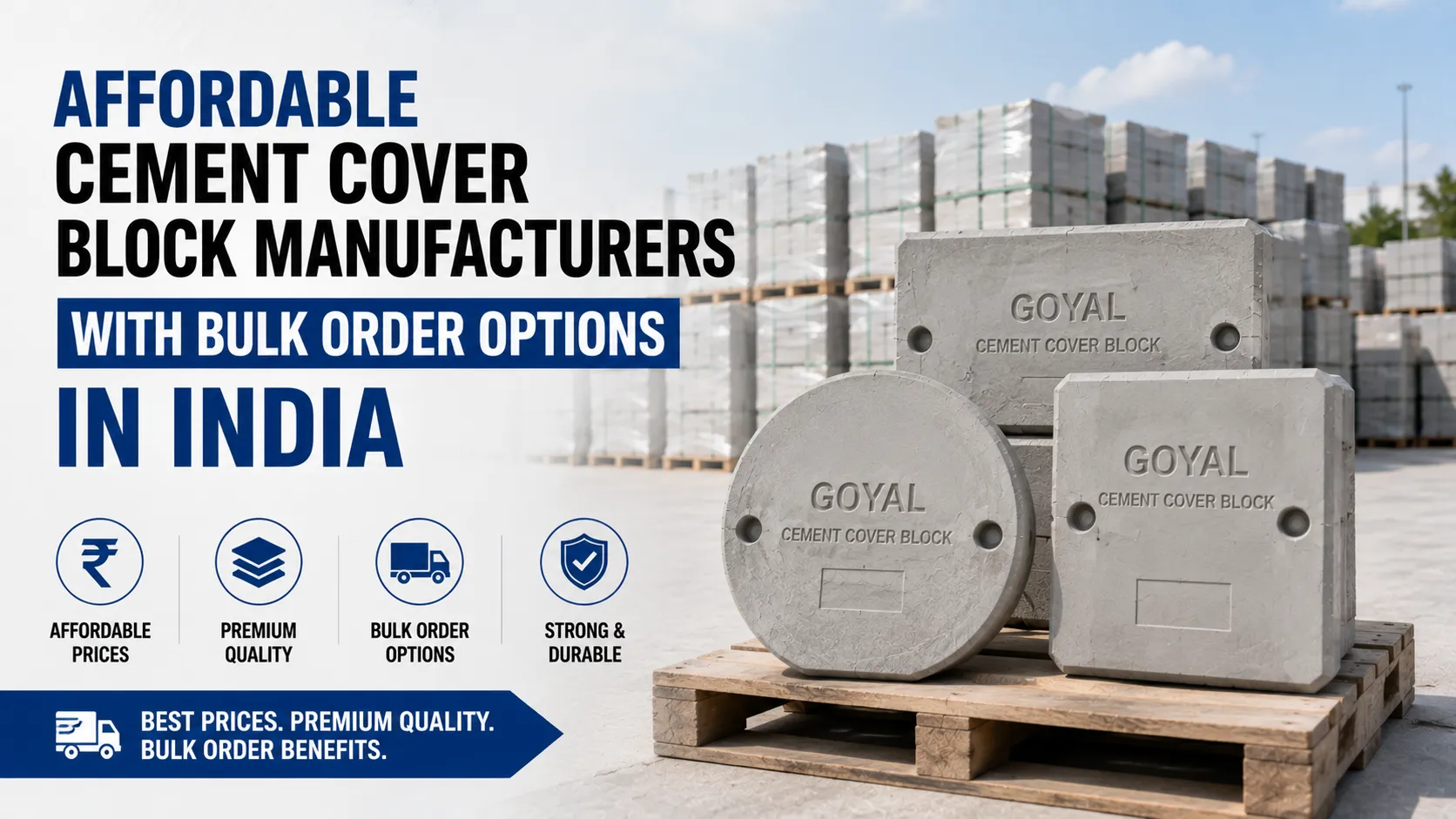
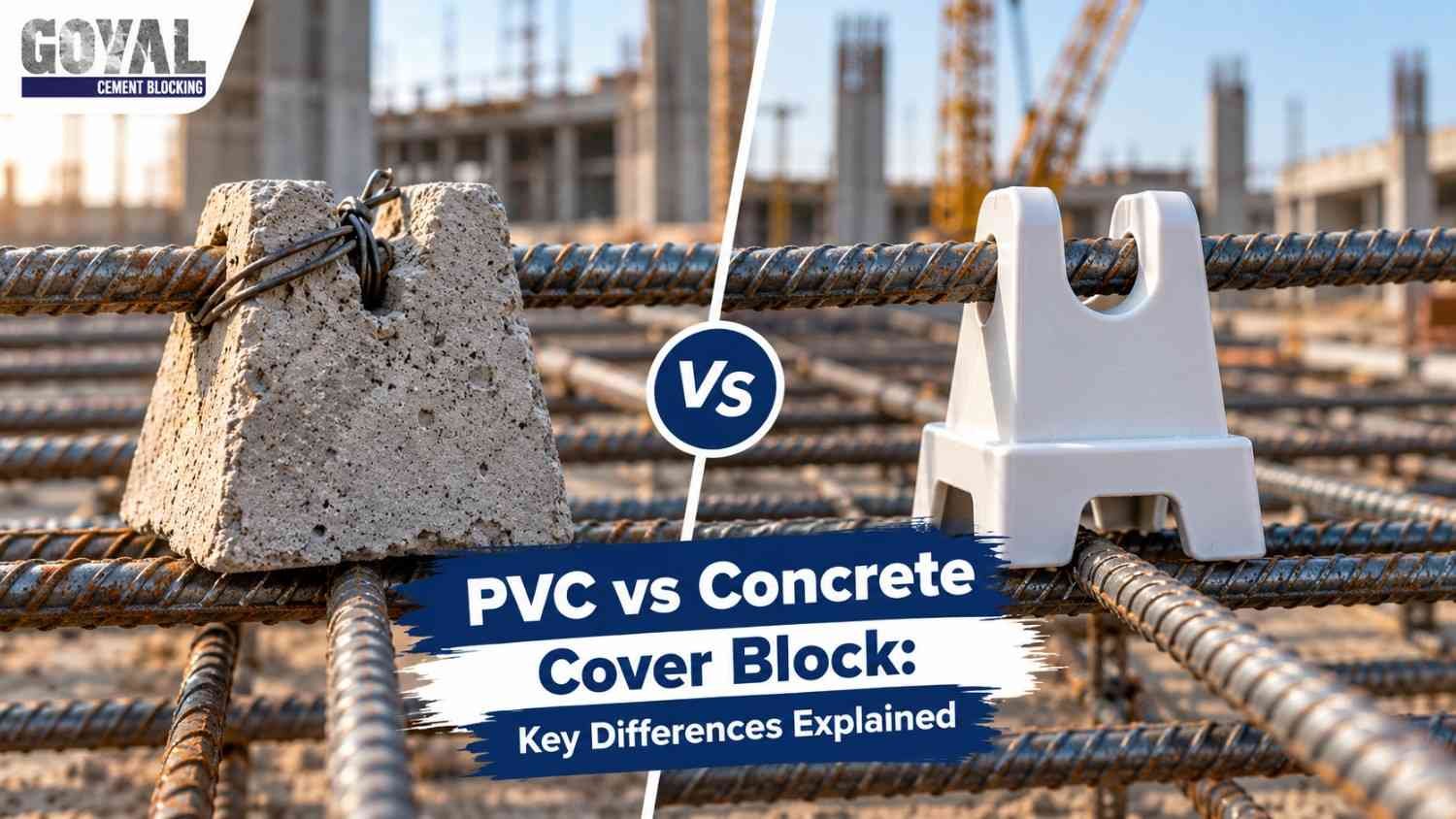
Concrete cover blocks, as the name suggests, are made from cement, sand, and aggregate — essentially the same material as the surrounding concrete structure itself. They're usually cast in moulds, cured properly, and then tied to the reinforcement using binding wire before concreting begins.
Because they're made from the same base material as the structure around them, concrete cover blocks bond naturally with the surrounding concrete once it's poured. There's no mismatch in material properties, which means no weak points or gaps forming around the spacer over time.
As one of the established Concrete Cover Blocks Manufacturers, we've seen firsthand how well-cured, properly graded concrete cover blocks hold up in real site conditions — from residential buildings to large infrastructure projects across India.
What Are PVC Cover Blocks?
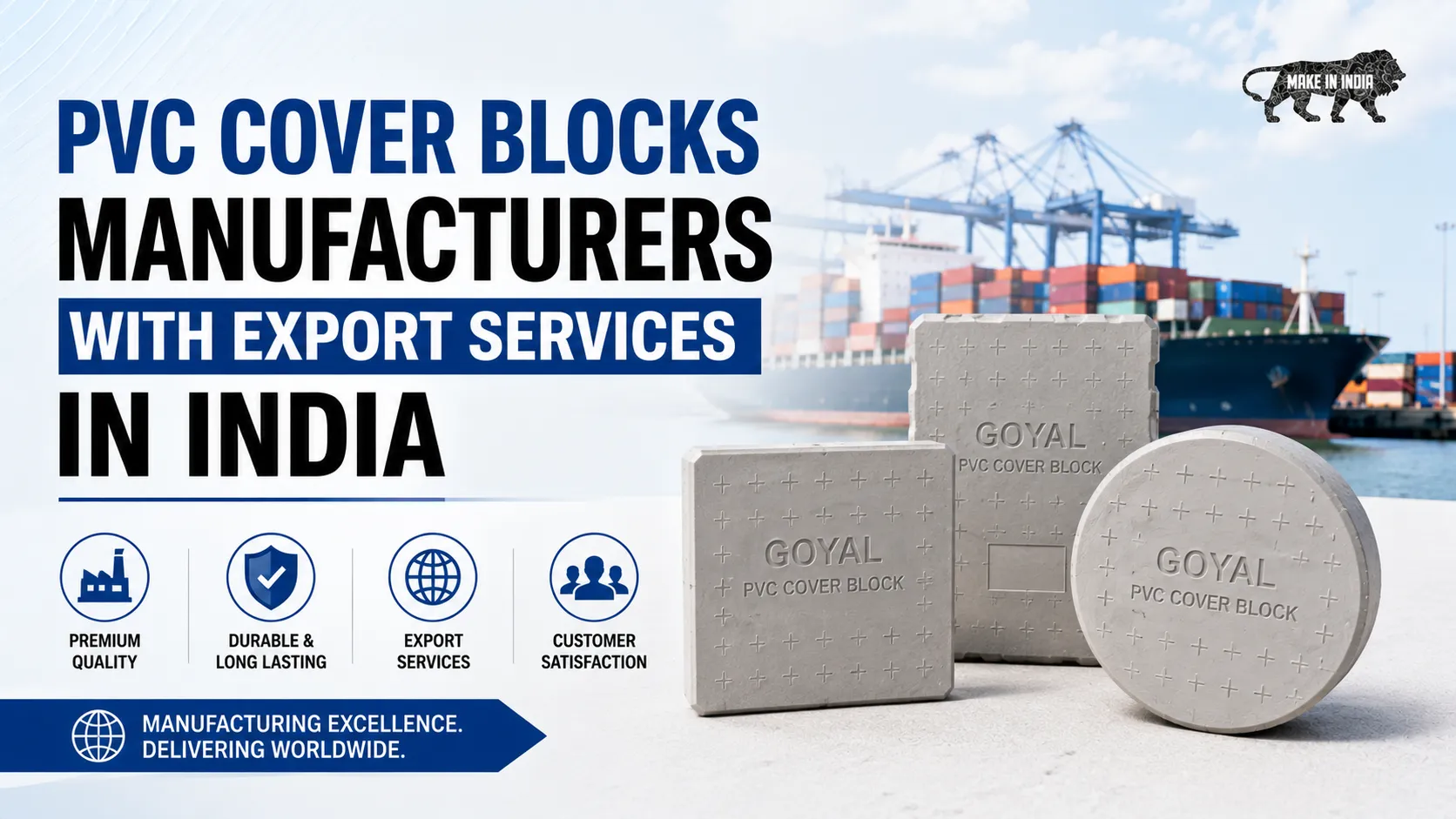
PVC cover blocks, on the other hand, are made from a type of rigid plastic material. They're manufactured in factories, come in various shapes designed to fit different rebar sizes, and are popular mainly because of how lightweight and easy they are to handle on site.
Many contractors like PVC cover blocks because they're quick to snap onto reinforcement, require no curing time, and are available in uniform sizes. If you're someone searching for PVC cover blocks online in India, you'll find they're widely available on multiple platforms because of their ease of transport and handling.
That said, being "easy to use" and being "the best long-term choice" aren't always the same thing — and that's exactly what we'll get into next.
PVC vs Concrete Cover Block: The Real Differences
Let's go through this point by point, so you can actually understand what separates the two — not just in theory, but in real-world performance.
1. Material Bonding With Concrete
This is probably the single biggest difference between the two.
Concrete cover blocks are made from the same material as the structure they're supporting. This means once the concrete is poured, the cover block essentially becomes part of the surrounding concrete — there's a natural, seamless bond.
PVC cover blocks, being plastic, don't bond with concrete at all. They remain a foreign material embedded inside the structure. Over time, this mismatch can create tiny gaps or voids around the block, which can become entry points for moisture — the very thing cover blocks are supposed to prevent.
2. Thermal Expansion Behavior
Here's something a lot of people don't think about — concrete and PVC expand and contract at different rates when exposed to temperature changes.
Concrete cover blocks expand and contract at almost the same rate as the surrounding concrete, since they're made of the same material. This keeps the structure stable and consistent.
PVC, being plastic, has a different thermal coefficient of expansion. In regions with high temperature fluctuations, this mismatch can gradually create stress points around the cover block location, potentially weakening the bond over years of use.
3. Durability and Long-Term Performance
Concrete cover blocks, when manufactured properly with the right cement-aggregate ratio and adequate curing, offer excellent long-term durability. They don't degrade, and since they match the surrounding material, there's no risk of premature material failure at that specific point.
PVC cover blocks, while durable in the short term, are more prone to long-term issues. Since plastic doesn't fuse with concrete, there's always a theoretical weak zone at each block location — something that becomes more relevant in structures exposed to heavy loads, moisture, or aggressive environments like coastal areas.
4. Corrosion Protection
The entire purpose of a cover block is to protect the reinforcement from corrosion by maintaining proper concrete cover. Concrete cover blocks support this goal fully because they don't introduce any material inconsistency.
PVC cover blocks can, over time, create micro-gaps due to poor bonding, which may allow moisture to travel closer to the reinforcement than intended — somewhat defeating the very purpose the cover block was meant to serve in the first place.
5. Cost Consideration
PVC cover blocks are often slightly cheaper upfront and are extremely popular for PVC cover blocks online in India searches because of easy bulk ordering and fast delivery.
Concrete cover blocks might involve marginally higher costs due to manufacturing and curing time, but when you factor in the long-term durability and reduced risk of structural issues, they often turn out to be the more cost-effective choice over the life of the building.
6. Ease of Handling and Installation
This is one area where PVC genuinely has an edge. PVC cover blocks are lightweight, easy to transport in bulk, and quick to fix onto reinforcement with simple clip mechanisms. For fast-paced projects with tight labor timelines, this convenience matters.
Concrete cover blocks are slightly heavier and need to be tied using binding wire, which takes marginally more time and labor compared to PVC's snap-fit design.
7. Suitability for Different Project Types
For smaller residential projects with straightforward requirements, PVC cover blocks might work fine, especially where speed of construction is a priority.
For larger structures, industrial buildings, bridges, coastal constructions, or any project where long-term durability and structural integrity are non-negotiable, concrete cover blocks in India are generally the more trusted and recommended choice by engineers and structural consultants.
Quick Comparison Table
| Factor | Concrete Cover Blocks | PVC Cover Blocks |
|---|---|---|
| Material Bonding | Excellent, same base material | Poor, foreign material |
| Thermal Expansion Match | Matches concrete | Different, can cause stress |
| Long-Term Durability | High | Moderate |
| Corrosion Protection | Strong, no gaps | Risk of micro-gaps over time |
| Handling & Installation | Slightly heavier, wire-tied | Lightweight, quick snap-fit |
| Cost (Upfront) | Slightly higher | Slightly lower |
| Best Suited For | Large, long-term, coastal, heavy-load structures | Small projects, fast-track work |
So, Which One Should You Choose?
Honestly, there's no one-size-fits-all answer here, but here's a simple way to decide:
Choose Concrete Cover Blocks if:
- You're working on a large-scale, long-term structure
- Your project is in a coastal or high-moisture environment
- Durability and corrosion resistance are top priorities
- You want the spacer to fully bond with the surrounding concrete
Choose PVC Cover Blocks if:
- You're working on a smaller, fast-track project
- Ease of handling and quick installation matter more
- Budget constraints are tighter for upfront material cost
- The structure doesn't face extreme environmental exposure
That said, most experienced structural engineers across India continue to recommend concrete cover blocks for anything beyond small residential work, simply because the long-term risk-reward makes more sense.
Why the Manufacturer You Choose Matters Just as Much
Here's something worth remembering — even the best cover block type won't perform well if it's poorly manufactured. Inconsistent curing, wrong cement grade, or improper sizing can cause even concrete cover blocks to underperform.
This is exactly why choosing an experienced, quality-focused manufacturer matters. At Goyal Cement Blocking, we manufacture both concrete and PVC cover blocks with proper quality checks, consistent sizing, and reliable curing processes — because we understand that this small component carries a big responsibility in your structure's lifespan.
As trusted PVC Cover Blocks Manufacturers and Concrete Cover Blocks Manufacturers, our focus has always been on delivering products that actually perform on real construction sites, not just meet basic specifications on paper. Whether you're sourcing bulk material for a large project or looking for PVC cover blocks online in India for a smaller job, working with a manufacturer who understands site conditions and structural requirements makes a genuine difference.
Common Mistakes to Avoid
- Choosing based purely on price — The cheapest option isn't always the most cost-effective over the structure's lifetime.
- Ignoring exposure conditions — Coastal, industrial, or high-moisture sites need extra consideration before choosing PVC.
- Using incorrect cover block sizes — Always match the block thickness to the structural drawing's specified cover requirement.
- Buying from unverified sources — Poor quality cover blocks, whether concrete or PVC, can compromise your entire structure regardless of type.
Final Thoughts
At the end of the day, both PVC and concrete cover blocks serve the same basic purpose — maintaining proper reinforcement cover. But the way they perform over the years is genuinely different. Concrete cover blocks generally offer better long-term bonding, durability, and corrosion protection, making them the preferred choice for serious, long-lasting construction. PVC cover blocks bring convenience and speed, making them a reasonable choice for smaller, quicker projects.
Whatever you decide, make sure you're sourcing from a manufacturer who prioritizes quality and consistency. That's exactly the standard we follow at Goyal Cement Blocking — reliable Concrete Cover Blocks In India, manufactured with the site conditions and structural performance in mind, not just quick sales.
If you're still unsure which type suits your specific project, feel free to reach out to our team — we're always happy to guide you based on your actual requirements rather than pushing one product over another.
Frequently Asked Questions
Quick answers to what people usually ask.