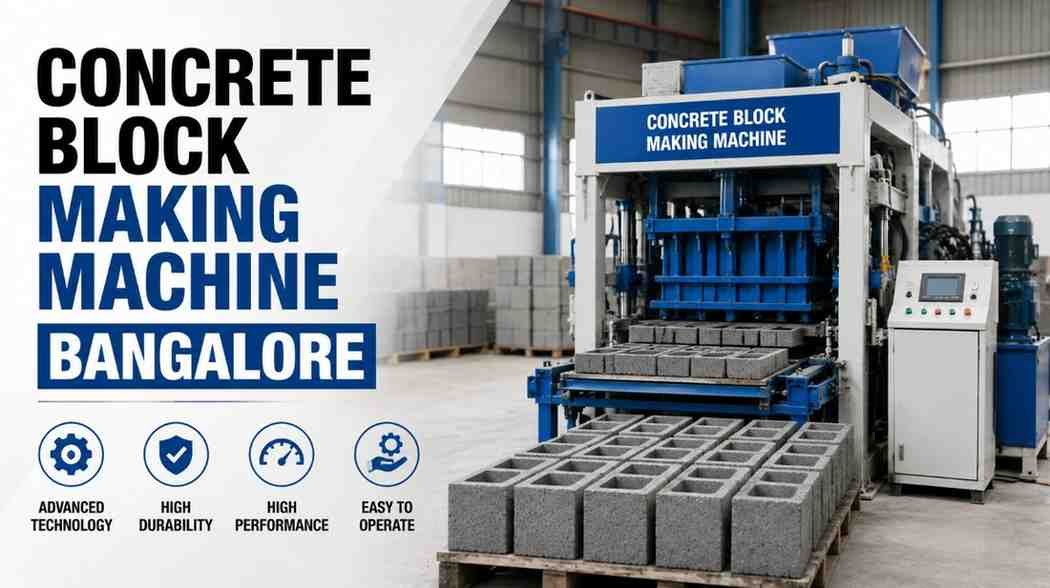
I have spent a good amount of time around concrete block production, not as a machine seller, but as someone who deals with the output these machines create every single day. That perspective matters here, because a machine is only as good as the blocks it produces.
This guide walks you through what actually matters when evaluating a concrete block making machine, the mistakes people commonly make, and why the quality of the final block should guide your decision far more than the machine's specifications sheet alone.
Why This Decision Is Bigger Than Just Buying Equipment
A lot of first-time buyers treat this like buying any other piece of machinery. Compare features, compare output capacity, pick one. In my experience, that approach causes problems down the line.
The machine you choose determines the consistency, strength, and dimensional accuracy of every single block you produce afterward. Get it wrong, and you are not just stuck with a bad machine. You are stuck producing bad blocks, batch after batch, until you fix the underlying issue.
A 2023 industry note from the Construction Industry Development Council pointed out that small and mid-scale block manufacturing units in urban India often face quality inconsistency issues traced directly back to machine calibration and maintenance gaps, not raw material problems. That single insight changes how most buyers should approach this decision.
Types of Concrete Block Making Machines Available in Bangalore
Bangalore's construction equipment market offers a fairly wide range of options, and understanding the categories helps narrow down what actually fits your scale of operation.
Manual or Semi-Automatic Machines
These are typically suited for small operations or businesses just starting out. They require more manual labor and offer lower output, but the upfront investment is generally more manageable.
Fully Automatic Machines
These handle most of the production process independently, from mixing to molding to ejecting finished blocks. Output is significantly higher, but so is the complexity of operation and maintenance.
Hydraulic Press Machines
Known for producing denser, stronger blocks due to higher compaction pressure. These work particularly well for paver blocks and chequered tiles that need to handle vehicle load.
Stationary vs Mobile Machines
Stationary machines are fixed at one production site, while mobile units can move between locations, which is useful for larger infrastructure projects spread across multiple sites.
What to Actually Check Before You Buy
I have noticed that buyers often get distracted by output numbers and miss the details that actually affect long-term performance. Here is a more practical checklist.
- Check the vibration and compaction mechanism, since this directly affects block density and strength
- Ask about mold flexibility, especially if you plan to produce multiple block types like cover blocks, paver tiles, and chequered tiles
- Confirm the machine's maintenance requirements and the availability of spare parts locally in Bangalore
- Look into the manufacturer's after-sales support, since machine downtime directly affects your production schedule
- Request a sample output run, if possible, before finalizing the purchase
When I tried sourcing block samples from different production setups years ago, the difference in compaction quality between high and low pressure machines was immediately visible just by holding two blocks side by side. The denser one had a noticeably different weight and surface finish.
A Real Lesson From the Field
A small manufacturing unit I came across in the outskirts of Bangalore had invested in a low-cost semi-automatic machine to save on upfront costs. Within a year, inconsistent compaction led to a noticeable rejection rate on larger orders, and clients started asking questions about block quality.
They eventually upgraded to a higher compaction machine, and the rejection issues dropped sharply within a few months. The lesson here is simple. Cutting corners on the machine almost always shows up later in the product, and by then, it is a much more expensive problem to fix.
How Machine Quality Connects to Final Block Quality
This is where experience on the production side becomes genuinely useful. A machine with poor vibration control produces blocks with uneven density, which means inconsistent strength and a higher chance of cracking over time.
In my experience working closely with concrete block production standards, the blocks that perform best in the field consistently come from setups where compaction pressure, curing time, and material ratio are all tightly controlled, not just one or two of these factors.
This is also why established manufacturers, including companies like Goyal Cement Blocking, place such heavy emphasis on production consistency across batches rather than focusing purely on output volume. Goyal Cement Blocking's experience supplying concrete cover blocks, paver tiles, and chequered tiles to large infrastructure projects comes from understanding exactly this relationship between equipment, process, and final product quality.
Questions Worth Asking Before You Commit
- What is the actual compaction pressure the machine generates, not just the advertised output capacity
- How does the manufacturer handle servicing and part replacement in the Bangalore region
- Can the machine handle multiple mold types if your product range expands later
- What is the realistic learning curve for your team to operate it efficiently
- Are there existing buyers in Bangalore you can speak to about real-world performance
These questions take a little extra time upfront, but they consistently separate buyers who end up satisfied from those who regret the purchase within the first year.
Common Mistakes to Avoid
- Choosing based purely on output capacity without checking compaction quality
- Ignoring maintenance and spare parts availability until something breaks
- Assuming a single machine type can handle every block category efficiently
- Skipping a trial run or sample output check before finalizing the purchase
- Underestimating the learning curve required for new operators
I have noticed that most regret in this space comes from rushing the decision rather than from picking the wrong brand outright. Slowing down by even a week or two to ask the right questions tends to pay off significantly.
Final Thoughts
A concrete block making machine in Bangalore is not just equipment. It is the foundation of everything your business produces afterward, quite literally. Getting the compaction, mold flexibility, and maintenance support right matters far more than chasing the lowest upfront number.
If your goal is producing blocks that genuinely hold up on real construction sites, it helps to think the way established block manufacturers do. Companies like Goyal Cement Blocking, with years of experience producing concrete cover blocks, paver tiles, and precast concrete products for infrastructure and institutional clients, understand this relationship between equipment and output better than most.
Take your time, ask the uncomfortable questions, and prioritize consistency over speed. The machine you choose today will quietly shape the quality of every block your business produces for years to come.