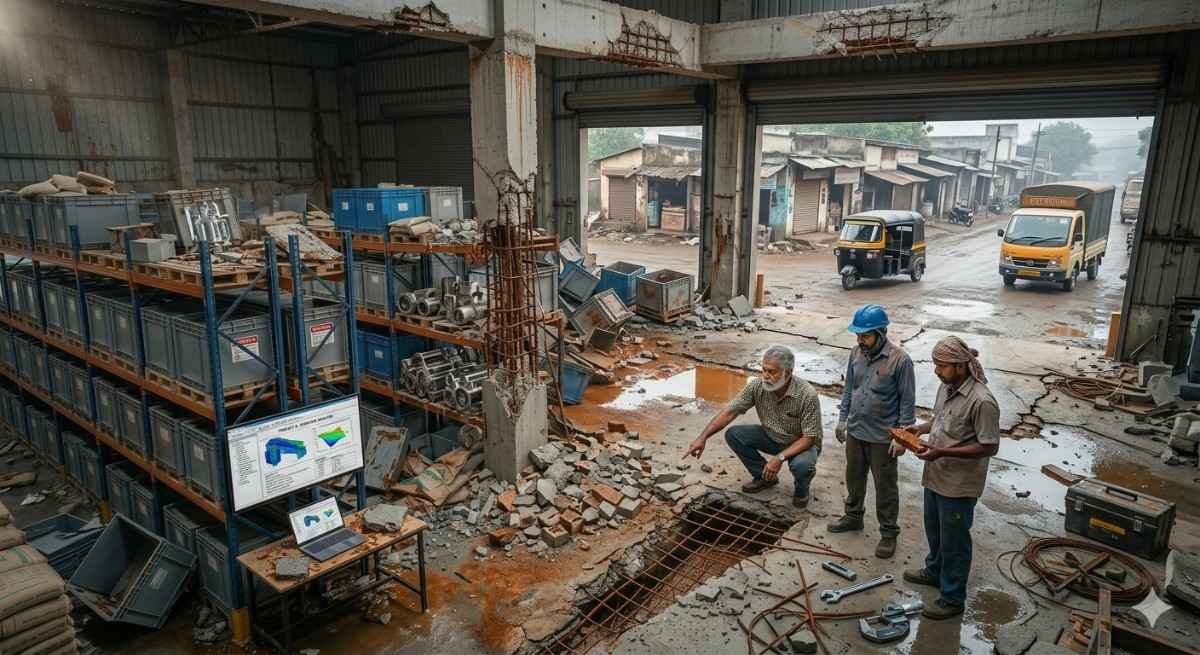
It starts with a small decision on site. The cover blocks have not arrived yet. The concrete is ready. The crew is standing by. Someone says, let us just use a few broken brick pieces or get on with it without spacers. The pour happens. The structure looks fine.
For the next two or three years, everything seems normal.
Then the cracks appear.
Skipping concrete cover blocks is one of the most common and most costly mistakes made in RCC construction across India. It does not cause immediate visible damage, which is exactly why it is so dangerous. The consequences build quietly inside the structure and surface only when the damage is already severe and expensive to fix.
This blog explains exactly what happens when you skip concrete cover blocks, why the damage is worse than most builders expect, and what you can do to make sure it never happens on your site.
What Are Concrete Cover Blocks and What Do They Actually Do
Before understanding the consequences of skipping them, it helps to understand what concrete cover blocks actually do inside an RCC structure.
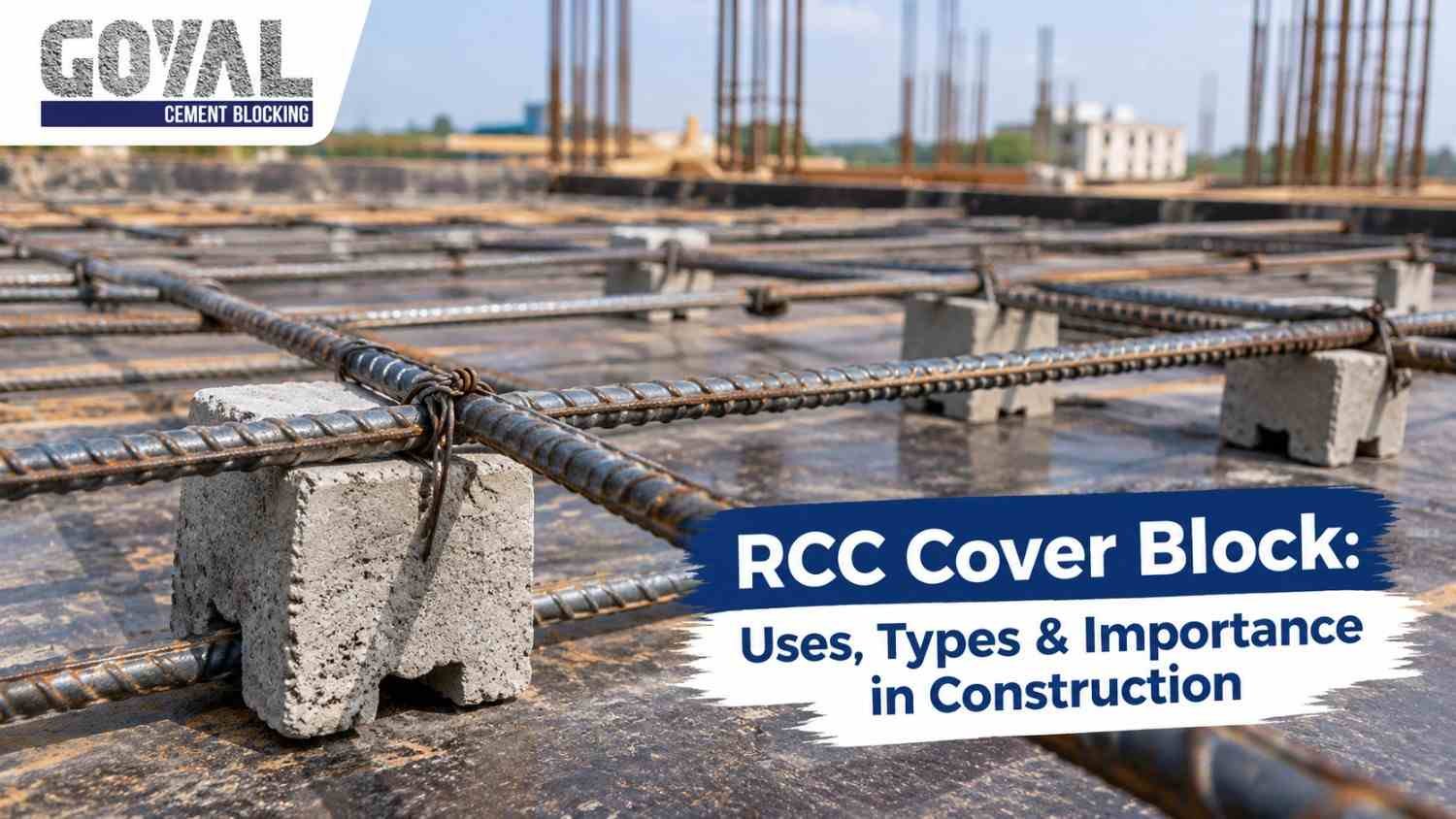
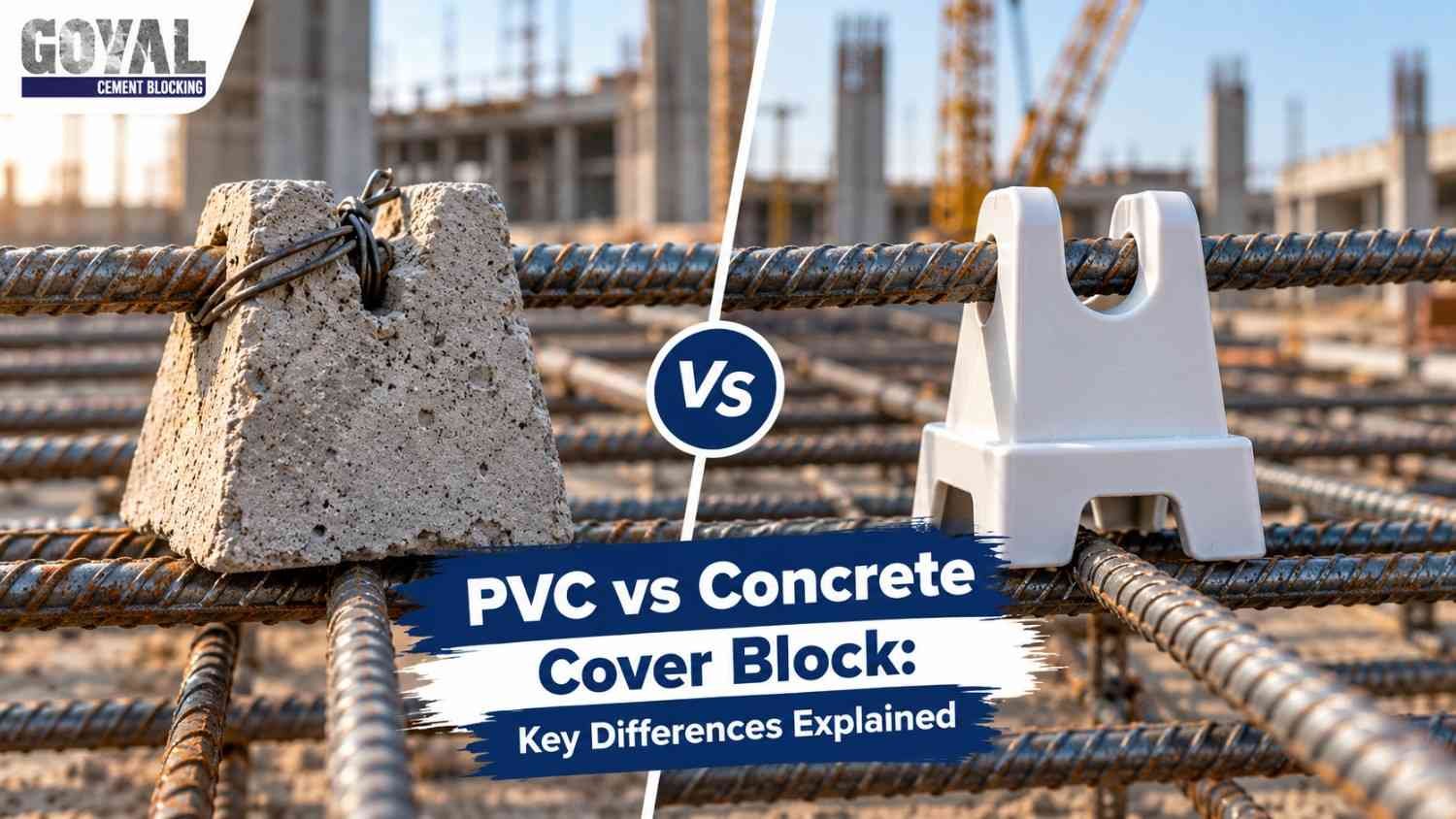
A concrete cover block is a small precast block made from cement mortar. It is placed between the steel reinforcement bars and the formwork before concrete is poured. Its purpose is to hold the steel at a fixed, precise distance from the outer surface of the finished structure.
That distance is called concrete cover. It is the layer of hardened concrete that sits between the steel bar and the outside world.
Think of it as a shield. The steel inside your slab, beam, column, or foundation is incredibly strong under tension. But it has one serious weakness. It corrodes when it comes into contact with moisture, oxygen, and chemicals. Concrete cover is what keeps those elements away from the steel.
Concrete cover blocks are the tools that create and maintain that cover during the most critical phase of construction, which is when the wet concrete is being poured and before it hardens into its final position.
Without them, the steel has no guaranteed distance from the surface. It can shift, drop, or sit unevenly. And once the concrete hardens, whatever position the steel is in becomes permanent.
Why Builders Skip Concrete Cover Blocks and Why That Logic is Flawed
There are a few common reasons why cover blocks get skipped on site. Understanding them helps prevent the mistake from happening.
The blocks did not arrive on time. Supply chain delays are real. But pouring concrete without cover blocks is never the right solution. The pour should wait or the team should source an emergency supply before proceeding.
The team used makeshift alternatives. Broken bricks, stone chips, and tile pieces are the most common substitutes. The problem is that these materials have completely random heights. One piece might be 18mm, the next 27mm, and the one after that 12mm. The result is a slab where the steel cover varies wildly across the entire surface.
The site engineer or supervisor was not present. On many smaller construction sites, cover blocks are only placed when a supervisor specifically instructs it. When no one is watching, workers skip the step to save time.
The builder did not think it mattered. This is the most dangerous reason. Many first-time builders and even some experienced contractors genuinely underestimate the role of cover blocks because the structure looks the same with or without them after the pour.
In every one of these cases, the logic is flawed. The visible result may be identical. But what is happening inside the concrete is completely different.
What Actually Happens When You Skip Concrete Cover Blocks
The Steel Drops to the Wrong Position
When concrete cover blocks are not present, there is nothing holding the reinforcement bars at the correct height inside the formwork. As workers walk across the reinforcement mesh, as the concrete is poured and flows across the bars, and as the vibrator moves through the mix, the steel shifts.
In most cases, the bars drop toward the bottom of the formwork. A slab designed with 20mm cover at the bottom may end up with only 5mm to 10mm of concrete between the steel and the surface.
This is not a minor deviation. At 5mm cover, moisture from rain, cleaning water, or even humid air can reach the steel within a few years.
Corrosion Begins From Inside
Once moisture reaches the steel, the corrosion process begins. Steel oxidises in the presence of water and oxygen, forming iron oxide, which is rust. Rust has a volume roughly three times greater than the original steel it forms from.
As rust expands inside the concrete, it creates internal pressure. This pressure pushes outward against the surrounding concrete. The concrete, which is strong in compression but weak in tension, begins to crack from the inside.
These cracks are not random. They typically follow the path of the reinforcement bars, appearing as long, straight lines on the surface of slabs, beams, or columns. By the time these cracks are visible, the corrosion has already been progressing for years.
Concrete Spalling Follows
As the cracks widen, the thin layer of concrete between the steel and the surface begins to separate and fall away. This is called spalling. It is the most visible and dramatic sign of cover failure.
In a roof slab, spalling means chunks of concrete falling from the ceiling below. In a column, it means the outer concrete layer peeling away to reveal rusty bars beneath. In a beam, it can mean loss of load-carrying capacity in the most structurally critical element of the floor system.
Spalling is not just an aesthetic problem. A spalled column or beam is a structurally compromised element. In severe cases, it is a safety risk.
The Structure Loses Designed Strength
Structural engineers calculate the load-bearing capacity of slabs, beams, and columns based on the assumption that the reinforcement is exactly where it is drawn on the structural plan. That means correct cover depth, correct bar diameter, and correct spacing.
When the steel has moved because there were no concrete cover blocks holding it in place, the actual structural capacity of the element is different from the designed capacity. In most cases it is lower.
A slab designed to carry 300 kg per square metre may actually only be able to carry 220 kg per square metre because the effective depth of the reinforcement has changed. This reduced capacity may not cause immediate failure, but it shortens the safe working life of the structure and increases the risk of problems under heavy or repeated loading.
How the Damage Shows Up in Different Structural Elements
In Slabs
The most common symptom in slabs is brown or rust-coloured staining on the underside of the slab or the ceiling of the floor below. This is followed by hairline cracks along the bar lines, then wider cracks, and eventually spalling.
In roof slabs exposed to rain, the process is faster. Water enters through the surface, travels to the steel, and accelerates corrosion. In buildings with flat roofs that collect water, the damage can begin within two to three years of construction if cover blocks were skipped.
In Beams
Beams are more exposed than slabs in many configurations, particularly in open corridors, balconies, and external structures. Beam corrosion typically shows up as longitudinal cracks along the bottom and sides of the beam.
Because beams carry the load of the slab above and transfer it to the columns, a structurally compromised beam is a serious concern. Engineers often recommend immediate shoring and repair when beam corrosion reaches an advanced stage.
In Columns
Columns are the vertical load carriers of the building. When concrete cover is insufficient in a column, the vertical reinforcement bars near the surface corrode first. This shows up as vertical cracks running along the column face, followed by spalling of the outer concrete layer.
A column that has lost its cover concrete is visually alarming and structurally significant. Repairing a corroded column is a complex and costly process involving concrete removal, steel treatment, and recasting or jacketing.
In Foundations and Footings
Foundation damage is the hardest to detect and the most expensive to repair. Footings are buried underground, often in soil that contains moisture and chemicals. When the required 50mm cover is not maintained due to absent or wrong-sized concrete cover blocks, the footing steel begins to corrode from below.
By the time the signs of foundation damage reach the surface, such as diagonal cracks in walls or uneven floor settlement, the underground damage is usually extensive.
The Cost of Skipping Concrete Cover Blocks
Here is a realistic look at repair costs when cover block failure leads to structural damage:
| Type of Damage | Estimated Repair Cost |
|---|---|
| Surface crack sealing on a slab | Rs. 30,000 to Rs. 80,000 |
| Full slab soffit treatment and waterproofing | Rs. 1 lakh to Rs. 3 lakh |
| Beam repair with steel treatment and recasting | Rs. 80,000 to Rs. 2.5 lakh per beam |
| Column jacketing for corrosion damage | Rs. 1.5 lakh to Rs. 5 lakh per column |
| Foundation repair and underpinning | Rs. 5 lakh to Rs. 20 lakh or more |
The cost of quality concrete cover blocks for an entire residential building is typically between Rs. 2,000 and Rs. 8,000 depending on the size of the project. The repair costs above are for single elements. A building with multiple affected elements can easily cross Rs. 20 lakh to Rs. 50 lakh in repairs.
How to Ensure Concrete Cover is Always Maintained on Your Site
Always Have Cover Blocks Ready Before the Pour
Never begin a concrete pour without confirming that cover blocks of the correct size are available and placed. Make this a mandatory checklist item before any pour is approved.
Use the Right Size for Each Element
Match the cover block size to the IS 456:2000 requirement for each structural element. Do not use the same size block for every application. A 20mm block is right for a slab but completely wrong for a column or foundation.
Inspect Before Pouring
A quick visual inspection before the pour takes less than 10 minutes. Walk the reinforcement and confirm that cover blocks are present at regular intervals, typically every 500mm to 800mm, and that they appear solid and properly positioned.
Buy From a Manufacturer, Not a Roadside Vendor
Quality matters as much as presence. A cover block that crumbles during the pour is as good as no cover block at all. Always source from a manufacturer who produces consistently sized, properly cured blocks with verified compressive strength.
Why Goyal Cement Blocking Is the Right Partner for Your Construction Site
Goyal Cement Blocking, based in Hodal, Haryana, is one of North India's most trusted manufacturers of concrete cover blocks and related precast construction materials. With over 8 years of manufacturing experience and a client list that includes L and T, Tata Projects, NCC, AFCONS, IndianOil, and ISGEC, GCB has a proven track record of supplying quality products that perform on the most demanding construction sites in India.
Here is what you get when you source concrete cover blocks from Goyal Cement Blocking:
- Pre-manufactured blocks with consistent sizing across every batch
- Available in all standard IS code sizes from 15mm to 75mm
- High compressive strength to withstand site loads and concrete pour conditions
- Plain and wire-bound variants for all structural applications
- Low water absorption for long-term performance in moisture-exposed environments
- Reliable bulk supply for residential, commercial, and infrastructure projects
- Quick delivery to sites across Haryana, Delhi NCR, and surrounding regions
When your structure needs to last 50 years or more, the cover blocks inside it need to be right. GCB makes sure they are.
Frequently Asked Questions
Q1. Can I tell if concrete cover blocks were skipped after the slab has already been cast?
Not directly, but there are signs. If rust stains, hairline cracks along bar lines, or damp patches appear on the slab soffit within two to five years of construction, inadequate cover is a likely cause. A structural engineer can use a cover meter, a non-destructive testing device, to measure the actual cover depth without breaking the concrete.
Q2. What is the minimum cover required for a roof slab in India?
As per IS 456:2000, the minimum cover for a roof slab in moderate exposure conditions is 20mm. In severe or very severe exposure conditions such as coastal areas or industrial zones, this requirement increases. Always confirm with your structural engineer based on the specific exposure condition of your project.
Q3. Are broken bricks or tiles acceptable substitutes for concrete cover blocks?
No. Broken bricks and tiles have inconsistent heights, unknown compressive strength, and no quality control. They can crumble under the weight of reinforcement or during the pour, causing the steel to shift. Using manufactured concrete cover blocks is the only reliable way to maintain correct and consistent cover depth.
Q4. How far apart should concrete cover blocks be placed?
The general guideline is to place cover blocks every 500mm to 800mm in both directions under reinforcement mesh. For individual bars, a cover block should be placed at every point where the bar is unsupported. Your structural engineer or site supervisor can specify the exact spacing based on bar diameter and slab thickness.
Q5. What should I do if I suspect cover blocks were skipped during a pour that has already hardened?
Contact a structural engineer immediately for an assessment. They can use a cover meter to check actual cover depths across the element. If cover is found to be insufficient, surface protection treatments, waterproof coatings, or in serious cases, concrete removal and recasting may be recommended depending on the severity.
Conclusion
Concrete cover blocks are not optional. They are not a formality. They are one of the most functionally critical components in any RCC structure, and skipping them is a decision that the building will pay for over decades.
The corrosion, cracking, spalling, and structural weakness that follow from missing or inadequate concrete cover are entirely preventable. The solution costs very little and takes almost no extra time on site. The consequences of ignoring it can run into lakhs of rupees in repairs and years of structural headaches.
Every contractor, builder, and site engineer has the responsibility to ensure that correct concrete cover blocks are in place before every single pour. Not most pours. Every pour.
For quality concrete cover blocks that are correctly sized, consistently made, and trusted by India's top construction companies, reach out to Goyal Cement Blocking today.