When people think about RCC (Reinforced Cement Concrete) structures, most of the attention naturally goes to cement, concrete mix and steel bars. But there's one small, often-overlooked component that quietly holds this entire system together — the cover block.
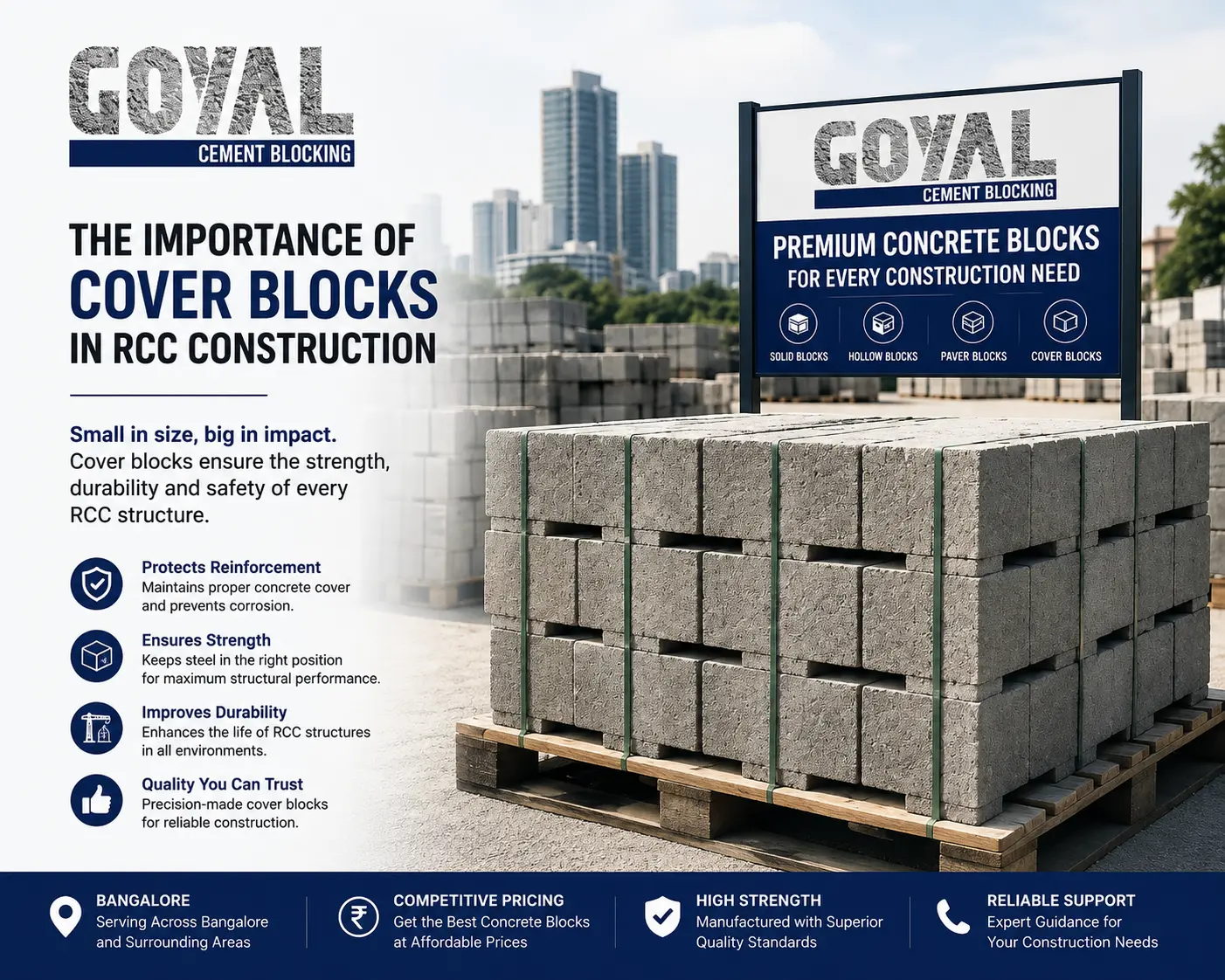
A cover block may look like a tiny, insignificant piece of material, but its role is critical. It maintains the required gap between the reinforcement steel and the outer surface of the concrete — a gap known as "concrete cover." This cover protects the reinforcement and ensures the RCC member performs exactly as it was designed to.
From homes and commercial buildings to bridges, industrial structures and foundations, correct reinforcement placement is non-negotiable. That's exactly why understanding the importance of cover blocks in RCC construction matters — for builders, contractors, site engineers, and anyone directly involved in construction quality.
What Is a Cover Block?
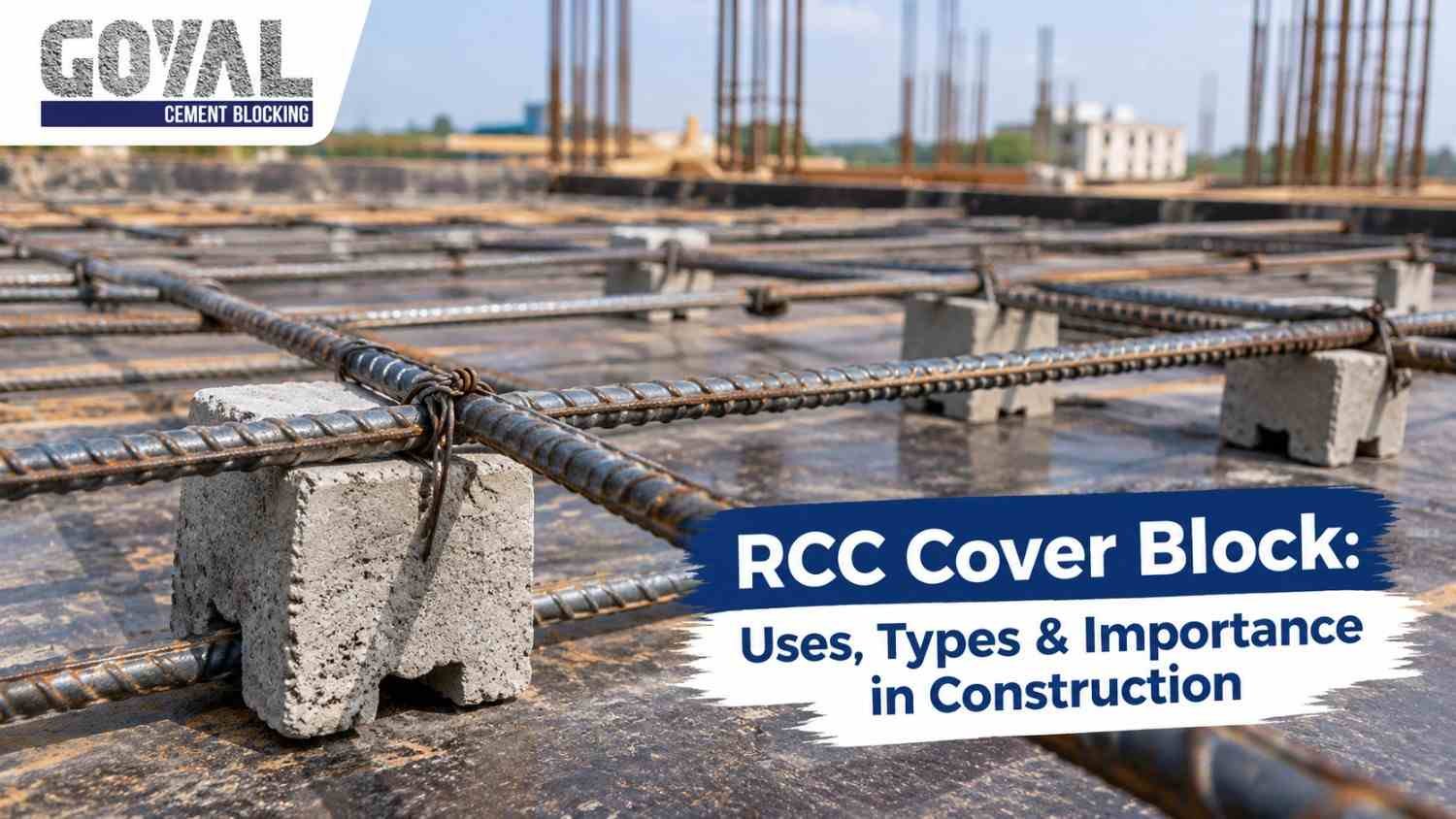
A cover block is a small spacer placed between the reinforcement bars and the formwork before concreting begins. Its job is simple but essential — keep the reinforcement at the exact distance specified in the structural drawings.
Think of it this way: if the steel bars inside a slab, beam or column shift too close to the surface, they won't get enough protective concrete around them. Cover blocks physically prevent this from happening.
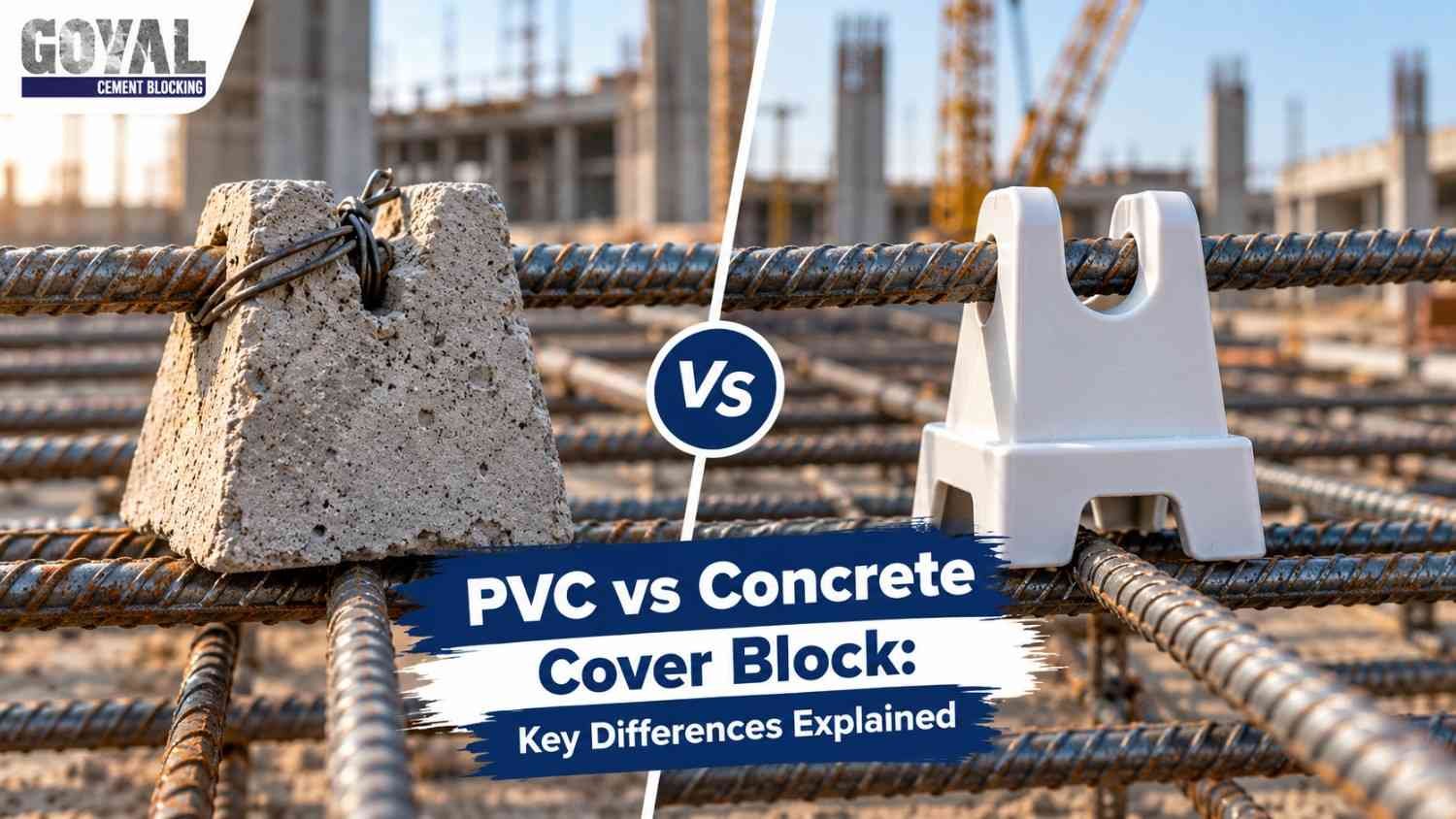
They come in different shapes, sizes and materials depending on the application. Concrete or cement-based cover blocks are the most widely used in Indian RCC construction, while PVC cover blocks are chosen for certain specific requirements. Whatever the type, the size should always be picked based on the structural drawing, exposure condition and engineering requirement — never by convenience.
Why Are Cover Blocks Important in RCC Construction?
RCC works because concrete and steel complement each other — concrete handles compression, steel handles tension. For this partnership to function properly, reinforcement must stay in its designed position with adequate concrete surrounding it. This is exactly where a good quality cover block becomes essential. A correctly selected and placed cover block helps to:
- Maintain the required concrete cover
- Keep reinforcement fixed at its intended position
- Reduce the risk of exposed steel
- Protect reinforcement from moisture and weather exposure
- Support consistent placement across the site
- Improve overall construction quality and control
- Cut down problems caused by improvised, makeshift spacers
The value of a cover block isn't that it bears structural load — it's that it keeps the reinforcement exactly where the design intends it to be.
1. They Maintain the Correct Concrete Cover
The primary function of a cover block is maintaining the correct distance between reinforcement and the concrete surface. During fixing, if bars rest directly on the shuttering or shift while concreting, the specified cover gets compromised. A properly sized block creates a fixed physical gap — for instance, cover blocks placed beneath a slab's reinforcement mesh keep the steel at the required level throughout the pour.
2. They Protect Reinforcement From Corrosion
Steel needs protection from moisture, air and chlorides that cause corrosion. Concrete offers that protection — but only when sufficient cover exists. When reinforcement sits too close to the surface, the protective layer thins out, letting moisture and aggressive elements reach the steel faster. Corrosion expands the steel, which creates internal pressure and eventually leads to cracking and spalling. This is precisely why cover blocks should never be treated as a "small, skippable" site item.
3. They Keep Reinforcement in Position During Concreting
Pouring concrete is an active process — workers move around, concrete flows, vibrators compact the mix. Without support, reinforcement can easily shift. Even a small movement changes the actual cover achieved. Cover blocks hold the reinforcement steady before and during pouring, which matters across slabs, beams, columns and foundations alike.
4. They Maintain Uniformity Across the Structure
Using random materials — broken bricks, stone chips, debris — as makeshift spacers leads to inconsistent cover across the structure. Manufactured cover blocks come in defined, consistent sizes, making it far easier for site teams to maintain uniform cover throughout — though inspection by engineers is still a must.
5. Cover Blocks Are Used Across Different RCC Applications
- Slabs: Placed below the reinforcement mesh to prevent sagging onto the shuttering.
- Beams: Maintain distance for longitudinal bars and stirrups.
- Columns: Support vertical reinforcement and ties against the formwork.
- Foundations & Footings: Critical given constant soil and moisture exposure.
6. They Reduce Dependence on Improvised Spacers
Broken bricks or stone pieces may seem convenient, but they don't offer consistent dimensions or reliable support. A purpose-made cover block is built specifically to create a defined, dependable separation between steel and formwork — a far more reliable choice for any serious RCC project.
7. They Support Better Quality Control
Good construction means verifying every stage before moving ahead. Before pouring, engineers can check reinforcement spacing, cover block size and placement, stability, and formwork condition. Because cover blocks come in a fixed, known size, this verification becomes far easier — improving site discipline overall.
8. The Right Size Matters
There's no one-size-fits-all cover block. Requirements vary by structural element and exposure condition — a slab's needs differ from a beam's, a column's, or a foundation's. Always choose based on the approved structural drawing.
For high-quality, precision-manufactured concrete cover blocks trusted across residential, commercial and industrial RCC projects, visit Goyal Cement Blocking.
Frequently Asked Questions
Quick answers to what people usually ask.