A bored pile is cast underground, where nobody can see the steel cage once the concrete goes in. That is exactly why the pile cover block matters: it is the small precast spacer that holds the reinforcement away from the soil face while the pile is poured. If the cage touches the wall of the bore, the steel loses its protective concrete layer on that side, and moisture in the soil or groundwater gets a direct path to the bars.
This guide is written for site engineers, contractors and purchase managers who need to choose, specify and order pile cover blocks without guesswork. It explains what a pile cover block is, how it differs from the cover blocks used in slabs and columns, which sizes and shapes are common, how many blocks a cage needs, and what to check before you accept a delivery. Goyal Cement Blocking manufactures cover blocks for reinforced concrete work at our plant in Palwal, Haryana, so the points below are written from a manufacturer point of view.
What Is a Pile Cover Block?
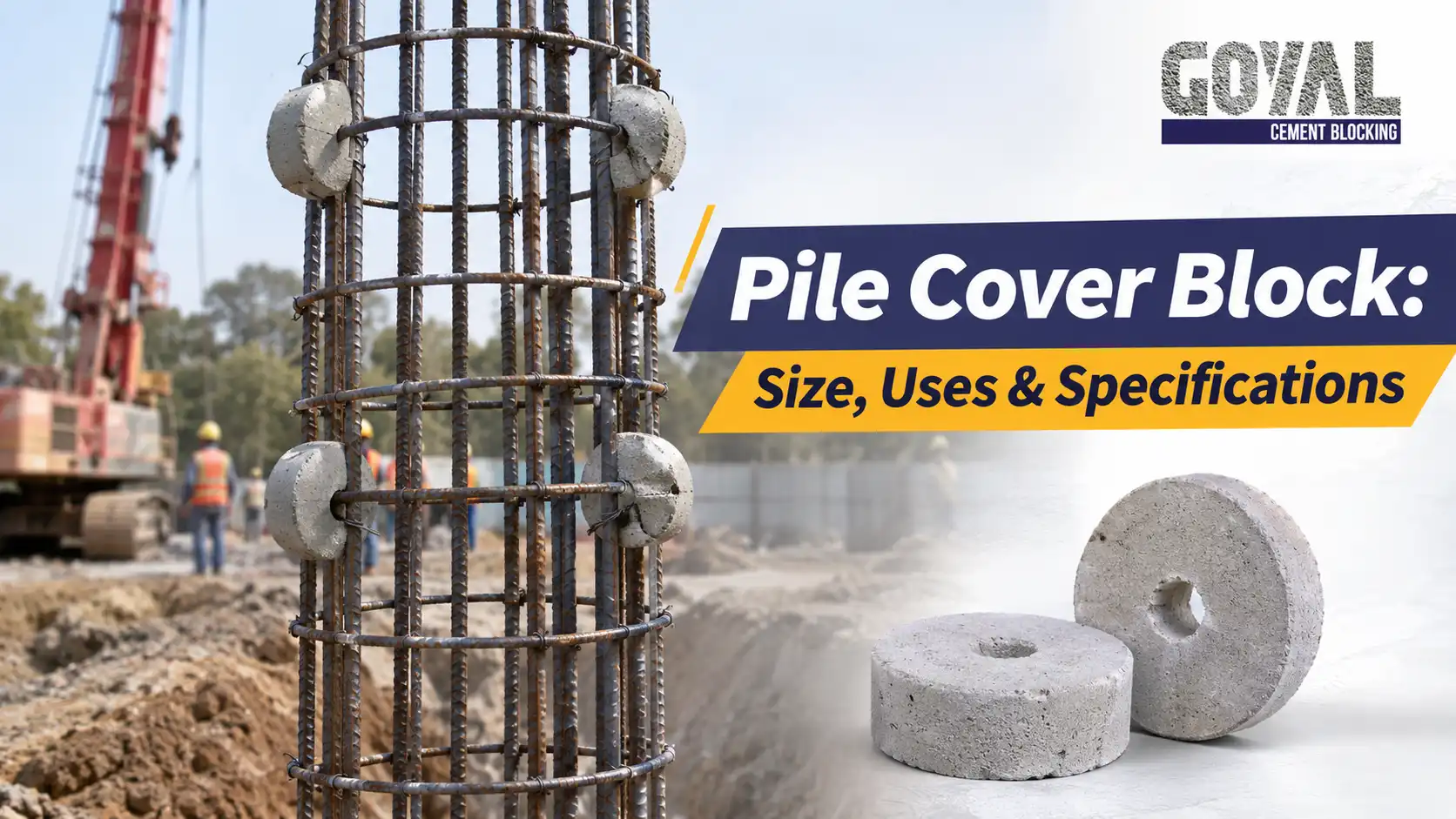
A pile cover block is a precast concrete spacer, usually round or wheel shaped, that is tied to the outside of a pile reinforcement cage. Its thickness equals the concrete cover the designer wants between the main bars and the surface of the pile. When the cage is lowered into the bore, the blocks touch the bore wall or the casing and keep the cage centred.
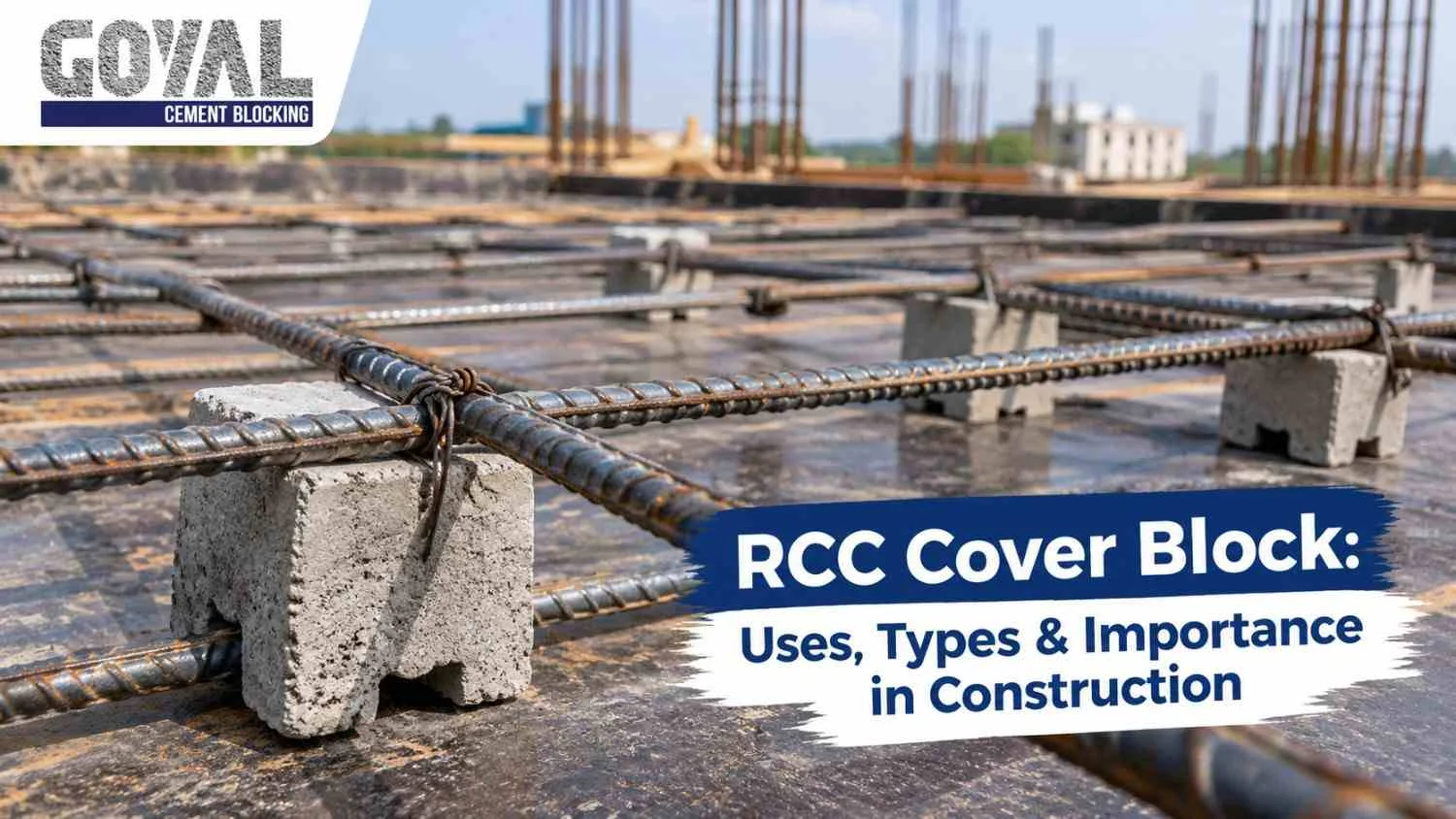
The reason this gap matters is simple. Steel inside concrete is protected by the alkaline concrete around it. A pile sits in damp ground for its whole life, and in some soils the groundwater carries salts that attack steel faster. A uniform, full thickness cover is the first line of defence. For a wider explanation of why cover protects structures, read our blog on the uses, types and importance of RCC cover blocks.
How Pile Cover Blocks Differ From Slab and Column Blocks
People often assume one cover block fits every job. In practice the working conditions are very different.
In a slab, the block sits under the bars on flat formwork and carries the weight of the reinforcement and the workers walking over it. Our guide to the cover block for slab covers that case in detail. In a pile, the block is fixed on the side of a tall vertical cage and has to slide against the soil or casing while the cage goes down. That is why pile blocks have a rounded outer profile and a firm tie point. A cube shaped slab block would snag, rotate or break off during lowering.
Because the loads and movement are different, a block that works well in a slab should not simply be reused in a pile. Use a block made for the purpose.
Common Types and Shapes of Pile Cover Blocks
Wheel or circular concrete blocks
This is the most common type for bored piles. The block is a thick disc with a central hole or groove, so it can be threaded or tied onto a vertical bar. The round edge rolls along the bore wall instead of digging into it, which reduces the chance of the cage catching during placement.
Concrete versus plastic spacers
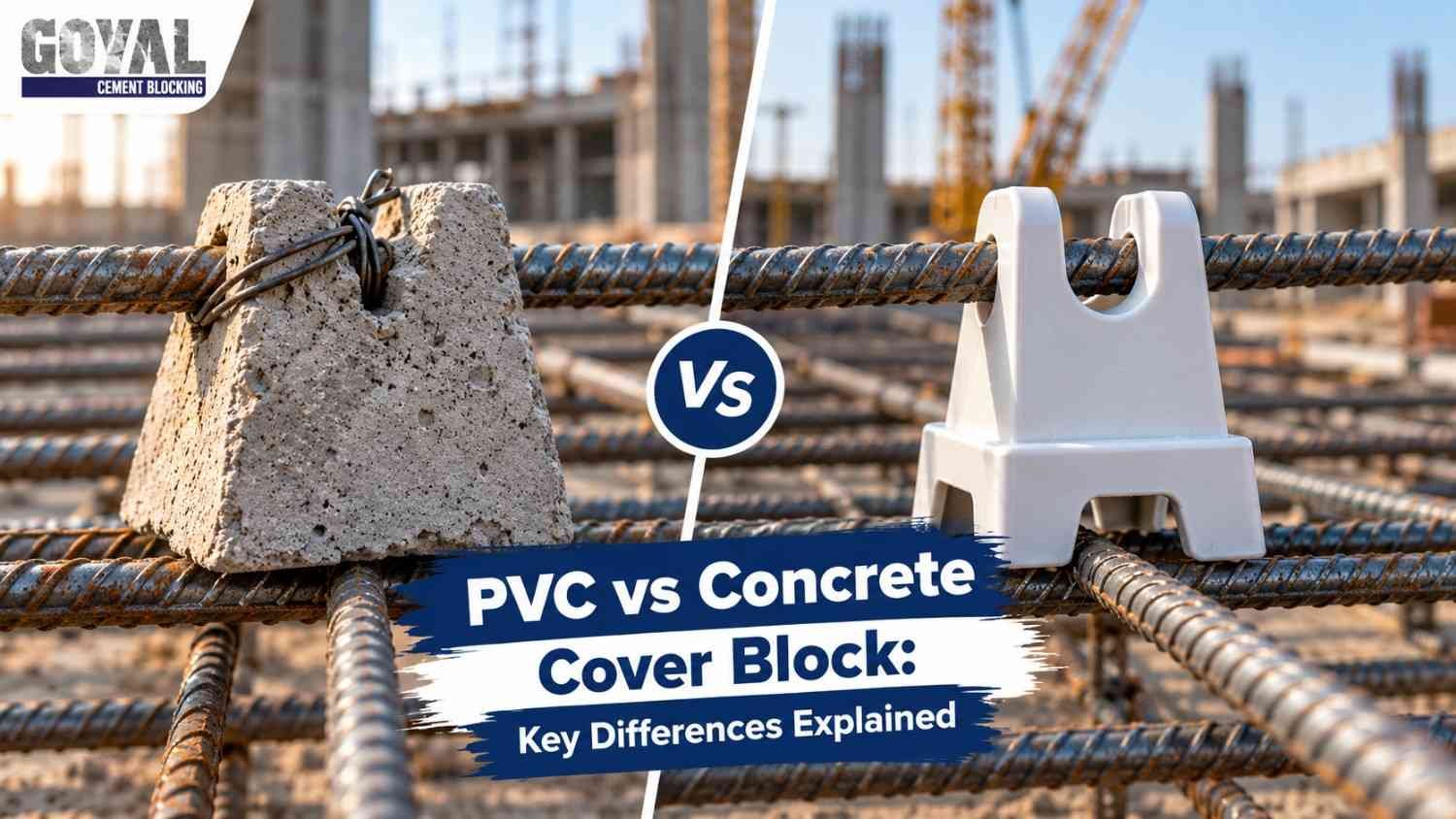
Concrete blocks are widely specified for piles because they have a similar nature to the pile concrete and do not leave a different material against the surface. Plastic wheel spacers are also sold, and some jobs permit them. The right choice depends on your specification, so confirm it before ordering. Our comparison of PVC and concrete cover blocks helps you weigh the two, and our PVC cover block range is available if your project allows plastic.
Size based on the cover thickness
Pile cover blocks are made to the cover thickness you need. Many project specifications ask for a minimum clear cover of 50 mm for bored cast in situ piles and a higher figure, often 75 mm, where soil or groundwater is aggressive. Treat those numbers as typical examples only. Your structural drawing and the applicable code, such as IS 2911 for pile foundations, set the final value, and the block must match it exactly.
Specification Checklist Before You Order
Send the supplier a clear specification, not just a quantity. A good order includes the following details.
- The required cover thickness in millimetres, taken from the drawing.
- The pile diameter and the diameter of the main reinforcement bars.
- The outer diameter and width of the block, and the size of the central hole or groove for tie wire.
- The concrete grade of the block, which should not be weaker than the pile concrete.
- Dimensional tolerance, so every block gives the same cover.
- The total quantity including spare, and the delivery location and date.
A supplier who asks you these questions before quoting is usually a supplier who understands the job. If a quote comes back without any of them, ask again. Our blog on what to ask your concrete cover block supplier lists more questions worth raising.
How Many Pile Cover Blocks Does One Cage Need?
The number and spacing of blocks are decided by the design engineer, because they depend on the cage length, bar size and pile diameter. A common arrangement is a ring of three or four blocks around the cage at one level, repeated at fixed intervals along its length. More blocks in a ring keep the cage better centred. Too few allow the cage to lean to one side and touch the bore.
Here is a simple illustration. Suppose a cage is 12 m long and the drawing calls for a ring every 3 m. That gives 5 ring positions including both ends. With four blocks per ring, you need 20 blocks for the cage. Adding about 10 percent spare for breakage and handling brings the order to 22 blocks per pile. For a site with 40 piles, that is 880 blocks. This is only a worked example. Always use the spacing shown on your own drawings.
How to Fix Pile Cover Blocks on the Cage
Correct fixing is as important as the block itself. A well made block that slips down the cage does nothing.
- Check the cage first. Confirm bar spacing, ring bars and overall diameter before any spacer goes on.
- Mark the ring positions. Measure along the main bars and mark each level so the spacing is even.
- Tie each block firmly. Pass binding wire through the hole or around the groove and tie it to the vertical bar so the block cannot slide.
- Keep blocks aligned in each ring. Place them at equal angles around the cage so it stays centred.
- Lower the cage slowly. Watch for any block that shifts, and correct it before the concrete is placed.
For general placement habits that apply to any reinforced concrete work, see how to place concrete cover blocks the right way.
Common Mistakes on Site
Most pile cover problems come from a handful of repeated mistakes.
- Using broken bricks, stone chips or mortar lumps because blocks have not arrived.
- Ordering a block of the wrong thickness, which gives less cover than the design needs.
- Fixing too few blocks, so the cage leans against one side of the bore.
- Tying blocks loosely, so they slide down while the cage is being lowered.
- Accepting cracked or chipped blocks that crumble in the bore.
Every one of these is cheap to avoid and expensive to fix after the pile is cast. Since a pile cannot be inspected once it is poured, prevention is the only reliable method.
How to Check Pile Cover Block Quality on Delivery
A quick inspection at the gate saves trouble later. Pick a sample of blocks from different stacks and check the following.
- Dimensions: measure several blocks with a calliper or tape and compare them with the order.
- Surface and edges: reject blocks with cracks, chipped edges or loose crumbs.
- Consistency: blocks from one batch should look and weigh alike.
- Tie hole: confirm the hole or groove is clear and large enough for binding wire.
- Curing: ask how long the blocks were cured before dispatch, since young blocks are weaker.
Our article on concrete cover blocks in high rise construction shows how the same quality thinking applies to deep foundations and tall structures.
Pile Cover Blocks From Goyal Cement Blocking
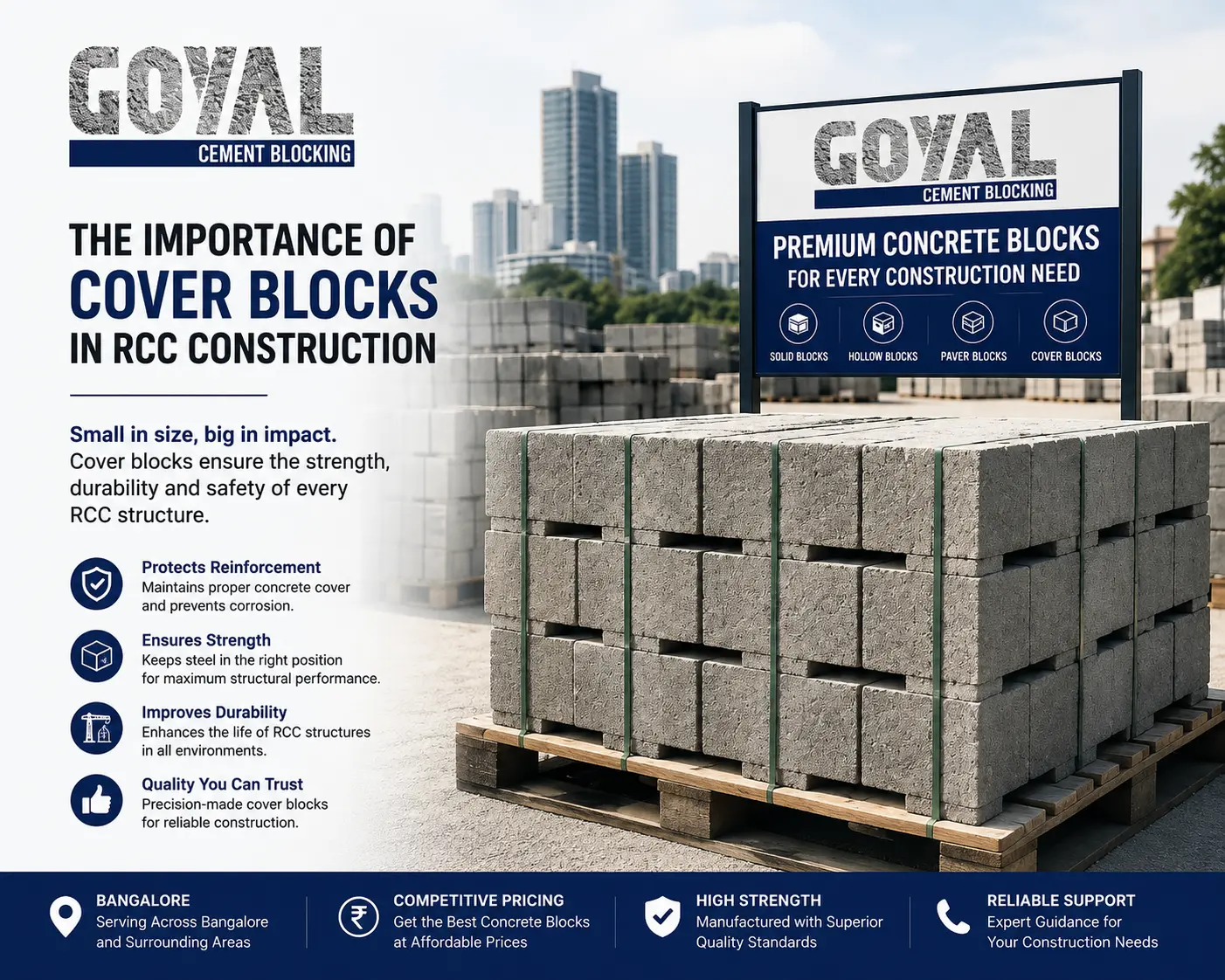
Our pilling block range is made for pile foundation work, and our wider concrete cover block range covers beams, columns, slabs and footings. We make blocks to the cover thickness you specify, and our location list shows the cities we supply, including Delhi NCR, Mumbai, Pune, Kolkata and Ahmedabad.
To get a quote, share your cover thickness, pile diameter, bar size and quantity through our contact page. If you are comparing suppliers, keep the specification checklist above in front of you. It will tell you quickly who understands pile work.
Key Points to Remember
A pile cover block protects the one part of a foundation that you can never inspect later. Choose the right type, match the thickness to the drawing, fix the blocks firmly and check quality on delivery. Those four habits give every pile the full concrete cover the designer intended.
Need pile cover blocks for your next project? Send us your specification and quantity, and our team will respond with a quote. Contact Goyal Cement Blocking today.
Frequently Asked Questions
Quick answers to what people usually ask.