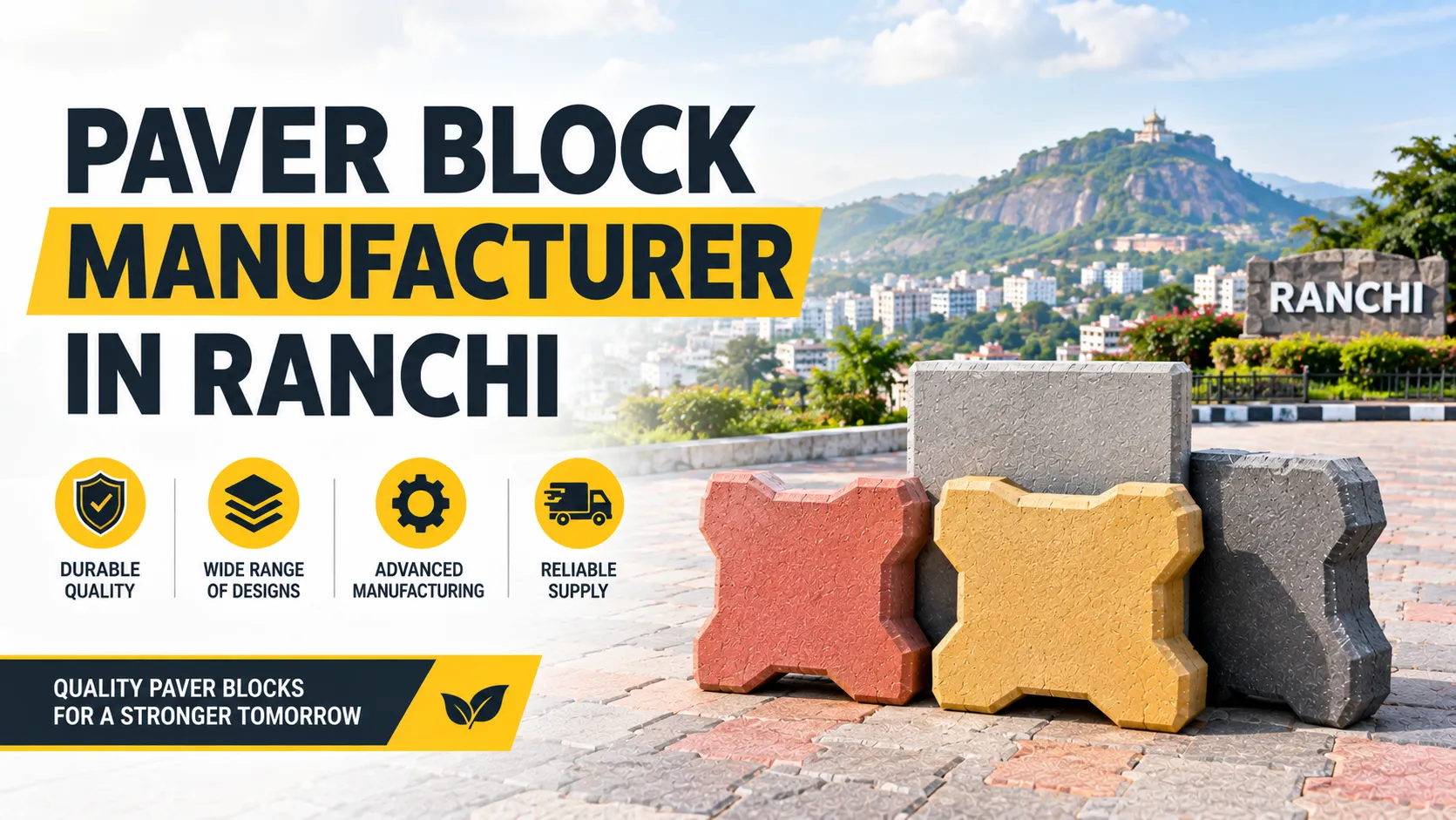
This article aims to discuss the importance of reliable manufacturers, the products that they offer and how one can establish a connection for the required supply.
Why it's Beneficial to Connect with Paver Block Manufacturers Directly Essay
There are several advantages of connecting with paver block manufacturers directly instead of buying through a dealer. These benefits could include such things as manufacturer's control over production process, increased flexibility and responsiveness to your needs, and decreased overall complexity and risks of the supply chain among others.
Since the manufacturing process is under the direct control of the manufacturer, you can be assured of having a consistent product with no variations from the seller to seller. Instead, you are likely to get blocks of the same quality, because all of them come from a single manufacturer.
Manufacturers are often much better at fulfilling specific and unique requests than a dealer with a limited supply of blocks. In addition, they often offer technical support and advice about which materials to choose for your specific project. Lastly, the manufacturers are usually more convenient to deal with and easier to establish a long-term relationship with due to the complexity of dealing with multiple dealers at once.
Manufacturing Process and Quality Control
A closer examination of the production process of paver blocks will explain the difference in their quality.
First, the production process involves a series of steps before the blocks are ready for sale. During the manufacturing process, cement, fine and coarse aggregates, and water are mixed in proportion to produce blocks of standard quality. It is evident that manufacturers who use standard materials and conduct routine tests to ensure consistency produce high-quality blocks.
Moreover, mixing machines should be used during blending to ensure that all components are thoroughly combined for a predetermined period. The resulting homogenous mixture should be fed into casting machines where blocks are produced with standard dimensions. The casting process also utilizes vibration to remove excess air. This step ensures that there are no hollow spaces within the blocks.
The blocks should then be cured for a period of 24-48 hours before they can be handled. This stage is critical to the manufacturing process since it allows the concrete mix to gain strength. Quality manufacturers should ensure that their products are cured for a longer time before they are dispatched to contractors and engineers. Lastly, quality control tests should be performed to measure the blocks’ dimensions, compressive strength, water absorption rate, and visual appearance. These tests guarantee that a manufacturer produces consistent, reliable blocks that meet the desired specifications. Blocks that have passed all stages of production are suitable for use in construction projects after being tested on-site.
From my personal experience, manufacturers that emphasize the need for quality testing at every stage produce blocks with superior qualities compared to other companies that focus on fast production without undergoing the testing process.
Product Range Offered by Manufacturers
Paver block manufacturers usually offer several categories of blocks.
Concrete paver blocks are the most common products, among which Standard Concrete Paver Blocks are the most popular. In this category, blocks are typically 100 x 100 mm, 100 x 200 mm, 150 x 150 mm, 200 x 200 mm in size and 60, 70, or 80 mm thick.
Colored and decorative blocks also belong to the most common types of paver blocks. Blocks of this category are available in a wide range of colors and sizes and have an ornamental surface. The surfaces may have different patterns and textures.
Interlocking Paver Tiles Blocks are designed for commercial construction sites and have special shapes to hold each other in place when installed. Thus, such blocks are useful for heavy traffic areas as they resist pressure.
Chequered and anti-slip tiles are designed for areas with high risk of slipping on wet surfaces. The surface of these blocks may have a dot or a checkered pattern.
Landscape and Decorative Paver Tile blocks are used in projects requiring aesthetic appeal. Interlocking paver tiles blocks are appropriate for such projects since they can form patterns and shapes, and have permeable surfaces.
The Role of Paver Block Tile Manufacturers
Paver block tile manufacturers specialize in high-end, aesthetic products as well as functional ones. A paver block tile manufacturer, therefore, acquires its competitive edge by focusing on the nuances of the surface, color range, and pattern. Such manufacturers typically collaborate with landscapers and designers to develop unique projects. They also tend to offer bespoke products and solutions for the paver block market.
Paver block tile manufacturers that specialize in a certain field may invest heavily in large-scale machinery for the accurate finishing and coloring of blocks. As a result, they are able to provide products that satisfy the exacting standards of both performance and design.
The paver block manufacturer you choose should showcase the scope of its completed projects, demonstrate its knowledge of landscaping design, and offer to customize a particular pattern or color for your project.
Interlocking Paver Tiles in Landscaping Uses Essay
The use of interlocking paver tiles blocks in landscaping has revolutionized the method in which outdoor spaces are designed and built.
Interlocking systems present a number of benefits over standard paver tiles. The interlocking edges provide mechanical stability with the removal of concrete base layer; the interlocking paver tiles blocks can be easily replaced or removed if necessary. Drainage is not an issue, as the joints of the interlocking system are designed to allow for the passage of water down to the ground below, replenishing the water table. This makes the interlocking paver tiles blocks much more environmentally friendly than standard alternatives;
Interlocking systems offer more design flexibility, as manufacturers provide wide variety of pattern and colors of interlocking blocks, so the designer can create truly unique outdoor areas using the interlocking paver tiles blocks in landscaping.
Selecting a Manufacturer for Your Project Needs Essay
Examine the technical capabilities, product quality, supply chain reliability, and customer service of different manufacturers.
Production capacity
In this case, it is necessary to determine whether the manufacturer has the technical capability and resources to meet the proposed demands within the specified timeframe. For instance, manufacturers with high production volumes and established supply chains are preferred for large-scale commercial projects.
Product quality
It is essential to obtain relevant information regarding the quality control process, test results (e.g., compression tests), and material properties (e.g., water absorption). Reliable manufacturers offer detailed documentation outlining the specific characteristics of their products.
Product range
A company’s production capability may depend on the required block size, shape, and color. Ideally, one should choose a manufacturer that offers a wide range of products to meet specific demands. For example, selecting a manufacturer that produces both concrete and clay blocks might be more cost-effective if they provide better pricing conditions.
Delivery
It is critical to ensure that the manufacturer can supply the materials to the desired location without delays. Some manufacturers have well-established distribution systems that allow them to deliver products nationwide or even internationally. At the same time, certain manufacturers may have limited regional availability due to logistic restrictions.
Technical support
One should consider the level of technical service and consultation provided by a manufacturer. For instance, an experienced manufacturer can recommend the most effective construction solutions based on the region, project needs, and material characteristics.
References
It is advisable to request references and contact previous customers to obtain unbiased information regarding the performance and quality of a manufacturer. For example, one can identify the most reliable manufacturer by reviewing the feedback provided by their clients.
A company like Goyal Cement Blocking can be considered an excellent choice for cement blocks due to its significant presence in the market and established quality control system.
Supply Chain and Logistics Considerations
The considerations of manufacturers’ supply chains play an essential role in the lead time and reliability of the materials provided.
For example, companies that keep stock of their products ready to be shipped and do not rely on the just-in-time manufacturing principle may better satisfy some urgent demands.
Meanwhile, manufacturers that produce items on a per-order basis will need more time but will allow creating unique products.
Furthermore, a company’s strategy toward transportation is also vital for the delivery of goods.
Some manufacturers have extensive transportation networks to deliver their products to any part of the world with a guaranteed result.
In this case, it is essential to analyze how much material one would need for the project and whether it is available in the necessary quantities.
Finally, another vital consideration is represented by the customer support provided by the manufacturer, which is manifested in the ease of communication with the company.
For example, some manufacturers are less responsive to customer demands and require more time for any changes or for requesting a quote.
Moreover, some companies have multiple manufacturing facilities to distribute their capabilities worldwide, allowing them to build strong supply chains.
Building Long-Term Manufacturer Partnerships
Developing a long-term relationship with paver block manufacturers is an option that helps achieve more than just making an occasional purchase.
Such connections give manufacturers a possibility to get to know your requirements and demands better, which makes their work more effective.
A manufacturer who has an established relationship with a repeat customer will deliver the required materials faster and with more attention to detail.
Moreover, such companies offer better conditions for repeat customers, including special offers and discounts.
Finally, if issues arise, it is easier to solve them directly with the manufacturer, thus eliminating any intermediaries.
Therefore, it is a wise decision to make when considering how to buy paver blocks. In case you are making multiple purchases of this material, it is always a good idea to establish connections with paver block manufacturers.
Common Questions About Working with Manufacturers Essay
Contractors and developers often ask the same questions when approaching manufacturers and inquiring about their products.
How far in advance should I contact a manufacturer to place an order? Most manufacturers require 2-4 weeks’ notice for large orders to schedule production and delivery, while some can provide priority service at an increased price.
Can manufacturers make blocks in custom sizes and colors? Many manufacturers are able to provide custom sizes of their blocks for larger projects, but only with extra lead time to allow for equipment setup and moldmaking. Contact your manufacturer to establish your requirements.
What quality control procedures should a manufacturer be able to demonstrate? Reputable manufacturers will be able to provide detailed information on their material sourcing, production processes, batch testing, and customer feedback. Ask manufacturers to provide this information in writing.
What procedures should I perform to check the quality of received blocks? Check samples from each pallet for dimensional accuracy, surface quality, and color consistency. It is also a good idea to request a visit to the manufacturer’s facility to observe the production process if custom blocks are required.
What payment terms do manufacturers normally use? Manufacturers usually offer a wide range of payment terms from requiring payment in advance to offering up to net-45 for repeat customers. The terms should also depend on the order’s size.
Manufacturer Vs. Distributor: Learn The Difference
Having an idea about the work nature of manufacturers and distributors will help you get an insight into which option will be more cost-effective for your business.
Both manufacturers and distributors deal in paver blocks. However, the difference is that while the former make the blocks, the latter purchase the material from manufacturers and resell.
When you work with manufacturers you can negotiate prices for large scale purchases, get customized options and technical help. On the other hand distributors offer convenience because they normally have stocks of materials at hand. Distributors also offer small scale sales which is ideal for retail buyers.
It is advisable to deal with manufacturers when you are a commercial contractor or someone who regularly purchases large volumes of construction materials. This will save you costs since you will not be charged middle man fees by the distributors.
However, if you hardly buy building materials and have little need for paver blocks it is advisable to go with distributors. This is because they have smaller minimum purchase levels and can offer more convenience.
Goyal Cement Blocking is a manufacturer which means that they make the paver blocks. This removes the middle man element which is common when dealing with distributors.
Making Your Manufacturer Selection
When considering block manufacturers in Ranchi, besides the obvious questions of technical capabilities and product quality, it is essential to consider the quality of the delivery service. It is necessary to make sure to request samples, check the desired products’ certificates of conformity, and formulate the requirements in clear terms.
Established manufacturers with a good reputation have a stronger ability to meet the complex demands of a construction site. Maintaining a successful working relationship with them might also help in obtaining professional advice on technical matters.