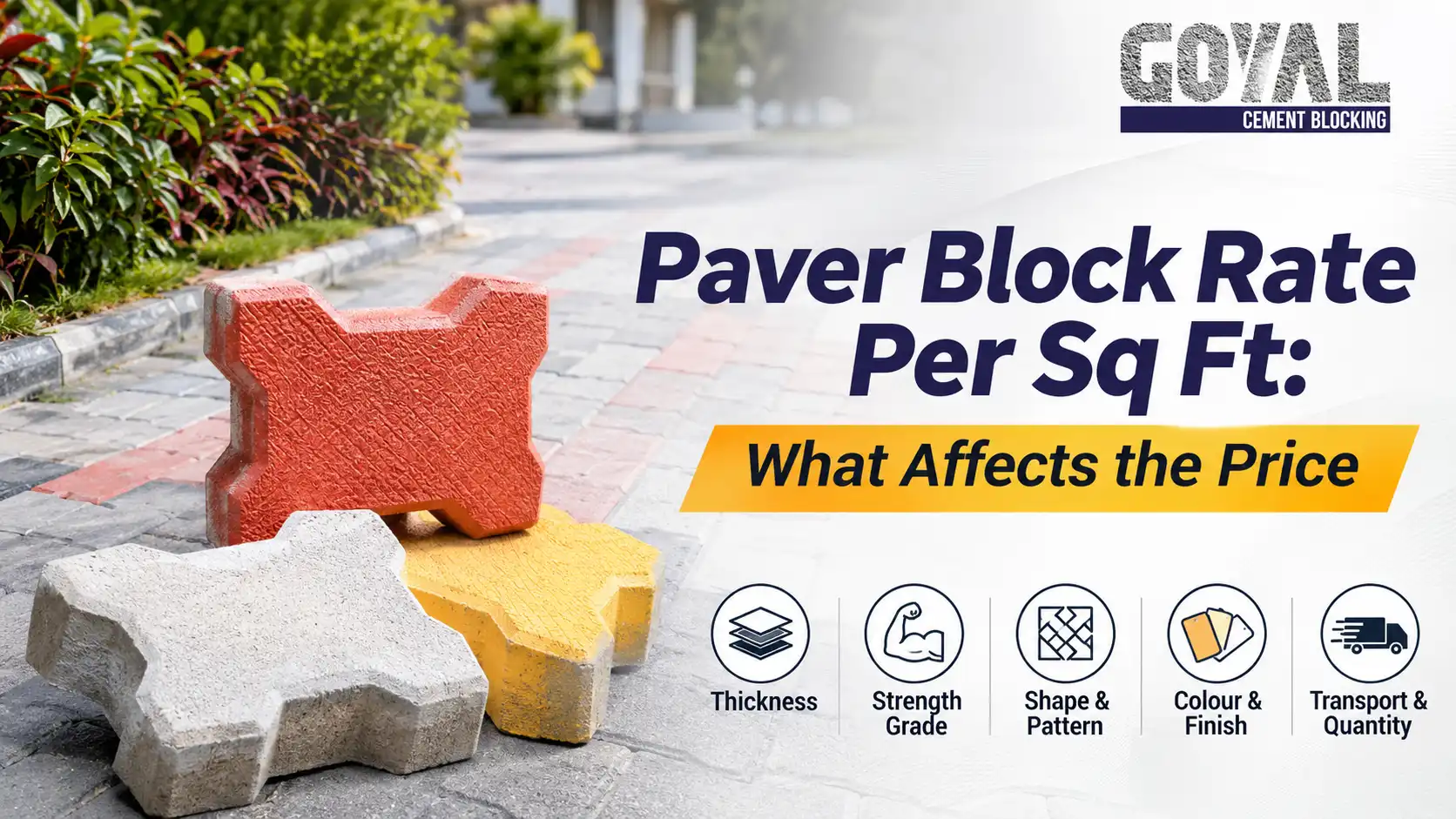
Anyone planning a driveway, parking area, walkway or garden path asks the same first question: what is the paver block rate per sq ft? The honest answer is that there is no single number. The rate depends on thickness, strength, shape, colour, order size and how far the blocks travel, and two quotes that look different are often quoting different products. This guide explains how the rate is built up, so you can compare offers on equal terms and avoid paying for specifications you do not need.
It is written for homeowners, contractors and project managers who are about to request quotations. Goyal Cement Blocking manufactures paver tile blocks at our plant in Palwal, Haryana, and the points below reflect the questions that matter when a buyer asks for a price.
How Paver Block Rate Per Sq Ft Is Worked Out
A supplier looks at the cost of cement, aggregates, pigment if the block is coloured, the moulding and curing process, and the cost of moving the blocks to your site. All of that is converted into a rate for the area the blocks will cover. Some suppliers quote per square foot, some per square metre and some per piece, so the first step is to bring every quote to the same unit.
One square metre equals about 10.76 square feet. If a quote is given per square metre, divide it by 10.76 to see the approximate rate per square foot. If it is given per piece, multiply the price by the number of pieces needed for one square foot, which depends on the block size.
Factors That Change the Rate
Thickness
Thicker blocks use more material, so they cost more. Common thicknesses in use are 60 mm, 80 mm and 100 mm. Choosing a thickness that is heavier than your traffic needs is one of the easiest ways to overspend, and choosing one that is too thin leads to cracking and settling later.
Strength grade
Blocks are made in different strength grades, such as M30 or M40, and Indian standard IS 15658 covers precast concrete blocks for paving. A higher grade suits heavier loads and generally costs more to produce. Ask the supplier which grade is quoted, and match it to the use of the area.
Shape and pattern
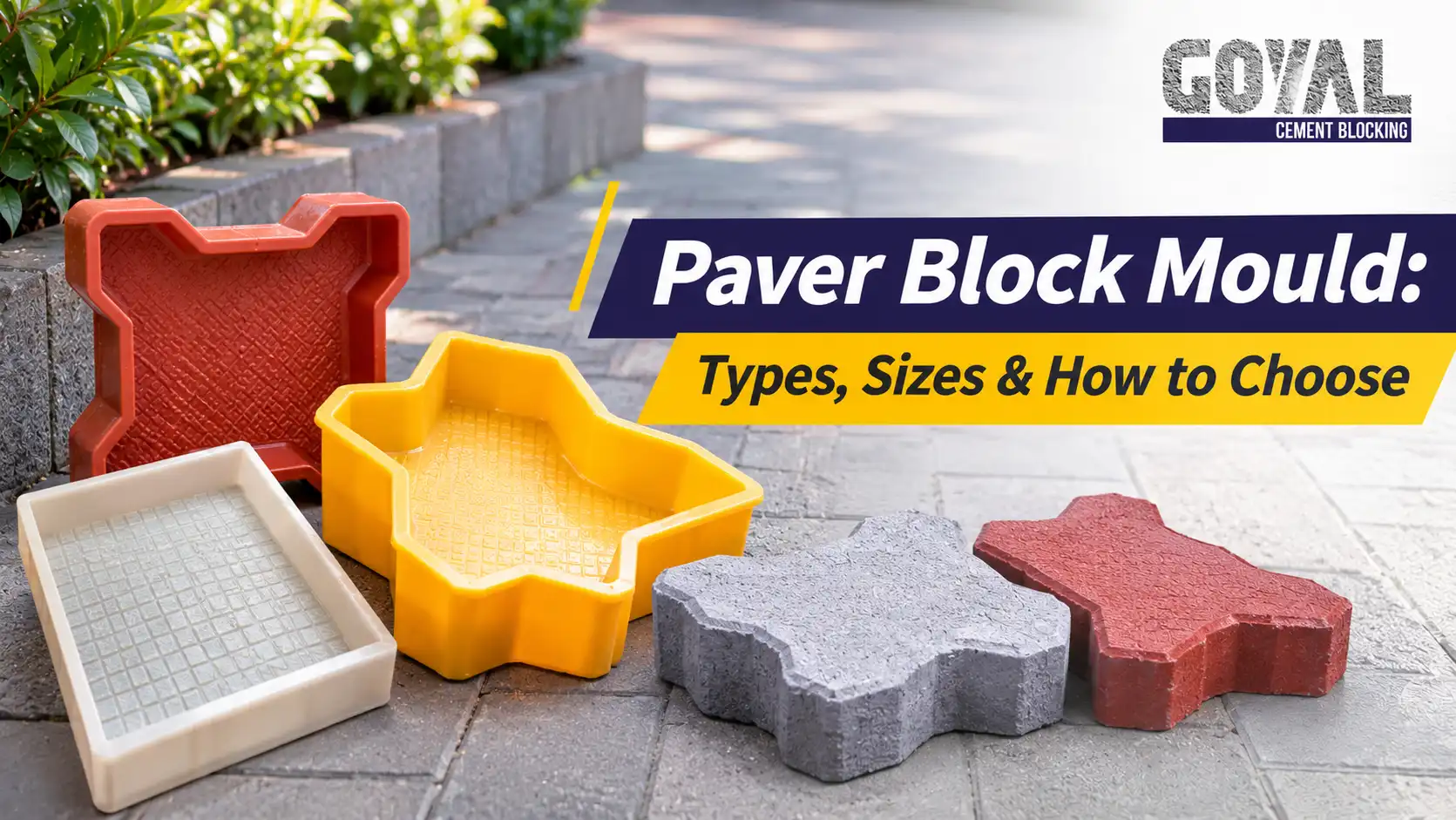
Plain rectangular blocks, interlocking shapes and designer patterns all need different moulds and finishing. Interlocking shapes spread loads between neighbouring blocks, which is why they are popular for driveways and parking.
Colour and finish
Natural grey blocks are the most economical. Coloured blocks need pigment and tighter process control, so the rate rises. A surface finish or a chamfered edge can add a little more.
Order quantity
A larger order spreads the fixed costs of production and loading over more area, so bulk buyers often get a better rate per square foot than small buyers. Very small orders may attract a higher rate and a minimum quantity.
Transport and unloading
Blocks are heavy, so freight is a real part of the price. Distance from the plant, vehicle type and unloading arrangements all change the final figure. This is also why rates differ from city to city.
Installation
Most block rates cover the blocks only. Base preparation, sand bedding, labour and edge restraints are separate unless the supplier says they are included. Always ask for a written breakup so you know what the number covers.
Which Thickness Fits Which Use
As a general guide, many contractors follow this pattern. Treat it as a starting point and confirm it with your designer.
- 60 mm blocks for footpaths, gardens, terraces and light pedestrian areas.
- 80 mm blocks for residential driveways, car parking and internal roads with light vehicles.
- 100 mm blocks for areas with heavy vehicles, such as loading bays, industrial yards and commercial entrances.
Using the right thickness keeps your rate sensible and your pavement in shape for years. If you are still deciding between block types, our guide on how to choose the right paver tiles block for your outdoor space compares the options.
Worked Example: Estimating Quantity and Budget
Suppose you want to pave 1,000 sq ft. Add about 5 percent for cutting and breakage, so you order for 1,050 sq ft. If you choose a common block of 200 mm by 100 mm, each block covers 0.02 square metres. One square foot is about 0.093 square metres, so you need roughly 4.65 blocks per square foot. For 1,050 sq ft, that is about 4,880 blocks.
Your budget then follows a simple formula: area with wastage multiplied by the rate per sq ft, plus base preparation, transport and labour. Because this uses your own quoted rate, it gives a figure you can trust. This example is only an illustration, and block sizes vary, so use the size from your own quotation.
Mistakes That Make Rate Comparison Misleading
Comparing rates without comparing specifications is the biggest mistake buyers make. Before you decide, check these points for every quote.
- Is the thickness the same in every quote?
- Is the strength grade stated, and is it the same?
- Is the rate for natural or coloured blocks?
- Does the rate include GST, transport and unloading?
- Is the quote for blocks only, or for laying as well?
- Is a minimum order quantity applied?
A lower rate that leaves out transport or uses a thinner block is not really lower. Our guide on how to find the best paver block manufacturer near you adds more advice on judging suppliers beyond the headline price.
Why Rates Differ From City to City
The same block can have different delivered rates in different cities because of freight distance, local demand and handling costs. If you are working in a specific city, see the city pages we maintain for local details, such as paver block price in Kolkata, paver block price in Nagpur, paver block price in Raipur and paver block price in Ahmedabad.
Paver Blocks Compared With Other Flooring
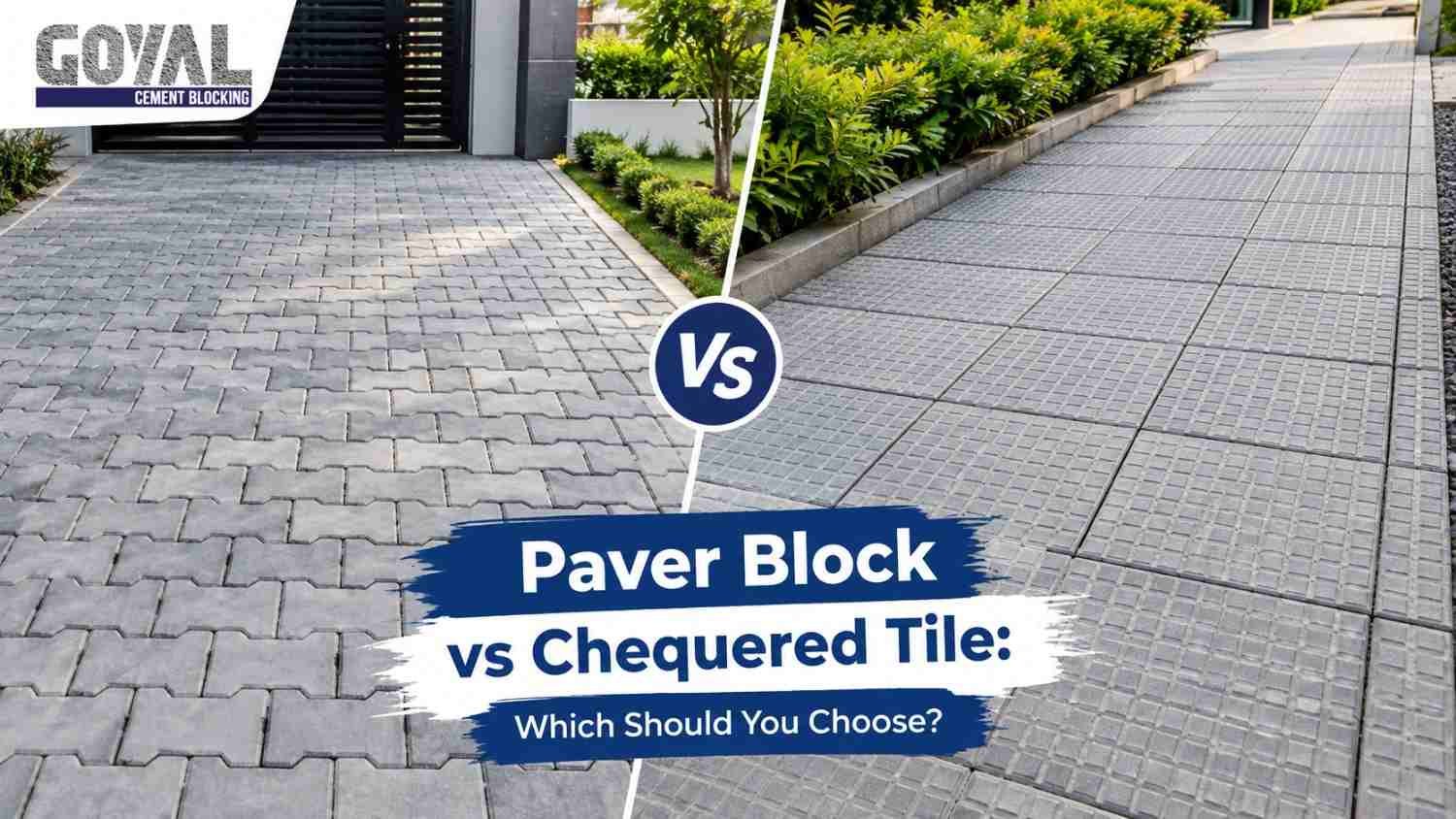
Paver blocks are often compared with chequered tiles and other outdoor flooring. Each suits a different job, and the cheapest option on paper is not always the cheapest over ten years. Our blog on paver block versus chequered tile helps you decide, and our overview of concrete paver blocks explains how they are made and where they perform best.
Think about lifetime cost as well as the rate. Paver blocks can be lifted and relaid when a utility line needs repair, which saves breaking a whole surface. Good drainage through the joints also protects the base layer.
How to Get an Accurate Quote From Goyal Cement Blocking
To receive a clear rate quickly, send us the following details through our contact page.
- The area in square feet or square metres.
- The use of the area, such as footpath, driveway or industrial yard.
- The preferred thickness, shape and colour, if you have decided them.
- The delivery location, and whether unloading support is needed.
We will reply with a rate based on your specification, so you can compare it with other offers on the same basis.
Ways to Keep the Rate Reasonable Without Losing Quality
You do not need to compromise on quality to manage cost. These practical steps help many buyers bring the total down.
- Order the full quantity in one go. This saves trips, and blocks from one batch match in colour and size.
- Use natural grey blocks in areas where appearance is not critical, and keep colour for the entrance or feature areas.
- Mix thicknesses by zone. A footpath can use 60 mm blocks while the driveway uses 80 mm, instead of paying for the heavier block everywhere.
- Plan the layout around standard shapes. Fewer curves and fewer cuts mean less wastage and less labour.
- Arrange unloading as close to the work area as possible, so labour is not spent on shifting blocks by hand.
What to Do Before Placing the Order
Ask for a sample and look at it closely. The blocks should have a uniform size, clean edges and a dense surface without large voids. Ask how long the blocks are cured before dispatch, because properly cured blocks are stronger. Confirm the delivery schedule, and request a written quotation that states the thickness, grade, quantity, rate and how long the quoted rate stays valid. A clear paper trail avoids arguments if the specification or price changes later.
Key Points to Remember
The paver block rate per sq ft is not a fixed figure. It reflects thickness, grade, shape, colour, quantity and transport. Convert every quote to the same unit, compare like with like, add wastage to your quantity and ask for a breakup of what is included. With those steps you will pick a rate that fits your budget and your project.
Planning a paving project? Share your area and use with our team, and we will send you a quotation. Contact Goyal Cement Blocking today.
Frequently Asked Questions
Quick answers to what people usually ask.