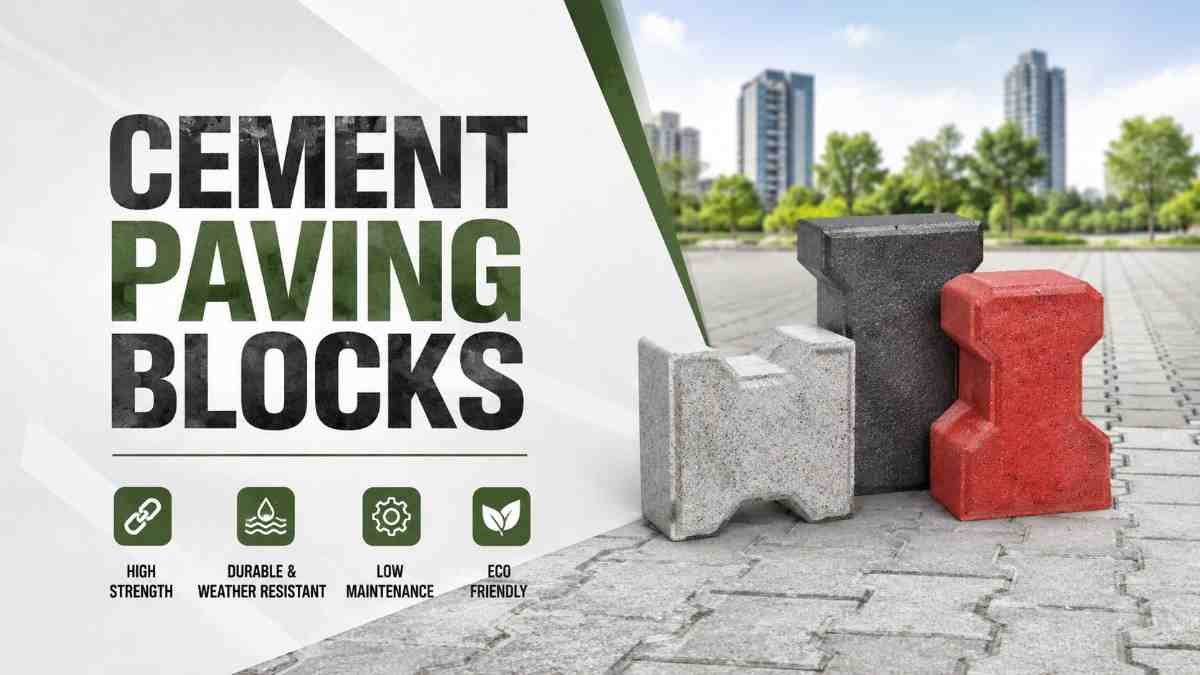
Whether you’re designing a driveway, pathway, parking area, garden landscape, or commercial plaza, paving blocks offer the kind of durability and flexibility that traditional surfaces often struggle to maintain over time.
In my experience, a properly paved outdoor area changes the entire feel of a property. It looks organized, performs better during bad weather, and stays easier to maintain for years.
At Goyal Cement Blocking, paving solutions are manufactured to support long-lasting residential, commercial, and industrial projects across multiple applications.
Why Cement Paving Blocks Are So Popular
Construction trends continue changing, but durability remains a constant priority. Outdoor surfaces especially need materials that can withstand environmental stress without deteriorating quickly.
Cement paving blocks are widely preferred because they combine:
- Structural strength
- Visual appeal
- Flexible design options
- Long service life
- Easier maintenance
I once visited a residential community where paving blocks had been installed more than seven years earlier. Even after years of regular traffic and seasonal weather changes, the pathways still looked neat and stable. That kind of long-term performance matters.
What Are Cement Paving Blocks?
Cement paving blocks are precast masonry units manufactured using cement, aggregates, sand, water, and sometimes color pigments. These blocks are designed for outdoor paving applications where durability and appearance are equally important.
Unlike large poured concrete surfaces, paving blocks are installed individually in interlocking or aligned patterns. This gives the surface more flexibility and easier repair capability.
Materials Used in Manufacturing
Cement
Acts as the primary binding material that gives structural strength.
Aggregates
Stone chips and crushed materials improve durability and load-bearing performance.
Sand
Helps create consistency and smooth finishing.
Pigments
Used to create decorative color options.
Water
Supports hydration and proper curing.
At trusted manufacturers like Goyal Cement Blocking, production quality and curing standards are carefully maintained because outdoor paving performance depends heavily on manufacturing precision.
Applications of Cement Paving Blocks
One reason cement paving blocks are so widely used is versatility. They work across residential, commercial, industrial, and public infrastructure projects.
Residential Applications
Homeowners often use paving blocks for:
- Driveways
- Garden pathways
- Courtyards
- Patios
- Outdoor seating spaces
- Terrace flooring
Commercial Projects
Retail spaces, office complexes, and hospitality properties frequently install paving systems because they offer both functionality and visual appeal.
Industrial Areas
Factories and warehouses require durable surfaces capable of supporting heavy movement and operational activity.
Public Infrastructure
Paving blocks are commonly used for:
- Footpaths
- Parking zones
- Parks
- Bus stops
- Community spaces
- Pedestrian walkways
Benefits of Cement Paving Blocks
High Durability
Quality paving blocks can handle years of weather exposure and traffic pressure.
Easy Repair and Maintenance
Damaged blocks can usually be replaced individually without disturbing the surrounding surface.
Attractive Appearance
Available in multiple:
- Shapes
- Colors
- Textures
- Patterns
This allows flexible outdoor designs.
Better Drainage Performance
Joint spacing between blocks helps support surface water movement.
Reduced Surface Cracking
Unlike rigid slabs, block systems distribute pressure more evenly.
In my experience, interlocking paving surfaces usually age much better than large plain concrete areas.
Cement Paving Blocks vs Traditional Concrete Flooring
| Feature | Cement Paving Blocks | Traditional Concrete Surface |
|---|---|---|
| Crack Resistance | Better | Moderate |
| Maintenance | Easier | More difficult |
| Repair Flexibility | Excellent | Limited |
| Installation Speed | Faster | Moderate |
| Visual Appeal | Higher | Standard |
| Drainage Performance | Better | Lower |
This flexibility explains why paving blocks continue growing in popularity across both private and public projects.
Different Types of Cement Paving Blocks
Different projects require different paving styles and strengths.
Interlocking Pavers
Designed to lock together for improved stability.
Zigzag Pavers
Commonly used for driveways and parking areas because of their strong grip.
Rectangular Pavers
Ideal for pathways, courtyards, and decorative landscapes.
Decorative Pavers
Used where aesthetics are especially important.
Heavy Duty Pavers
Manufactured for industrial zones and heavy vehicle movement.
Selecting the right type depends on:
- Traffic load
- Design requirements
- Surface usage
- Environmental conditions
How Quality Affects Long-Term Performance
Not all paving blocks deliver the same durability. Manufacturing standards make a major difference.
According to the Interlocking Concrete Pavement Institute, high-quality paving systems can significantly improve long-term pavement performance while reducing maintenance requirements compared to many traditional paving methods.
That’s why proper manufacturing matters.
Things to Inspect Before Buying
- Uniform dimensions
- Sharp edges
- Consistent surface finish
- Proper curing
- High compressive strength
- Minimal chips or cracks
I’ve noticed that poorly cured paving blocks often begin losing edge quality much earlier under regular traffic conditions.
Installation Tips for Better Results
Even premium cement paving blocks need proper installation techniques to perform effectively.
Prepare a Strong Base
A stable foundation prevents sinking and uneven settlement.
Use Proper Sand Bedding
Sand layers help distribute loads evenly.
Maintain Accurate Alignment
Correct placement improves both appearance and durability.
Compact the Surface Thoroughly
Mechanical compaction strengthens interlocking stability.
Ensure Proper Drainage
Good drainage planning prevents water accumulation.
When I tried helping on a landscape project several years ago, the contractor spent more time preparing the base than laying the blocks. At first it seemed excessive, but later it became obvious why the finished surface stayed perfectly stable.
Why Cement Paving Blocks Work Well in Indian Conditions
Indian climates can be extremely demanding on outdoor surfaces. High heat, monsoon moisture, and heavy traffic create constant stress.
Cement paving blocks perform well because they:
- Resist surface wear
- Handle thermal changes better
- Support drainage efficiency
- Reduce widespread cracking
- Manage heavy traffic loads effectively
That’s why they are widely used in:
- Residential colonies
- Commercial complexes
- Industrial parks
- Municipal projects
- Educational institutions
Why Builders Prefer Goyal Cement Blocking
Construction professionals value reliability and consistency above everything else.
Goyal Cement Blocking manufactures paving solutions suitable for:
- Residential developments
- Commercial landscaping
- Industrial flooring
- Public infrastructure projects
Their focus on dimensional accuracy, durability, and manufacturing consistency helps ensure long-term paving performance.
I’ve noticed experienced contractors rarely compromise on paving quality because outdoor surfaces face constant exposure every single day.
Sustainability Benefits of Cement Paving Blocks
Modern construction increasingly focuses on sustainable building practices.
Reduced Repair Waste
Individual block replacement minimizes demolition waste.
Long Operational Lifespan
Durable surfaces reduce replacement frequency.
Water Management Support
Interlocking joints improve surface drainage performance.
Reusable Installation
Blocks can often be lifted and reused during redesign projects.
These advantages support more environmentally responsible construction methods.
Design Flexibility Makes a Huge Difference
One reason homeowners and architects appreciate paving blocks is creative flexibility.
You can create:
- Decorative borders
- Geometric layouts
- Multi-color designs
- Curved pathways
- Textured outdoor surfaces
A thoughtfully designed paved entrance or pathway can completely transform the visual appeal of a property.