From residential driveways and garden walkways to commercial plazas and industrial yards, interlocking paving systems have become one of the most trusted choices in modern landscape and infrastructure development. They combine structural strength with design flexibility, making them suitable for a wide range of applications.
At Goyal Cement Blocking, we have seen how quality paving solutions can completely transform outdoor spaces while improving functionality and long-term performance.
Why Interlocking Paving Blocks Are So Popular
The popularity of interlocking paving blocks continues to grow because they offer advantages that traditional paving materials often struggle to match.
Unlike plain concrete surfaces, interlocking pavers consist of individual units that fit together to create a strong and flexible pavement system. This design helps distribute loads more effectively and reduces the risk of large cracks forming across the surface.
Property owners, architects, builders, and developers appreciate their ability to combine beauty with durability.
Understanding Interlocking Paving Blocks
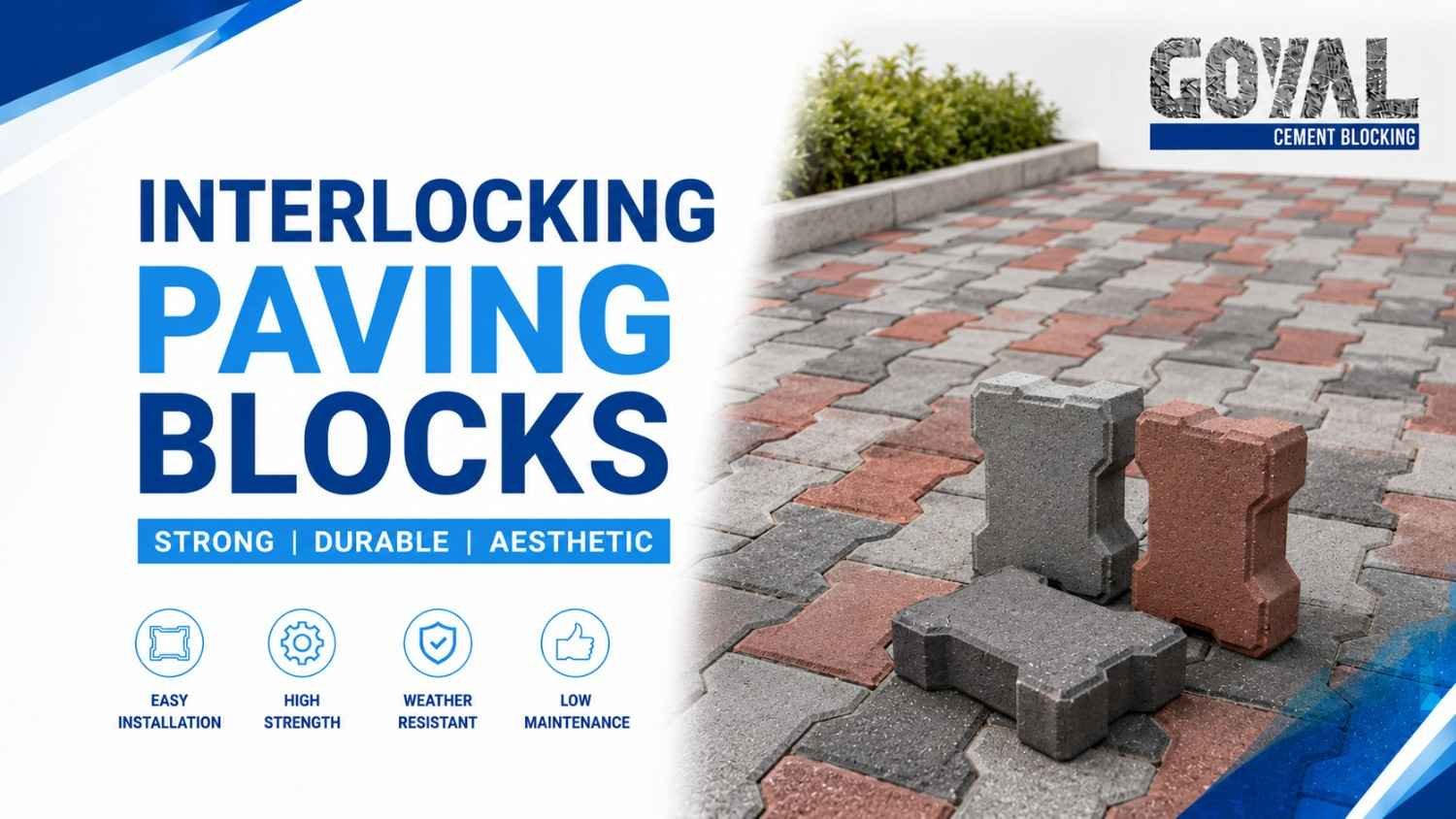
Interlocking paving blocks are precast concrete units manufactured in various shapes, sizes, and designs. These blocks are installed in patterns that allow them to lock together and create a stable paving surface.
The strength comes from the interlocking action between the blocks rather than relying solely on a rigid concrete slab.
Think of it like a team working together. Each individual block supports the surrounding blocks, creating a surface that performs as a single, unified system.
Benefits of Interlocking Paving Blocks
Excellent Durability
One of the biggest reasons people choose interlocking paving blocks is their ability to withstand regular traffic and environmental exposure.
Whether the surface is used by pedestrians, cars, or light commercial vehicles, properly installed paving blocks can provide long-term performance.
Attractive Appearance
A major advantage of interlocking systems is their visual appeal.
They are available in various:
- Shapes
- Textures
- Colors
- Patterns
This allows you to create customized outdoor spaces that complement the surrounding architecture.
Easy Maintenance
Unlike large concrete slabs, damaged blocks can often be replaced individually.
I've noticed that this feature becomes especially valuable in commercial spaces where minimizing maintenance disruptions is important.
Better Load Distribution
The interlocking mechanism helps spread loads across multiple blocks, reducing stress concentrations and improving pavement performance.
Long Service Life
When installed correctly and maintained properly, interlocking paving systems can provide reliable service for many years.
Common Applications of Interlocking Paving Blocks
Residential Driveways
Homeowners frequently use interlocking paving blocks to create attractive and durable driveways.
The wide range of designs allows homeowners to match the pavement to the overall appearance of the property.
Walkways and Pathways
Garden paths, pedestrian walkways, and entrance pathways benefit from both the functionality and appearance of interlocking pavers.
Commercial Spaces
Shopping centers, office complexes, hotels, and retail developments often incorporate paving blocks into outdoor designs.
Parking Areas
Interlocking paving systems are commonly used in parking facilities because they can handle vehicle traffic while maintaining visual appeal.
Public Spaces
Municipal projects such as parks, plazas, recreational areas, and pedestrian zones frequently utilize interlocking paving solutions.
Industrial Facilities
Heavy-duty paving blocks are suitable for certain industrial applications where durability is essential.
Types of Interlocking Paving Blocks
Different paving projects require different types of blocks.
Rectangular Pavers
These are among the most widely used paving blocks because they offer versatility and clean design options.
Zigzag Pavers
Zigzag shapes provide strong interlocking performance and are often used in high-traffic areas.
I-Shaped Pavers
These blocks are designed to enhance load distribution and pavement stability.
Hexagonal Pavers
Hexagonal paving blocks create visually distinctive surfaces while maintaining structural strength.
Decorative Pavers
Decorative options allow designers to create unique patterns and customized landscapes.
How Interlocking Paving Blocks Work
The performance of interlocking pavement depends on more than the blocks themselves.
Surface Layer
The paving blocks form the visible surface and provide structural support.
Bedding Sand
A layer of sand beneath the blocks allows for proper placement and load distribution.
Base Layer
Compacted aggregate forms the structural foundation of the pavement.
Subgrade
The underlying soil supports the entire pavement system.
Together, these layers create a durable and flexible pavement capable of handling various loading conditions.
Why Proper Installation Matters
Even the highest-quality paving blocks require proper installation to perform effectively.
Site Preparation
The area must be excavated and graded correctly.
Base Construction
A properly compacted base provides the necessary support for the pavement.
Accurate Block Placement
The blocks should be installed according to the selected pattern.
Joint Filling
Joint sand helps lock the blocks together and improve stability.
Final Compaction
Mechanical compaction ensures proper interlock and pavement performance.
In my experience, the quality of installation often has as much impact on long-term performance as the quality of the paving blocks themselves.
Environmental Benefits of Interlocking Paving Blocks
Sustainability has become an important consideration in construction and landscaping.
Interlocking paving systems offer several environmental advantages.
Reduced Material Waste
Individual blocks can often be reused or replaced without removing large pavement sections.
Improved Water Management
Certain paving systems can support better drainage and reduce surface runoff.
Long Service Life
Durable materials help reduce the frequency of replacement and resource consumption.
Repair-Friendly Design
Localized repairs generate less waste compared to complete pavement replacement.
According to the Interlocking Concrete Pavement Institute, properly designed interlocking pavement systems contribute to sustainable site development through durability and efficient stormwater management.
Choosing the Right Interlocking Paving Blocks
Selecting the right paving solution depends on several factors.
Intended Use
Consider whether the area will support:
- Pedestrian traffic
- Passenger vehicles
- Commercial traffic
- Light industrial equipment
Design Preferences
Color, texture, and pattern choices influence the overall appearance.
Environmental Conditions
Climate and drainage requirements should be evaluated during planning.
Maintenance Expectations
Different paving systems may have different maintenance requirements.
When I tried comparing various paving options for a landscape project, the flexibility of interlocking systems made them one of the most adaptable solutions available.
Why Contractors Prefer Interlocking Paving Blocks
Construction professionals often choose interlocking paving systems because they offer:
- Reliable performance
- Design versatility
- Faster installation
- Easy maintenance
- Long-term durability
These advantages help improve project efficiency while delivering attractive finished results.
Manufacturers such as Goyal Cement Blocking support these projects by producing high-quality paving products designed for dependable performance.
Future of Interlocking Pavement Systems
As urban development continues to expand, demand for durable and visually appealing paving solutions is expected to grow.
Interlocking paving blocks are increasingly being used in:
- Smart city projects
- Sustainable developments
- Commercial landscapes
- Public infrastructure
- Residential communities
Their combination of functionality, aesthetics, and durability makes them a valuable solution for modern construction.
Goyal Cement Blocking continues to contribute to this growth by supplying paving products that meet the evolving needs of builders, developers, and property owners.