Whether you’re building a home, warehouse, factory, school, or boundary wall, choosing the right block matters more than most people realize. In my experience, the quality of the block affects everything from wall alignment to long-term durability.
At Goyal Cement Blocking, the focus remains on producing dependable construction materials that support strong and efficient building practices across different types of projects.
Why Solid Concrete Blocks Are Preferred in Modern Construction
Construction methods have changed a lot over the years. Builders now want materials that offer speed, consistency, and durability all at once.
That’s where solid concrete blocks stand out.
Unlike traditional clay bricks that can vary in size and quality, solid blocks are manufactured using controlled processes. This gives them better uniformity and structural reliability.
I remember visiting a commercial project where workers switched from standard bricks to concrete blocks midway through construction. The contractor mentioned that wall finishing became much smoother and faster after the change. I’ve noticed similar improvements on many modern sites.
Main Advantages of Solid Concrete Blocks
- High structural strength
- Better durability against weather exposure
- Faster wall construction
- Lower mortar consumption
- Improved sound insulation
- Reduced maintenance needs
- Uniform shape and dimensions
- Better fire resistance
These benefits make solid blocks suitable for both small and large construction projects.
What Are Solid Concrete Blocks?
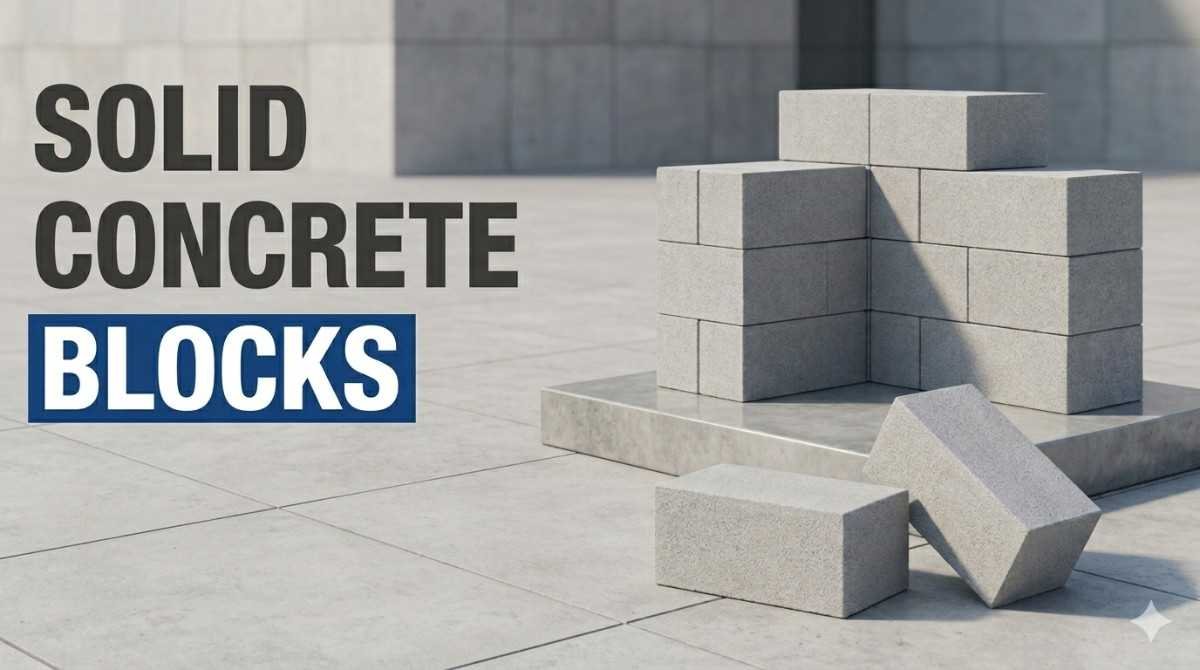
Solid concrete blocks are dense masonry units manufactured using cement, sand, aggregates, and water. They contain little or no hollow space, which gives them greater compressive strength compared to many lightweight alternatives.
The manufacturing process usually involves:
- Mixing raw materials
- Compacting the mixture under pressure
- Molding into uniform shapes
- Proper curing for strength development
The final result is a durable construction block capable of handling substantial structural loads.
Materials Used in Manufacturing
Cement
Acts as the primary binding material that holds the block together.
Aggregates
Crushed stone or stone dust improves density and durability.
Sand
Provides consistency and helps create a smooth finish.
Water
Essential for hydration and proper curing.
At reliable manufacturing facilities like Goyal Cement Blocking, maintaining the right material ratio is critical because even small variations can impact block performance.
Common Applications of Solid Concrete Blocks
One reason builders choose solid concrete blocks so frequently is versatility. They work well across different types of construction.
Residential Buildings
Solid blocks are widely used in:
- External walls
- Internal partitions
- Compound walls
- Foundations
- Staircase walls
Many homeowners appreciate their strength and durability, especially in areas with changing weather conditions.
Commercial Construction
Offices, shopping complexes, hospitals, and schools often use concrete blocks because they simplify construction while providing dependable support.
Industrial Structures
Factories and warehouses need materials that can withstand heavy usage. Solid blocks perform exceptionally well in demanding industrial environments.
Infrastructure Projects
Boundary walls, utility buildings, retaining structures, and service areas commonly use solid blocks for added stability.
How Solid Concrete Blocks Improve Construction Quality
Some building materials look good initially but fail under long-term stress. Solid concrete blocks are valued because they maintain structural integrity over time.
Better Load Bearing Capacity
Because of their dense composition, solid blocks can support substantial loads.
Reduced Cracking
Uniform manufacturing helps minimize stress points within walls.
Consistent Wall Alignment
Their accurate dimensions make masonry work cleaner and more precise.
Improved Durability
Properly cured blocks resist wear caused by moisture and temperature changes.
According to a study published by the Indian Concrete Institute, high-quality concrete masonry products can significantly increase the lifespan of structural walls while reducing maintenance requirements.
That matters more than people think. Repairing weak masonry years later can become frustrating and time-consuming.
Comparing Solid Concrete Blocks with Traditional Bricks
| Feature | Solid Concrete Blocks | Traditional Bricks |
|---|---|---|
| Strength | Higher | Moderate |
| Construction Speed | Faster | Slower |
| Water Absorption | Lower | Higher |
| Uniformity | Excellent | Variable |
| Durability | Strong | Moderate |
| Fire Resistance | Better | Standard |
| Maintenance | Lower | Higher |
This comparison explains why many contractors now prefer concrete blocks for large-scale developments.
Important Things to Check Before Buying Solid Concrete Blocks
Not all blocks in the market meet proper quality standards. Before selecting a supplier, you should inspect a few important factors.
Compressive Strength
Blocks should be strong enough for the intended structural application.
Dimensional Accuracy
Uniform size ensures better alignment during masonry work.
Water Absorption
Lower water absorption helps reduce dampness problems.
Surface Finish
Quality blocks typically have:
- Sharp edges
- Smooth texture
- Minimal cracks
- Consistent color
Proper Curing
Poor curing often leads to weak and brittle blocks.
In my experience, curing is one of the most overlooked aspects of block manufacturing. Yet it directly affects long-term durability.
Why Builders Trust Goyal Cement Blocking
Reliable construction materials help projects move smoothly from foundation to finishing.
Goyal Cement Blocking is known for supplying quality concrete block products designed to support:
- Residential construction
- Industrial facilities
- Commercial developments
- Infrastructure projects
Builders often look for consistency more than anything else. Consistent block dimensions reduce installation errors and improve overall efficiency on-site.
I’ve noticed contractors become extremely loyal to suppliers who deliver uniform quality repeatedly. Construction schedules depend heavily on dependable materials.
Sustainability Benefits of Solid Concrete Blocks
Sustainability has become an important factor in modern construction planning.
Reduced Construction Waste
Uniform blocks experience less breakage during transportation and installation.
Long Service Life
Durable walls require fewer repairs over time.
Thermal Performance
Dense walls can help maintain more stable indoor temperatures.
Resource Efficiency
Modern block manufacturing often incorporates recycled materials in aggregate blends.
Many architects today specifically recommend durable masonry materials because they support environmentally responsible building practices.
Installation Tips for Better Results
Even high-quality solid concrete blocks need proper installation methods to perform well.
Use Proper Mortar Mix
Weak mortar can compromise wall strength.
Ensure Correct Alignment
Leveling each row carefully prevents uneven walls later.
Avoid Excess Water
Overwatering mortar reduces bonding quality.
Cure Masonry Properly
Post-construction curing strengthens wall performance.
Store Blocks Carefully
Keep blocks protected from excessive moisture before installation.
When I tried helping with a renovation project years ago, poorly stored blocks absorbed rainwater before use. The difference in wall finishing became obvious within weeks.
Different Sizes of Solid Concrete Blocks
Block size selection usually depends on the project’s structural requirements.
Common sizes include:
- 4-inch blocks
- 6-inch blocks
- 8-inch blocks
Engineers typically choose dimensions based on:
- Wall thickness
- Building height
- Structural load
- Design specifications
Choosing the correct size improves both safety and efficiency.
How Solid Concrete Blocks Help Speed Up Construction
Time delays are one of the biggest frustrations in construction projects.
Solid blocks help reduce delays because:
- Larger units cover more wall area
- Fewer joints reduce masonry time
- Uniform shapes improve installation speed
- Reduced plaster correction saves labor effort
Contractors working on large apartment projects often prefer block masonry because it helps maintain tight schedules.
Long-Term Performance Matters
Construction materials should perform well not just today, but years down the line.
That’s where solid concrete blocks continue to prove their value. Their strength, durability, and structural consistency make them suitable for demanding environments.
Whether you’re planning a small residential project or a large industrial facility, selecting quality blocks can influence the entire lifespan of the structure.
Reliable manufacturers like Goyal Cement Blocking continue supporting modern construction needs with dependable block solutions designed for durability and efficiency.