Many property owners discover the importance of a well-designed retaining wall only after facing issues like soil movement, drainage problems, or sloping land. The good news is that modern interlocking systems offer a practical and durable answer to these challenges.
Whether you are developing a residential garden, commercial property, industrial site, or infrastructure project, understanding how interlocking retaining wall blocks work can help you make informed decisions.
What Are Interlocking Retaining Wall Blocks?
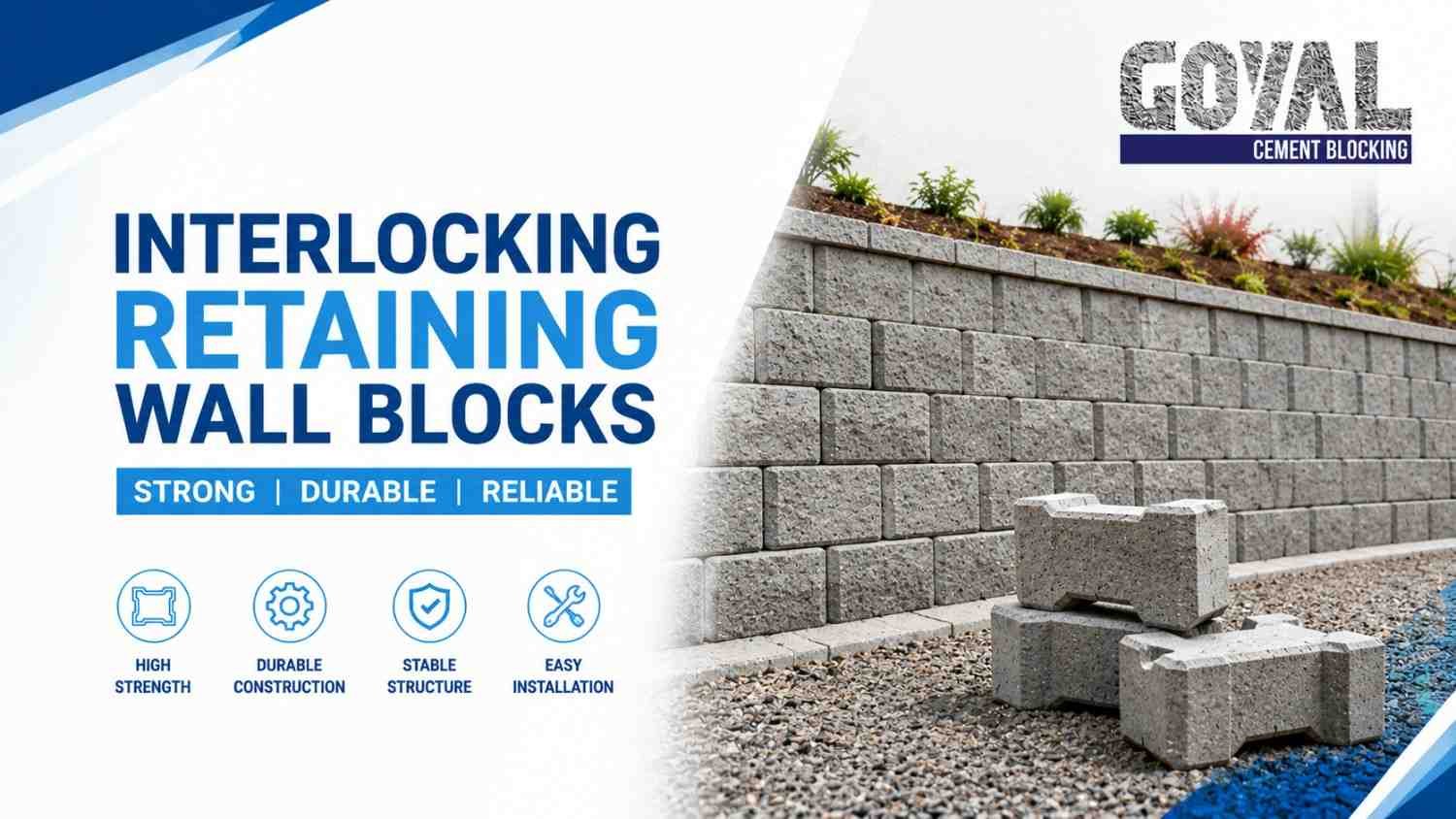
Interlocking retaining wall blocks are specially designed concrete blocks engineered to fit securely together without relying heavily on mortar. Their unique shape creates a mechanical connection that enhances stability and allows the wall to resist soil pressure effectively.
Unlike traditional masonry walls, interlocking systems use precision-manufactured blocks that lock together to form a strong, unified structure.
Think of them as building blocks designed for strength. Each unit supports the others, creating a retaining wall capable of handling significant loads while maintaining structural integrity.
Why Interlocking Retaining Wall Blocks Are Popular
Retaining walls face constant pressure from the soil behind them. As a result, strength and reliability are essential.
Interlocking retaining wall systems have become increasingly popular because they offer:
- Excellent structural stability
- Faster installation
- Long service life
- Attractive appearance
- Reduced maintenance
- Flexible design options
- Improved drainage performance
When I tried comparing different retaining wall solutions for a landscape project, I quickly realized that interlocking systems offered a balance between durability and ease of construction that many traditional methods lacked.
How Interlocking Retaining Wall Blocks Work
The effectiveness of these blocks comes from their engineered design.
Mechanical Interlocking
Each block contains features that connect with adjacent units. This interlocking mechanism helps distribute loads and maintain wall alignment.
Gravity-Based Stability
Many retaining walls rely on the weight of the blocks themselves to resist soil pressure.
Setback Design
Some interlocking systems are designed with a slight setback that allows the wall to lean gently into the retained soil, increasing stability.
Drainage Support
Proper drainage is essential for retaining wall performance. Interlocking systems often work well with drainage materials to manage water pressure behind the wall.
Benefits of Using Interlocking Retaining Wall Blocks
Superior Strength
One of the primary advantages is their ability to resist lateral earth pressure effectively.
The interlocking design creates a cohesive structure capable of supporting significant loads.
Faster Construction
Because the blocks are designed to fit together precisely, installation is often faster than conventional masonry methods.
Attractive Appearance
Retaining walls are often visible features of a property.
Interlocking blocks are available in a variety of textures, finishes, and shapes that complement different landscape styles.
Flexibility
Unlike rigid concrete walls, interlocking systems can accommodate minor ground movement without significant cracking.
Low Maintenance
I've noticed that well-constructed interlocking retaining walls generally require very little maintenance over time.
This makes them appealing for both residential and commercial projects.
Common Applications of Interlocking Retaining Wall Blocks
Residential Landscaping
Homeowners frequently use retaining walls to create:
- Raised garden beds
- Terraced landscapes
- Decorative boundaries
- Slope stabilization
Commercial Developments
Commercial properties often incorporate retaining walls to improve site functionality and aesthetics.
Industrial Facilities
Industrial sites may require retaining structures to support grade changes and manage soil retention.
Public Infrastructure
Municipal projects frequently utilize retaining walls for roads, parks, drainage systems, and public spaces.
Erosion Control
Retaining walls help prevent soil movement caused by rainfall, runoff, and environmental conditions.
Types of Interlocking Retaining Wall Blocks
Different projects require different retaining wall systems.
Standard Retaining Blocks
These versatile units are suitable for many residential and commercial applications.
Heavy-Duty Retaining Blocks
Designed for larger structures and higher load requirements.
Decorative Retaining Blocks
Decorative options combine structural performance with visual appeal.
Modular Retaining Blocks
Modular systems provide flexibility for projects of varying sizes and complexities.
Landscape Retaining Blocks
These blocks are commonly used in gardens, parks, and outdoor living spaces.
Why Drainage Matters in Retaining Walls
Many retaining wall failures are caused by poor drainage rather than inadequate wall strength.
Water buildup behind a wall creates hydrostatic pressure that can significantly increase loads.
Proper drainage systems help:
- Reduce water pressure
- Improve wall longevity
- Prevent soil saturation
- Enhance overall stability
According to the American Society of Civil Engineers, effective drainage is one of the most important considerations in retaining wall design and long-term performance.
That is why professional installation typically includes drainage aggregates and drainage outlets where appropriate.
Choosing the Right Interlocking Retaining Wall Blocks
Not all retaining walls have the same requirements.
Wall Height
The height of the wall influences block selection and engineering requirements.
Soil Conditions
Different soil types create different loading conditions.
Drainage Requirements
Proper water management should always be considered during planning.
Aesthetic Preferences
Color, texture, and finish affect the final appearance of the project.
Structural Demands
Some applications require greater load-bearing capacity than others.
In my experience, matching the block system to site-specific conditions is one of the most important steps in achieving a successful project.
Installation Process
Proper installation is essential for long-term retaining wall performance.
Step 1: Site Assessment
The site is evaluated to determine soil conditions, drainage needs, and design requirements.
Step 2: Excavation
The foundation area is excavated according to project specifications.
Step 3: Base Preparation
A compacted base layer provides stability and support.
Step 4: First Course Placement
The first row of blocks is carefully leveled because it establishes the alignment of the entire wall.
Step 5: Block Stacking
Additional courses are installed using the interlocking design.
Step 6: Drainage Installation
Drainage materials are placed behind the wall.
Step 7: Backfilling
The retained area is backfilled gradually while maintaining proper compaction.
Long-Term Durability
One reason interlocking retaining wall blocks continue to gain popularity is their durability.
Concrete retaining wall blocks are designed to withstand:
- Heavy soil loads
- Moisture exposure
- Temperature fluctuations
- Weathering effects
- Long-term environmental stress
When I visited a retaining wall installation that had been in place for many years, the structure remained stable and visually appealing despite exposure to changing weather conditions.
That level of durability demonstrates the value of quality materials and proper installation.
Why Contractors Prefer Interlocking Retaining Wall Systems
Construction professionals appreciate solutions that combine efficiency with reliability.
Interlocking retaining wall blocks offer:
- Consistent manufacturing quality
- Simplified installation
- Strong structural performance
- Reduced maintenance requirements
- Design flexibility
Manufacturers such as Goyal Cement Blocking help support these projects by supplying durable concrete products engineered for dependable performance.
Many builders choose Goyal Cement Blocking because consistency in manufacturing helps create retaining walls that perform reliably for years.
Future of Retaining Wall Construction
Modern construction increasingly emphasizes sustainability, efficiency, and durability.
Interlocking retaining wall blocks align well with these goals by providing:
- Long service life
- Reusable components
- Reduced construction waste
- Efficient installation methods
As landscaping and infrastructure projects continue to evolve, interlocking retaining wall systems are expected to remain a preferred solution for soil retention and site development.