Whether you are planning a residential project, commercial development, landscaping feature, or industrial structure, understanding how interlocking concrete blocks work can help you make a smarter construction decision.
At Goyal Cement Blocking, we have seen growing demand for these innovative blocks because builders, contractors, and property owners appreciate solutions that save time while delivering reliable performance.
What Are Interlocking Concrete Blocks?
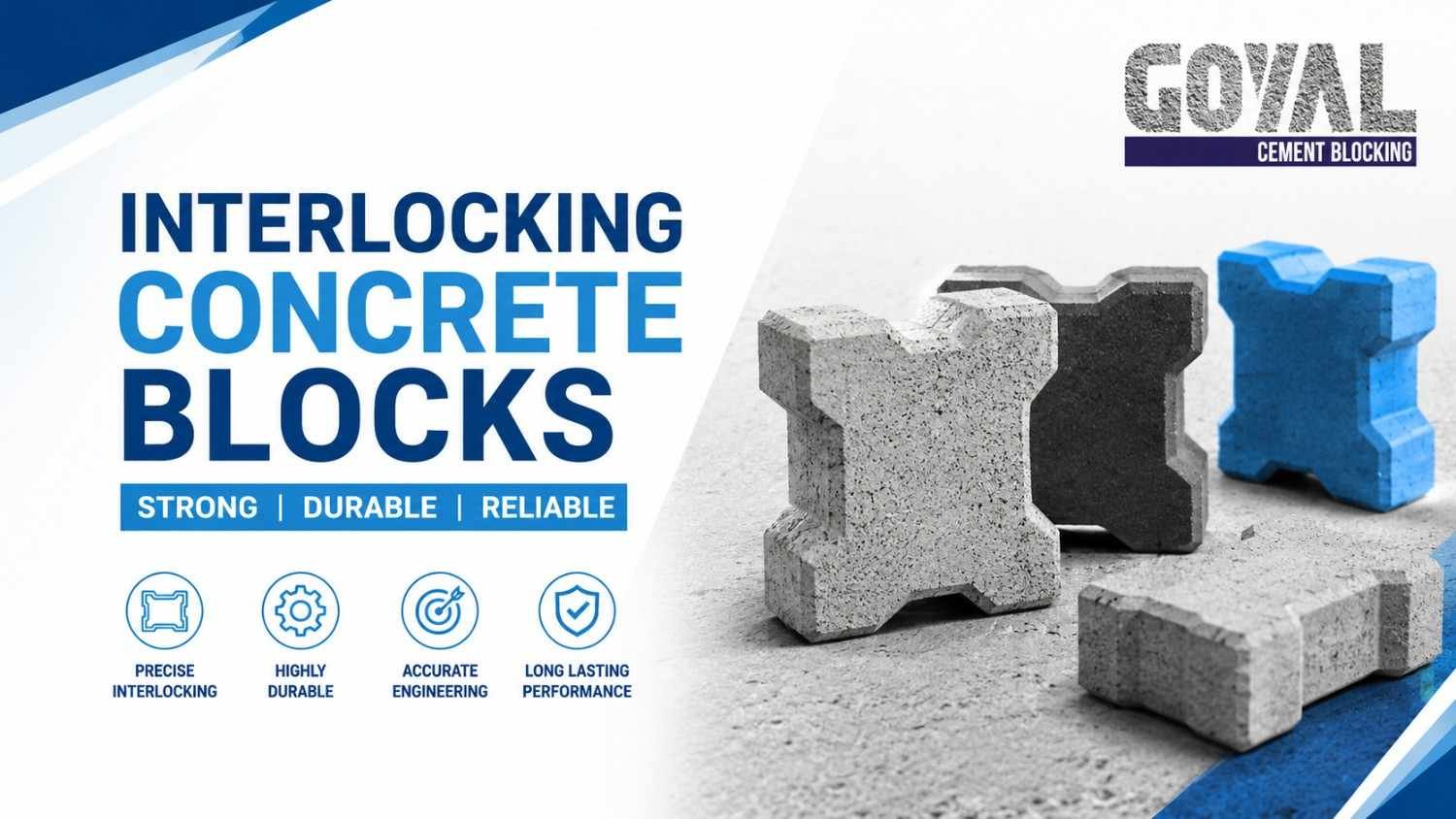
Interlocking concrete blocks are specially designed precast concrete units that fit together through a tongue-and-groove or key-locking mechanism. Unlike traditional bricks that depend heavily on mortar, these blocks lock into place, creating a stable and secure structure.
Think of them like puzzle pieces. Each block is designed to connect perfectly with adjacent blocks, creating a strong and unified construction system.
The interlocking design improves structural integrity while reducing construction time. This is one reason why these blocks have become increasingly popular across residential, commercial, and industrial projects.
Why Are Interlocking Concrete Blocks So Popular?
Construction professionals are constantly searching for methods that improve efficiency without sacrificing quality.
Interlocking blocks offer several advantages:
- Faster installation
- Reduced labor requirements
- Excellent structural stability
- Lower material wastage
- Minimal maintenance
- Long service life
- Environmentally friendly construction
When I visited several construction sites using interlocking systems, one thing stood out immediately. Workers were able to complete wall sections much faster compared to conventional brickwork.
That efficiency translates into significant project benefits.
Key Features of Interlocking Concrete Blocks
Precision Engineering
Every block is manufactured with consistent dimensions. This precision ensures accurate alignment during installation and creates a professional finish.
Superior Strength
Concrete blocks are known for their load-bearing capacity. The interlocking mechanism enhances overall stability and helps distribute structural loads effectively.
Weather Resistance
Rain, heat, moisture, and temperature fluctuations can affect traditional materials over time. Interlocking concrete blocks are designed to withstand harsh environmental conditions.
Easy Installation
The interlocking design reduces dependency on mortar and simplifies construction procedures.
Long-Term Durability
Properly manufactured blocks can remain structurally sound for decades with minimal maintenance requirements.
Benefits of Using Interlocking Concrete Blocks
Faster Construction Timelines
Time matters on every construction project.
Traditional bricklaying requires continuous mortar application, leveling, and curing. Interlocking systems simplify many of these steps.
I've noticed that contractors often prefer interlocking solutions when project deadlines are tight because installation can be completed significantly faster.
Cost Efficiency
Although material selection should never be based solely on initial cost, interlocking systems often help reduce overall project expenses by minimizing:
- Labor costs
- Construction time
- Material waste
- Maintenance requirements
Enhanced Structural Performance
The interlocking mechanism helps create a unified structure that resists movement and maintains stability over time.
This makes the blocks particularly suitable for retaining walls, boundary walls, and load-bearing applications.
Sustainable Construction
Environmental considerations are becoming increasingly important in construction.
Interlocking concrete blocks contribute to sustainability by:
- Reducing mortar usage
- Minimizing construction waste
- Supporting reusable construction methods
- Offering long service life
Common Applications of Interlocking Concrete Blocks
One of the biggest strengths of interlocking systems is versatility.
Retaining Walls
Retaining walls must withstand significant soil pressure. Interlocking blocks provide excellent stability and support for these applications.
Boundary Walls
Property owners frequently choose interlocking blocks for boundary walls due to their durability and attractive appearance.
Landscaping Projects
Landscape architects often use interlocking concrete blocks to create:
- Garden walls
- Raised planters
- Decorative boundaries
- Terraced landscapes
Industrial Structures
Factories, warehouses, and industrial facilities benefit from the strength and speed of interlocking block construction.
Residential Construction
Many homeowners use interlocking blocks for:
- Compound walls
- Garden features
- Utility structures
- Small retaining systems
How Interlocking Concrete Blocks Improve Structural Stability
Structural stability is one of the primary reasons these blocks have gained widespread acceptance.
The interlocking design creates mechanical connections between individual units. Instead of acting independently, the blocks work together as a cohesive system.
According to research published by the International Journal of Engineering and Advanced Technology, properly designed interlocking masonry systems can significantly improve load distribution and reduce construction errors compared to conventional masonry methods.
This makes them a reliable choice for a wide range of projects.
Types of Interlocking Concrete Blocks
Hollow Interlocking Blocks
These blocks contain internal cavities that reduce weight while maintaining strength.
They are often used for walls and building structures.
Solid Interlocking Blocks
Solid units offer greater density and strength for heavy-duty applications.
Retaining Wall Blocks
Specially engineered retaining wall blocks are designed to withstand lateral earth pressure.
Landscaping Blocks
These decorative blocks combine functionality with visual appeal.
Modular Interlocking Blocks
Modular systems provide flexibility for large-scale infrastructure and industrial projects.
Installation Process of Interlocking Concrete Blocks
The installation process is generally straightforward.
Step 1: Site Preparation
The construction area is cleared, leveled, and prepared according to project requirements.
Step 2: Foundation Preparation
A stable foundation is established to support the structure.
Step 3: First Layer Placement
The first row is carefully aligned because it determines the accuracy of the entire wall.
Step 4: Block Interlocking
Subsequent blocks are placed and locked into position.
Step 5: Alignment Checks
Regular inspections ensure proper alignment and structural integrity.
Step 6: Finishing
Depending on the project, additional finishing work may be completed.
Comparing Interlocking Concrete Blocks with Traditional Brick Construction
| Feature | Interlocking Concrete Blocks | Traditional Bricks |
|---|---|---|
| Installation Speed | Faster | Slower |
| Mortar Requirement | Minimal | High |
| Labor Requirement | Lower | Higher |
| Structural Stability | Excellent | Good |
| Waste Generation | Lower | Higher |
| Maintenance | Lower | Moderate |
| Durability | High | High |
For many projects, the efficiency advantages of interlocking systems make them an attractive alternative.
Choosing the Right Interlocking Concrete Blocks
Selecting quality blocks is essential for achieving the best results.
Consider the following factors:
Manufacturing Quality
Blocks should have uniform dimensions and consistent strength.
Application Requirements
Different projects require different block specifications.
Load-Bearing Capacity
Structural applications may require higher-strength blocks.
Weather Conditions
Environmental exposure should influence block selection.
Supplier Reputation
Working with an experienced manufacturer helps ensure product quality and reliability.
This is where established manufacturers such as Goyal Cement Blocking play an important role by providing consistent quality products for various construction requirements.
Maintenance of Interlocking Concrete Blocks
One reason many property owners appreciate interlocking systems is their low maintenance nature.
Basic maintenance includes:
- Periodic inspections
- Cleaning debris accumulation
- Checking drainage systems
- Monitoring structural movement
In my experience, well-installed interlocking concrete block structures require very little attention compared to many conventional alternatives.
Why Builders Prefer Interlocking Concrete Blocks
Builders are practical decision-makers.
They often choose materials based on performance, efficiency, and reliability.
Interlocking concrete blocks satisfy all three requirements.
The combination of strength, ease of installation, and long-term durability makes them suitable for modern construction projects where efficiency and quality are equally important.
Many contractors working with Goyal Cement Blocking products appreciate the consistency and dependability that quality manufacturing provides.
The Future of Interlocking Concrete Blocks
Construction technology continues to evolve.
As sustainability, speed, and efficiency become increasingly important, interlocking systems are expected to play an even larger role in future construction projects.
Innovations in manufacturing processes, material formulations, and block designs continue to improve performance and expand applications.
For builders seeking practical solutions that deliver long-term value, interlocking concrete blocks remain one of the most effective construction materials available today.