These specially engineered blocks have become a popular choice for builders, contractors, and property owners who want reliable structures without unnecessary construction complexity.
From residential boundary walls to commercial developments and industrial facilities, interlocking cinder blocks provide a practical solution that balances strength with ease of installation. Their growing popularity reflects the increasing demand for smarter construction methods that deliver long-term performance.
At Goyal Cement Blocking, we have seen more builders choosing interlocking systems because they help streamline projects while maintaining excellent structural quality.
Understanding Interlocking Cinder Blocks
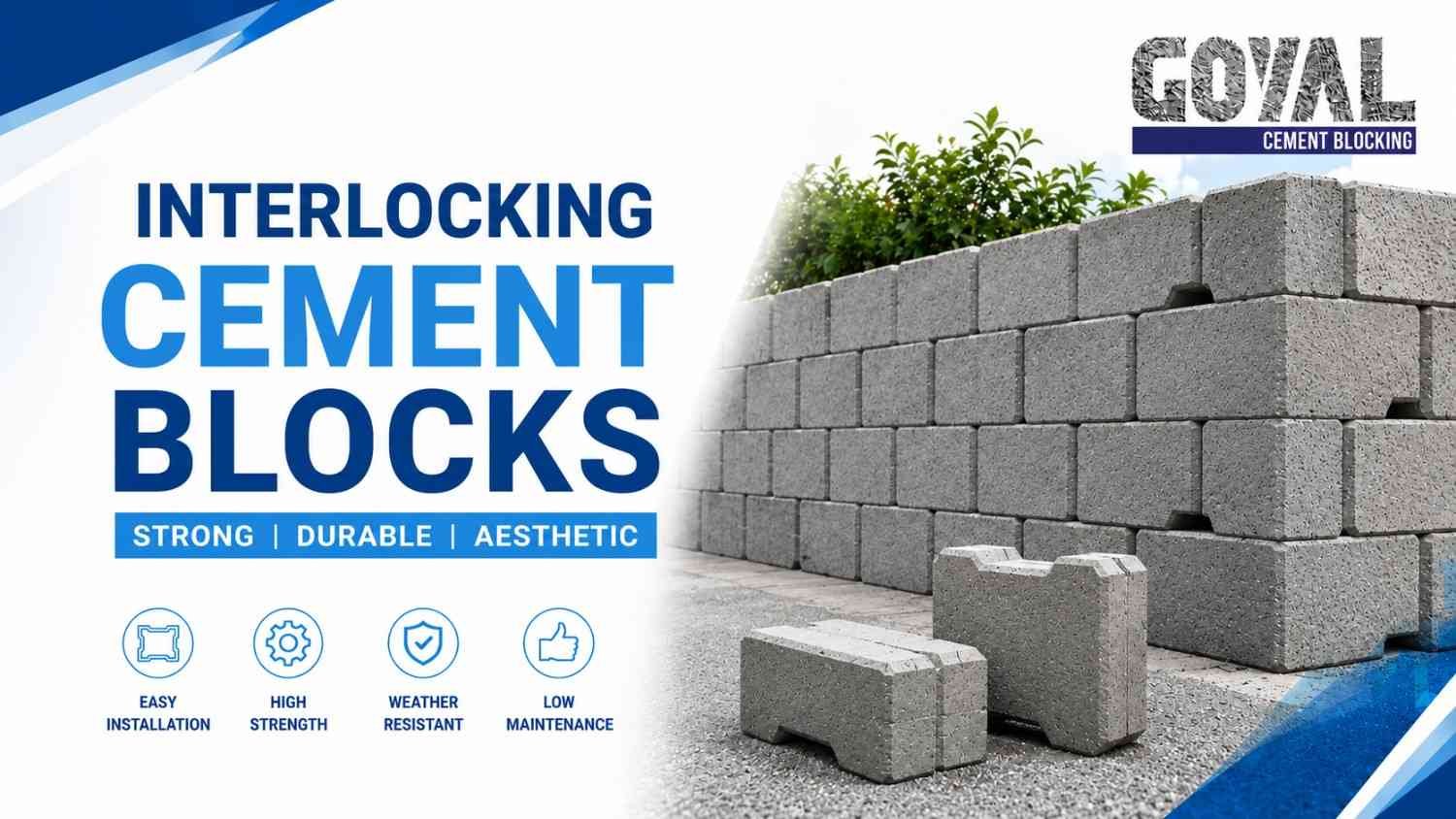
Interlocking cinder blocks are specially designed masonry units that connect through an integrated locking mechanism. Unlike traditional bricks that often require extensive mortar application, these blocks fit together with precision to create stable and durable structures.
The concept is simple but highly effective.
Each block contains features such as grooves, projections, or interlocking edges that allow it to connect securely with neighboring units. When assembled correctly, the blocks work together as a unified system capable of distributing loads efficiently.
Think of it like assembling a sturdy framework where every piece contributes to the strength of the whole structure.
Why Interlocking Cinder Blocks Are Becoming More Popular
The construction industry continues to prioritize efficiency and durability.
Interlocking systems have gained attention because they offer several practical advantages over conventional masonry methods.
Some of the reasons builders prefer them include:
- Faster construction timelines
- Improved structural stability
- Reduced material waste
- Consistent manufacturing quality
- Long-lasting durability
- Simplified installation
- Lower maintenance requirements
When I tried evaluating different wall construction methods on a commercial project, interlocking systems consistently stood out for their ability to simplify the building process while maintaining excellent structural performance.
Benefits of Interlocking Cinder Blocks
Enhanced Structural Stability
One of the biggest benefits of interlocking cinder blocks is their ability to create strong and stable structures.
The locking mechanism helps transfer loads across multiple units, improving the overall integrity of the construction.
Faster Installation
Construction schedules can have a significant impact on project success.
Because interlocking blocks are manufactured with precise dimensions, installation often progresses much faster compared to traditional masonry systems.
Improved Durability
Quality interlocking blocks are designed to withstand environmental exposure, moisture, and varying weather conditions.
This durability makes them suitable for a wide range of applications.
Consistent Results
Manufacturing precision ensures uniform block dimensions, helping builders achieve cleaner alignments and more professional finishes.
Reduced Maintenance
I've noticed that properly installed interlocking block structures generally require minimal upkeep over their lifespan.
This makes them attractive for both residential and commercial property owners.
Common Applications of Interlocking Cinder Blocks
Boundary Walls
Property owners frequently use interlocking blocks to construct secure and durable perimeter walls.
Residential Projects
Homeowners often choose these blocks for:
- Compound walls
- Garden boundaries
- Utility structures
- Decorative landscape features
Retaining Walls
The strength and stability of interlocking systems make them suitable for retaining wall applications.
Commercial Construction
Commercial developments benefit from the speed and efficiency of interlocking construction methods.
Industrial Facilities
Industrial sites often require durable wall systems capable of handling demanding operating environments.
How Interlocking Cinder Blocks Work
The effectiveness of interlocking systems lies in their engineered design.
Mechanical Interlock
Each block is designed to connect securely with surrounding units.
Load Sharing
The structure distributes loads across multiple blocks rather than concentrating stress in one area.
Enhanced Stability
The locking arrangement helps minimize movement and maintain alignment.
Efficient Construction
The design simplifies assembly and improves construction efficiency.
Types of Interlocking Cinder Blocks
Different projects require different block configurations.
Solid Interlocking Blocks
Solid blocks provide excellent strength and are often used in structural applications.
Hollow Interlocking Blocks
Hollow units reduce weight while maintaining reliable performance.
Decorative Blocks
Decorative options combine functionality with aesthetic appeal.
Retaining Wall Blocks
These specialized blocks are designed to resist soil pressure and support retaining structures.
Modular Construction Blocks
Modular systems offer flexibility for projects of varying sizes and designs.
Why Durability Matters in Construction
Construction materials should provide reliable performance for many years.
Environmental conditions, moisture exposure, temperature fluctuations, and structural loads all influence longevity.
According to a study published by the International Journal of Engineering Research and Applications, properly designed interlocking masonry systems demonstrate excellent load-bearing performance and durability when manufactured and installed according to established standards.
This reinforces the importance of selecting quality products from trusted manufacturers.
In my experience, the combination of good materials and proper installation practices often determines how well a structure performs over time.
Choosing the Right Interlocking Cinder Blocks
Selecting the right blocks involves more than simply choosing a size or shape.
Understand the Project Requirements
Every construction project has unique structural and functional needs.
Evaluate Site Conditions
Environmental exposure and soil characteristics can influence material selection.
Verify Product Quality
Look for:
- Uniform dimensions
- Consistent density
- Smooth finishes
- Reliable compressive strength
Assess Structural Demands
Consider:
- Wall height
- Load requirements
- Site constraints
- Design objectives
Partner with a Reliable Manufacturer
Choosing a trusted supplier helps ensure consistent quality and dependable performance.
Many builders work with Goyal Cement Blocking because manufacturing consistency plays a critical role in successful construction outcomes.
Installation Process
Proper installation helps maximize the benefits of interlocking cinder blocks.
Step 1: Site Preparation
The construction area is cleared and prepared according to project specifications.
Step 2: Foundation Development
A stable foundation is established to support the structure.
Step 3: First Course Placement
The initial row of blocks is carefully aligned.
Step 4: Block Installation
Additional blocks are installed using the interlocking system.
Step 5: Alignment Verification
Regular inspections ensure the structure remains straight and stable.
Step 6: Final Finishing
Any required finishing work is completed after installation.
Environmental Benefits of Interlocking Cinder Blocks
Sustainability is becoming increasingly important across the construction industry.
Interlocking systems support environmentally responsible practices through:
- Reduced construction waste
- Efficient material utilization
- Long service life
- Lower maintenance requirements
These benefits contribute to more sustainable construction outcomes.
Comparing Interlocking Cinder Blocks with Traditional Masonry
| Feature | Interlocking Cinder Blocks | Traditional Masonry |
|---|---|---|
| Installation Speed | Faster | Slower |
| Structural Stability | Excellent | Good |
| Material Waste | Lower | Higher |
| Dimensional Accuracy | High | Moderate |
| Maintenance | Lower | Moderate |
| Durability | High | High |
For many projects, these advantages make interlocking systems an attractive choice.
Why Contractors Prefer Interlocking Cinder Blocks
Construction professionals value solutions that improve efficiency without compromising quality.
Interlocking cinder blocks provide:
- Reliable performance
- Faster installation
- Long-term durability
- Design flexibility
- Consistent construction quality
When I visited a large-scale commercial project utilizing interlocking blocks, the contractor explained how the system simplified alignment and accelerated construction progress.
That practical advantage continues to drive widespread adoption.
Future of Interlocking Block Construction
Modern construction continues to evolve toward more efficient and sustainable building methods.
Interlocking cinder blocks support these goals by offering:
- Faster project completion
- Reliable structural performance
- Sustainable construction practices
- Long-term durability
As construction technology advances, interlocking systems are expected to play an even larger role in residential, commercial, and industrial development.
Goyal Cement Blocking continues to support this shift by providing quality construction products designed for modern building requirements.