Whether you're constructing a residential home, factory, boundary wall, warehouse, or commercial complex, the quality of your blocks directly affects durability, stability, and long-term performance. In my experience, choosing reliable solid blocks early in the construction process saves both time and structural trouble later.
At Goyal Cement Blocking, the focus is on manufacturing dependable construction materials that offer strength, consistency, and practical value for modern projects.
Why Cement Concrete Solid Blocks Are Widely Used
Traditional red bricks still exist on many construction sites, but solid concrete blocks are steadily becoming the smarter option. The reason is simple. They are stronger, more uniform, and easier to work with on large-scale projects.
A mason once told me during a warehouse project in Haryana, “Good blocks make the wall feel settled from the very first row.” I’ve noticed the same thing. Properly manufactured blocks create cleaner alignment and reduce plastering issues significantly.
Key Advantages of Cement Concrete Solid Blocks
- High compressive strength
- Better durability against weather conditions
- Faster construction speed
- Reduced mortar consumption
- Excellent load-bearing capacity
- Uniform size and shape
- Lower maintenance requirements
- Improved fire resistance
- Better sound insulation
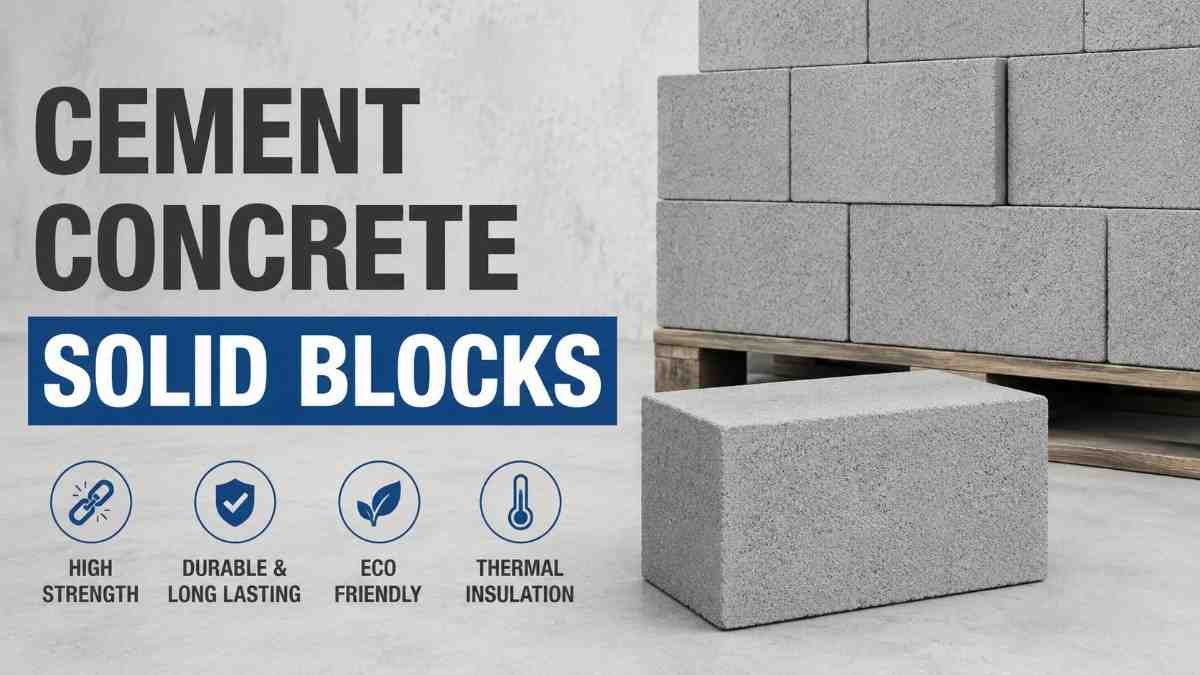
Because of these benefits, cement concrete solid blocks are commonly used in residential, industrial, and commercial construction.
What Are Cement Concrete Solid Blocks?
Cement concrete solid blocks are dense masonry units made using a mixture of cement, aggregates, sand, and water. These blocks are compacted under controlled manufacturing conditions to achieve consistent strength and shape.
Unlike hollow blocks, solid blocks contain very little or no hollow cavity. This makes them heavier and stronger, especially suitable for load-bearing structures.
Common Materials Used
Cement
Acts as the primary binding material.
Aggregates
Stone dust, crushed stone, or gravel help improve structural strength.
Sand
Provides workability and density.
Water
Essential for hydration and proper curing.
The quality of each ingredient matters. Even slight inconsistency in the mix can affect block performance. That’s why established manufacturers like Goyal Cement Blocking follow controlled production standards.
Applications of Cement Concrete Solid Blocks
One reason these blocks are so popular is versatility. They fit into almost every type of construction project.
Residential Construction
Solid blocks are ideal for:
- External walls
- Internal partition walls
- Compound walls
- Staircase walls
- Foundations
Many homeowners prefer them because they provide better stability and reduce long-term repair concerns.
Commercial Buildings
Office spaces, malls, schools, and hospitals frequently use cement concrete solid blocks due to their structural reliability and faster installation.
Industrial Projects
Factories and warehouses require durable materials capable of handling heavy loads and environmental stress. Solid concrete blocks perform exceptionally well in these environments.
Infrastructure Projects
Boundary walls, retaining structures, utility rooms, and service buildings often rely on solid blocks because of their toughness and long lifespan.
Strength and Durability Matter More Than You Think
A wall may look fine on the outside, but internal strength determines how well it survives over time.
According to a report published by the National Institute of Building Sciences, durable masonry materials can significantly reduce lifecycle maintenance costs in buildings exposed to harsh climates and heavy usage.
That’s one reason engineers often recommend cement concrete solid blocks for high-load applications.
In my experience, poorly made blocks usually reveal problems within the first few years:
- Surface cracks
- Water seepage
- Uneven walls
- Weak plaster bonding
High-quality solid blocks help avoid these issues.
How Cement Concrete Solid Blocks Improve Construction Efficiency
Construction delays are expensive. Every extra day increases labor and operational costs.
One major advantage of solid concrete blocks is speed.
Uniform Dimensions
Because blocks are manufactured in molds, their size remains consistent. This reduces alignment errors during masonry work.
Faster Wall Construction
Larger block sizes compared to traditional bricks mean fewer joints and quicker installation.
Reduced Mortar Usage
Fewer joints naturally reduce mortar consumption.
Cleaner Finishing
Uniform surfaces help achieve smoother plastering and cleaner wall finishes.
Builders working on large apartment projects often prefer solid blocks because they streamline execution without compromising structural integrity.
Comparing Cement Concrete Solid Blocks with Traditional Bricks
| Feature | Cement Concrete Solid Blocks | Traditional Bricks |
|---|---|---|
| Strength | High | Moderate |
| Construction Speed | Faster | Slower |
| Uniformity | Excellent | Variable |
| Water Absorption | Lower | Higher |
| Durability | Strong | Moderate |
| Maintenance | Lower | Higher |
| Fire Resistance | Better | Standard |
This doesn’t mean bricks are obsolete. But for modern construction needs, cement concrete solid blocks offer several practical advantages.
Important Factors to Check Before Buying Solid Blocks
Not all blocks available in the market are made with the same standards.
Here’s what you should always inspect before placing a bulk order.
Compressive Strength
Strong blocks can handle higher structural loads without failure.
Water Absorption Rate
Excessive water absorption can weaken walls over time.
Surface Finish
Good blocks should have:
- Sharp edges
- Smooth surfaces
- Consistent dimensions
- Minimal cracks
Proper Curing
Curing is critical. Poorly cured blocks often become brittle and weak.
Manufacturer Reputation
Reliable manufacturers maintain quality control during every stage of production.
This is where experienced suppliers like Goyal Cement Blocking stand out in the market.
Sustainability Benefits of Cement Concrete Solid Blocks
Modern construction increasingly focuses on environmentally responsible materials.
Solid concrete blocks contribute positively in several ways.
Reduced Material Waste
Their uniform shape minimizes breakage during handling and installation.
Long Service Life
Durable structures require fewer repairs and replacements.
Energy Efficiency
Dense walls can improve thermal insulation, helping maintain indoor temperatures more effectively.
Recyclable Material Components
Many aggregates used in block manufacturing can include recycled construction material.
I’ve noticed more commercial developers specifically asking for sustainable masonry products over the past few years. Environmental responsibility is becoming part of mainstream construction planning.
Common Sizes of Cement Concrete Solid Blocks
Different projects require different dimensions depending on load and design requirements.
Typical sizes include:
- 4-inch solid blocks
- 6-inch solid blocks
- 8-inch solid blocks
The choice depends on:
- Wall thickness
- Structural load
- Building type
- Architectural design
Contractors usually consult engineers before finalizing specifications.
Tips for Proper Installation
Even the best blocks need correct installation practices.
Use Quality Mortar
Weak mortar can reduce wall strength significantly.
Maintain Proper Alignment
Accurate leveling prevents uneven wall surfaces.
Avoid Excess Water
Too much water in mortar weakens bonding.
Ensure Proper Curing
Curing walls after construction improves durability.
Store Blocks Carefully
Blocks should be protected from excessive moisture before use.
When I tried helping a small renovation team on a storage building project, improper storage caused water saturation in several blocks before installation. The difference in wall quality became noticeable almost immediately.
Why Builders Prefer Goyal Cement Blocking
Construction professionals often look for consistency more than anything else.
Reliable dimensions, dependable strength, and timely supply make a huge difference during project execution.
Goyal Cement Blocking has built a strong reputation by supplying quality block products suitable for:
- Residential projects
- Industrial structures
- Commercial developments
- Infrastructure works
Their manufacturing process focuses on durability, dimensional accuracy, and dependable performance.
The Future of Modern Construction Materials
Construction practices continue evolving rapidly across India.
Builders today want materials that:
- Save labor time
- Improve durability
- Reduce maintenance
- Support sustainable construction
- Deliver structural reliability
That’s exactly why cement concrete solid blocks are becoming a standard choice for modern projects.
From independent homes to large commercial developments, these blocks provide practical advantages that builders genuinely appreciate on-site.