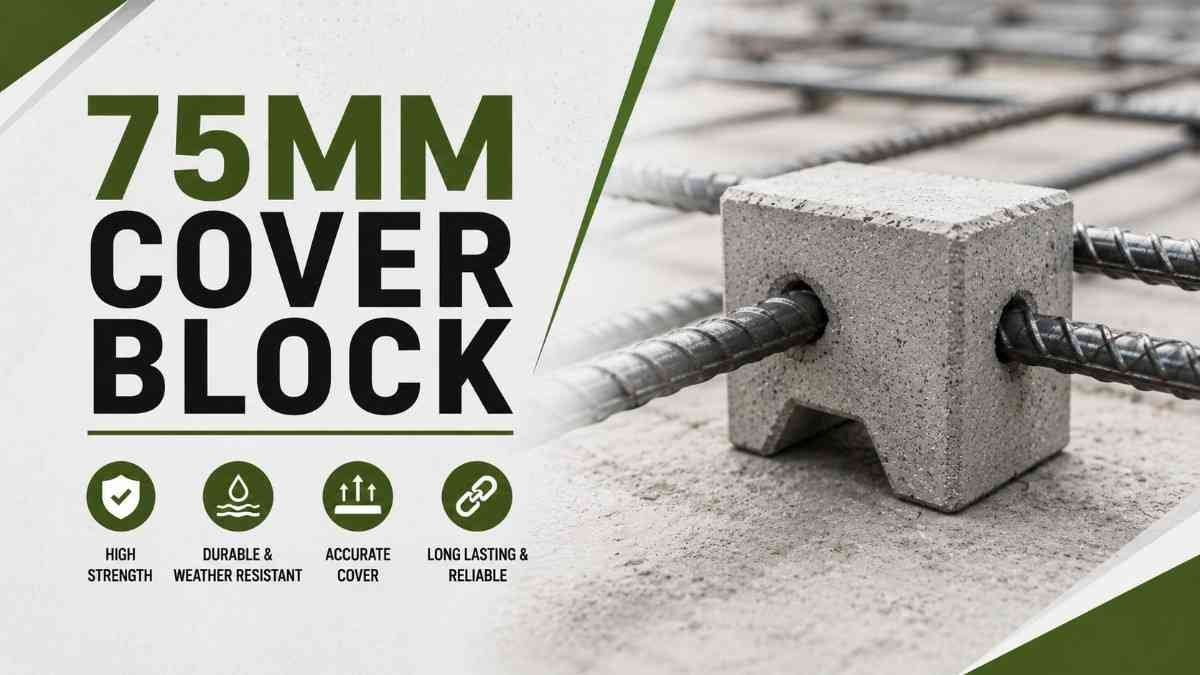
This small spacer helps maintain the correct distance between reinforcement steel and the outer concrete surface. That spacing protects steel from corrosion, improves structural durability, and supports proper load performance over time.
In my experience, many long-term structural issues begin with small construction oversights during reinforcement placement. Contractors often focus heavily on concrete strength, but reinforcement protection matters just as much.
At Goyal Cement Blocking, construction products are manufactured to support accurate reinforcement spacing and dependable RCC construction across residential, commercial, and industrial projects.
What Is a 75mm Cover Block?
A 75mm cover block is a spacer used in reinforced concrete construction to maintain a 75mm gap between reinforcement steel and the concrete surface.
The purpose of this spacing is to:
- Protect steel reinforcement
- Improve structural durability
- Prevent corrosion exposure
- Ensure proper concrete coverage
- Support fire resistance
These blocks are commonly manufactured using:
- Cement mortar
- Concrete mixtures
- High-density construction materials
The required cover depth depends on engineering design and environmental conditions.
Why Proper Reinforcement Cover Matters
Concrete acts as a protective layer around reinforcement steel. But for that protection to work properly, the reinforcement bars must remain positioned at the correct depth.
Problems Caused by Insufficient Cover
Without proper concrete cover:
- Reinforcement corrosion may begin
- Moisture can penetrate faster
- Cracking risks increase
- Structural lifespan may reduce
- Fire resistance weakens
I once visited an old foundation repair site where exposed reinforcement had already started corroding badly because proper cover depth was not maintained during construction. The repairs later became far more complicated than the original preventive measures would have been.
Benefits of Using 75mm Cover Block
Accurate Reinforcement Positioning
A reliable 75mm cover block helps maintain stable reinforcement alignment during concrete pouring.
Better Corrosion Protection
Adequate concrete cover shields reinforcement bars from moisture and environmental exposure.
Improved Structural Durability
Correct reinforcement placement supports long-term performance.
Enhanced Concrete Bonding
Proper spacing allows concrete to surround steel bars completely.
Fire Resistance Support
Thicker concrete cover improves structural behavior during high temperatures.
According to structural engineering recommendations, maintaining proper concrete cover is one of the most effective ways to improve reinforced concrete durability and reduce reinforcement deterioration.
Where 75mm Cover Blocks Are Commonly Used
Larger cover depths are generally used in structures exposed to moisture, soil contact, or demanding environmental conditions.
Foundation Construction
Foundations often require greater reinforcement protection because of constant soil moisture exposure.
Retaining Walls
Retaining structures face environmental pressure and water exposure regularly.
Underground Structures
Basements and underground RCC systems benefit from increased cover depth.
Water-Related Structures
Used in:
- Drainage systems
- Water tanks
- Infrastructure projects
- Outdoor RCC structures
Industrial Construction
Heavy-duty industrial environments often require additional reinforcement protection.
Types of Cover Blocks Used in RCC Construction
Different reinforcement systems use different spacer designs.
Square Cover Blocks
Commonly used in slabs and foundations.
Wheel Cover Blocks
Ideal for vertical reinforcement systems such as columns and walls.
Heavy-Duty Cover Blocks
Designed for large RCC projects and industrial construction.
Fiber-Reinforced Cover Blocks
Manufactured for improved strength and durability.
Reliable manufacturers like Goyal Cement Blocking focus on producing cover blocks with accurate dimensions and strong structural performance because reinforcement positioning directly affects construction quality.
Why Dimensional Accuracy Matters
Even small spacing variations can affect reinforcement alignment.
Uniform Concrete Cover
Consistent spacer dimensions maintain accurate cover depth.
Reduced Construction Errors
Properly sized blocks improve reinforcement stability during casting.
Better Structural Compliance
Accurate cover helps meet engineering specifications.
Improved Durability
Correct reinforcement placement supports longer structural life.
In my experience, experienced engineers always inspect spacer dimensions carefully because uneven cover thickness can create long-term durability problems.
Installation Tips for 75mm Cover Blocks
Good installation practices are essential for reinforcement protection.
Place Blocks at Proper Intervals
Even spacing supports reinforcement stability across the structure.
Use Undamaged Cover Blocks
Broken spacers can compromise cover depth accuracy.
Secure Reinforcement Properly
Steel bars should remain stable during concrete pouring.
Verify Alignment Before Casting
Reinforcement positioning should always be inspected carefully.
Maintain Proper Reinforcement Height
Incorrect bar placement can reduce structural protection.
When I tried helping during a foundation reinforcement setup years ago, I was surprised by how easily reinforcement cages could shift before concrete placement if spacer positioning wasn’t done correctly.
Why 75mm Cover Block Improves Long-Term Durability
Environmental exposure affects every reinforced concrete structure over time.
Moisture Protection
Adequate cover slows water penetration toward reinforcement steel.
Corrosion Resistance
Protected reinforcement remains durable longer.
Structural Reliability
Correct bar positioning improves load distribution performance.
Reduced Maintenance
Well-protected structures often require fewer repairs over time.
These advantages directly contribute to longer structural lifespan and improved construction quality.
Common Mistakes to Avoid During RCC Reinforcement Work
Using Poor-Quality Cover Blocks
Weak spacers may crack during installation.
Uneven Spacer Placement
Incorrect spacing can affect reinforcement alignment.
Insufficient Cover Thickness
Low cover depth increases corrosion risk.
Ignoring Reinforcement Inspection
Final reinforcement checks are critical before concrete casting.
I’ve noticed professional contractors rarely compromise on reinforcement accessories because structural durability depends heavily on preparation before pouring begins.
Why Builders Trust Goyal Cement Blocking
Construction professionals need dependable products that maintain consistent performance throughout RCC work.
Goyal Cement Blocking manufactures construction solutions suitable for:
- Foundations
- RCC slabs
- Columns
- Beams
- Retaining walls
- Infrastructure projects
Their focus on dimensional accuracy and durability helps support reliable reinforcement positioning in demanding construction environments.
Sustainability Benefits of Proper Reinforcement Cover
Durable RCC structures also support sustainable construction goals.
Longer Structural Lifespan
Proper reinforcement protection reduces early deterioration.
Reduced Repair Requirements
Well-protected structures need less restoration work.
Better Resource Efficiency
Long-lasting RCC systems reduce replacement material usage.
Improved Construction Reliability
Accurate reinforcement positioning improves overall structural quality.
As construction standards continue evolving, reinforcement protection remains one of the most important aspects of durable RCC construction.